

Economic activity has returned to almost what it was before the crisis, but to nowhere near were it would have been were it not for the crisis.
Articles on ABS
Displaying 41 - 60 of 103 articles

New data from the ABS shows how people adjusted their consumption patterns and behaviours during the early COVID-19 restrictions — and how some lifestyle changes have remained since then.

Australian Bureau of Statistics figures suggest there have been more than 800 ‘excess deaths’ in Australia in January-March 2020, relative to the average, but only 103 confirmed COVID-19 deaths so far.
Even in places that are now COVID-free spending remains subdued, and different.
The best case scenario sees a short-term recovery to the depths of the 1980s and 1990s recessions.
Incomes climbed as we snapped our wallets shut in the March quarter. The June quarter will be much, much worse.
Far too much hangs on whether Australia is “technically” in a recession. It might be skewing the design of our coronavirus support measures.
Women have suffered much more than men. Many who were employed in March have withdrawn from the labour force and so aren’t counted as unemployed.
The ABS is providing near real-time data like never before. It’s labour force survey remains the most authorative way of tracking the labour market.

Crime rates are down, but they were decreasing while imprisonment rates were increasing, so that doesn’t really explain lower numbers in our prisons.

The Institute for Health and Welfare issued an “errata” to correct statements about inequality that were perfectly correct.
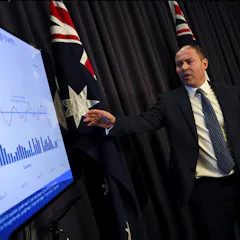
Households are buying no more than they were a year ago, and the wage share of national income is the lowest since 1964.
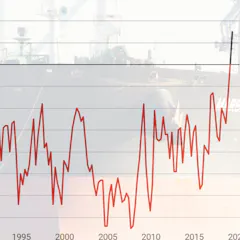
Australia is becoming more like the United States. Increasingly, we invest overseas. Our domestic economy is weak.
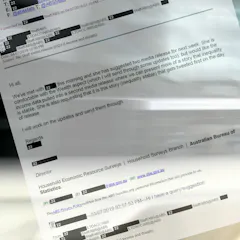
Freedom of Information documents show the Bureau of Statistics spent a good deal of effort toning down news of rising inequality. The Productivity Commission seems to have been at it too.
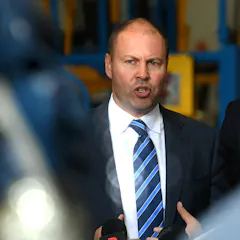
Investments only makes sense if there are markets for the things those investments will produce. It isn’t clear that there are.
Better data would tell us more about the ultrawealthy, but they really do seem to be growing more wealthy, more quickly, than the rest of us.
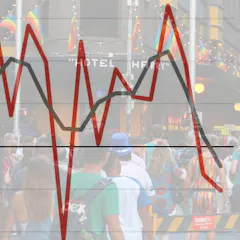
The treasurer says 2018 was a year of two halves, but there were signs of a downturn well before mid year.

We’ve been in the dark about how we use our time for more than a decade. It’s the decade that saw the rise of the smartphone, streaming and social media.

The Australian Bureau of Statistics’ latest analysis of the impact of government benefits and taxes on household income shows this reduces income inequality by more than 40% in Australia.

The people who have the most to gain from the extraordinary resources of the internet are missing out, including those not employed, older Australians and migrants from non-English speaking countries.
Top contributors
-

Visiting Fellow, Crawford School of Public Policy, Australian National University
-
Senior lecturer, Canberra School of Government, University of Canberra
-
Professorial Fellow, University of Canberra
-
Scientia Professor of Economics, UNSW
-
Professor of Economics, The University of Melbourne
-
Professorial Fellow and Co-Director, HILDA Survey, Melbourne Institute of Applied Economic and Social Research, The University of Melbourne
-
Professor of Economics and Public Policy, ANU College of Arts and Social Sciences, Australian National University
-
Visiting Senior Fellow in History, UNSW
-
Emeritus Professor, Department of Political Economy, University of Sydney
-
Professor of Economics, University of Canberra
-
Professor, Crawford School of Public Policy, Australian National University
-
Associate Professor, Bankwest Curtin Economics Centre, Curtin University
-
Adjunct professor, Flinders University
-
Associate Professor, POLIS@ANU Centre for Social Policy Research, Australian National University
-
Demographer, POLIS Centre for Social Policy Research, Australian National University