
Growth is painfully slow, according to data released on Wednesday. But this could well be seen by next year as the point when Australia started to move into positive territory.
Articles on National accounts
Displaying 1 - 20 of 47 articles

Until now, Australia has been more successful than the US, UK and Canada in managing inflation and unemployment, but underlying weakness in the labour market are putting that success at risk.
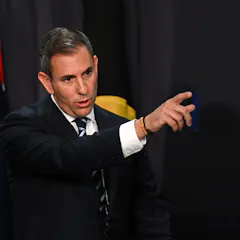
The economy hasn’t been this weak outside of a recession since the 1980s. GDP per capita has fallen for six consecutive quarters – the longest period in records going back to the 1970s.
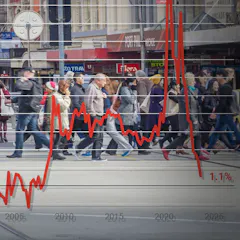
Australia’s household saving ratio has collapsed from a high of 20% at the start of the decade to just 1.1%.
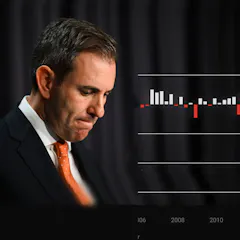
Six charts explain the Australian economy. Three of the most disturbing show living standards going backwards, productivity collapsing and household saving falling to a 15-year low.

Per person, gross domestic product shrank 0.2% in the three months to March, the most outside of a COVID downturn since 2016.
Australia faces an unpredictable global outlook, rising interest rates and wages not keeping up with the cost of living.

The full effects of the eight consecutive increases in the Reserve Bank’s cash rate are yet to become apparent, and there are signs inflation is on the way down.

Australia’s economy grew unusually strongly in the year to June, when interest rate increases were yet to bite.
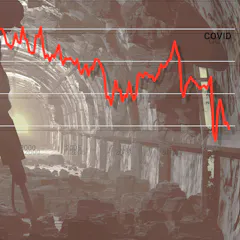
New figures show economic growth edged closer back towards normal in the months to March, but the gains went to profits rather than wages.
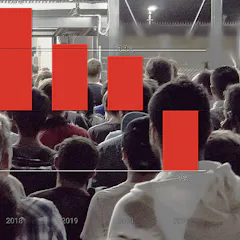
The buying power of wages began slipping mid last year year. The wages share of national income has been sliding since 2016.

Away from the states bouncing out of lockdown, spending growth was weak. The next figures, to be released after the election, might show the economy turning down.
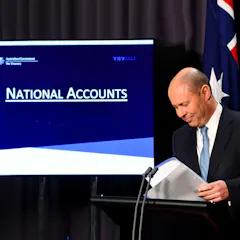
The economy shrank 1.9% in the September quarter, but figures released on Wednesday show spending roaring back as soon as the lockdowns ended.

Looking beyond the latest quarterly GDP figures, the truth is we’re getting better off more slowly than before.
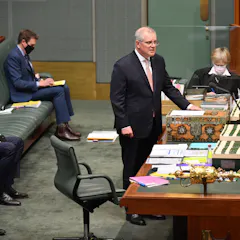
Michelle Grattan discusses the political week that was with Professor Paddy Nixon.
Learning to live with COVID
Michelle Grattan discusses politics with politics + society editor, Amanda Dunn
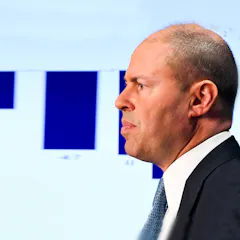
Wednesday’s national accounts show the Australian economy entered the delta storm in a better position than any other developed country’s.

The Australian Bureau of Statistics is doing what it can to push back against lobby groups’ over-inflated claims of job creation — but it can’t stop people misusing its figures.
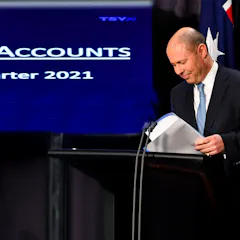
Things looked good, although we were still cautious at the end of March. Our national accounts are prepared with a lag.

Businesses won’t employ more people unless they are prepared to invest. Figures out on Thursday suggest they are.
Top contributors
-

Visiting Fellow, Crawford School of Public Policy, Australian National University
-
Professorial Fellow, University of Canberra
-
Senior lecturer, Canberra School of Government, University of Canberra
-
Scientia Professor of Economics, UNSW
-
Director, Centre of Policy Studies, Victoria University
-
Professor of Economics, University of Canberra
-
Lecturer in Economics, Monash University
-
Professor of Economics, The University of Melbourne
-
Associate Professor of Economics, University of Manitoba
-
Professor of Economics, The University of Melbourne
-
Senior Research Fellow (Macroeconomics), Melbourne Institute, The University of Melbourne
-
Visiting Fellow, Tax and Transfer Policy Institute, Crawford School of Public Policy, Australian National University
-
Emeritus Professor of Economics (Griffith University) and Teaching Associate (University of Queensland), Griffith University
-
Professor, Crawford School of Public Policy, Australian National University
-
Dean of Business School, University of Southern Queensland