

Weak Australian inflation and housing credit data mean the Reserve Bank is unlikely to move on interest rates.
Articles on ABS
Displaying 61 - 80 of 103 articles

The squeeze on wealth in the middle class by those at the top is a long established trend in international inequality data. But the ABS doesn’t provide this information.

The same-sex marriage postal survey gave Australians a chance to create data for social change. And that’s rare.

In the last few years, significant resources have been devoted to changing attitudes towards domestic violence – so why aren’t the numbers going down?

Business conditions aren’t translating to confidence, despite growing profits and jobs.

Politics Podcast: Mathias Cormann on the same-sex marriage postal survey
Since announcing that the ABS would be responsible for carrying out the same-sex marriage postal survey, Mathias Cormann has had no shortage of questions.
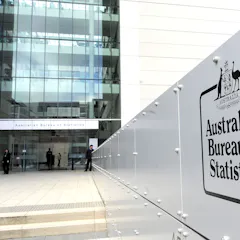
The key question in a legal challenge to the ‘postal plebiscite’ is whether information about Australians’ opinions on same-sex marriage constitutes ‘statistical information’.

The two major sources of data show conflicting trends on income inequality.

New ABS figures on film, TV and digital gaming show that subscription broadcasters and online content creators are booming. Yet local content quotas only apply to free-to-air broadcasters.

Total meat consumption per capita in Australia has been stable since the 1960s but the type of meat consumed has changed significantly. Chicken and pork both now far outstrip beef, mutton and lamb.
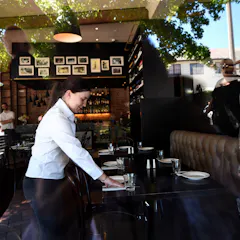
Q&A between the University of Melbourne’s Joshua Healy and The McKell Institute’s Edward Cavanough about methodologies for estimating the impact of the proposed Sunday penalty rate cuts.

ABS figures show that Australia’s appetite for faster broadband is growing apace.
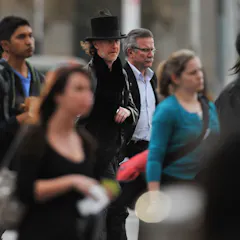
Melbourne is Australia’s most rapidly growing city, a title it wrested from Perth around 2013-14. Several of Australia’s big cities are growing well above the national average population growth rate.
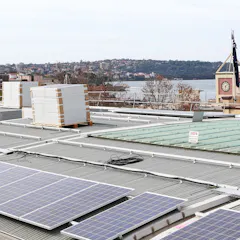
Estimates released by the Australian Bureau of Statistics suggest that the number of direct full-time equivalent jobs in renewable energy activities has continued to fall from its 2011-12 peak.

Women living in high financial stress and those who have a disability or chronic health condition are most at risk of economic abuse.

When we don’t factor in the environment in our economic decision making, we aren’t getting an acurate picture of what’s happening. Australia needs to adopt more environmental economics.
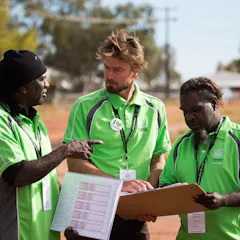
The ABS’ labour force survey is more than 50 years old. We need a new way of measuring employment for a new modes of work.
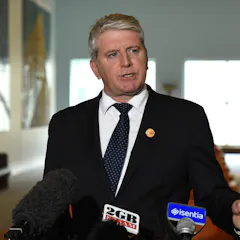
Shadow minister for employment Brendan O'Connor said the labour force participation rate was in “free fall” and that this showed “people have stopped looking for work”. Is that true?
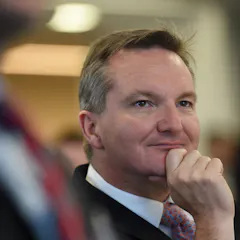
Shadow treasurer Chris Bowen said Australian wages growth is at record lows. Is that true?

If the response rate to the 2016 Census is lower than expected, it could compromise our ability to draw meaningful information from the data.
Top contributors
-

Visiting Fellow, Crawford School of Public Policy, Australian National University
-
Senior lecturer, Canberra School of Government, University of Canberra
-
Professorial Fellow, University of Canberra
-
Scientia Professor of Economics, UNSW
-
Professor of Economics, The University of Melbourne
-
Professorial Fellow and Co-Director, HILDA Survey, Melbourne Institute of Applied Economic and Social Research, The University of Melbourne
-
Professor of Economics and Public Policy, ANU College of Arts and Social Sciences, Australian National University
-
Visiting Senior Fellow in History, UNSW
-
Emeritus Professor, Department of Political Economy, University of Sydney
-
Professor of Economics, University of Canberra
-
Professor, Crawford School of Public Policy, Australian National University
-
Associate Professor, Bankwest Curtin Economics Centre, Curtin University
-
Adjunct professor, Flinders University
-
Associate Professor, POLIS@ANU Centre for Social Policy Research, Australian National University
-
Demographer, POLIS Centre for Social Policy Research, Australian National University