

For the Olympics to be viable in a warming world, new models of planning and hosting are necessary. Milano–Cortina 2026’s geographical dispersion could be a solution
Articles on 2026 Olympic Games
Displaying all articles
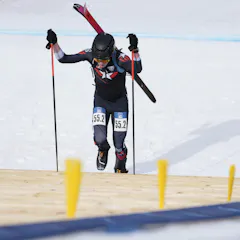
Skimo’s inclusion reflects changes in priorities surrounding sustainability, accessibility and the nature of athletic challenge.
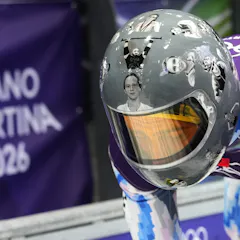
The IOC has failed, yet again, to be a global leader in the promotion of peace and human rights.
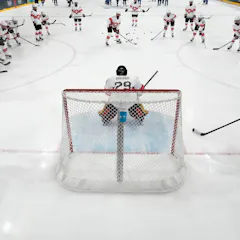
Norovirus outbreaks at events like the Olympics are more than logistical setbacks. They reveal how the virus’s biology and the realities of mass gatherings make containment difficult.
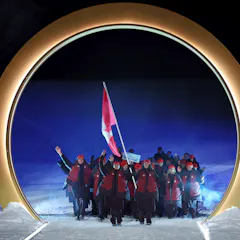
As the 2026 Winter Olympics approach, Indigenous athletes reveal why using the Olympics to perform Canadian sovereignty is never simple.
Athletes will use physics concepts such as friction and lift to their advantage on the world stage in the 2026 Olympic Games.

Some of the most decisive moments in sport hinge on how athletes perceive, process and act on information in a matter of milliseconds.

While all Olympic athletes are expected to play and perform under pressure, Canada’s historical successes at the Winter Games have created heightened expectations.
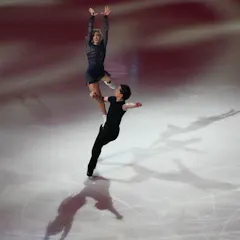
Watching, modeling and even playing winter sports help students internalize physics concepts, including acceleration, momentum and friction.
Sporting rivalries, national ambitions and global politics are set to intersect in ways rarely seen before in the upcoming Winter Olympics.
Top contributors
-

Assistant Professor, Sport Management, Brock University
-
Principal Lecturer of Physics and Astronomy, Clemson University
-
Professor of Social Welfare, Washington University in St. Louis
-
Professor of Engineering Practice, Purdue University
-
Senior Lecturer in the School of Psychology, University of Lincoln
-
Professor of Atmospheric Science, University of Utah
-
Assistant Professor, Critical Studies of Race & Indigeneity, University of Toronto; Brock University
-
Master's Student in Applied Health Sciences, Brock University
-
Assistant Professor of Microbiology and Immunology, Western University
-
Assistant Professor, School of Kinesiology, Western University
-
Director, International Centre for Olympic Studies, Western University
-
Project Manager, International Centre for Olympic Studies, Western University
-
PhD, Political Science, Western University
-
Associate Professor, Department of Sports Sciences, Malmö University
-
Postdoctoral Fellow, Faculty of Science, McMaster University