
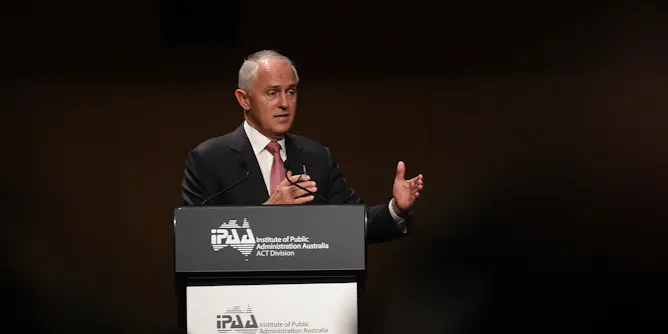
The Turnbull government sees the ‘City Deal’ as a way for ‘smart cities’ to drive innovation and growth. But what is the value proposition behind this UK concept and how might it work in Australia?
Articles on 2015 Intergenerational Report
Displaying 1 - 20 of 22 articles

The role of grandparents as the biggest providers of childcare is a huge blind spot in policy-making for workforce participation, childcare, early childhood education and retirement.

The 2015 Intergenerational Report is being used as a basis for important decisions about future policies. But it makes some misleading claims.
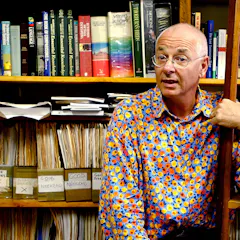
Dr Karl has been criticised for fronting adverts for a government report he turned out not to agree with. But despite his lapse in judgement, he hasn’t seriously breached his journalistic ethics.

Without affordable and secure housing that meets the needs of older Australians, the nation cannot hope to sustain the productivity that is needed to secure future prosperity.
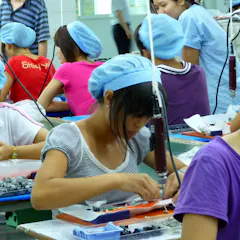
Once the world’s factory, China is shooting up the innovation rankings. There are important lessons there for Australia.

Culture is barely mentioned in the latest Intergenerational Report – as was the case with the three preceding it. But we need strong policies to support cultural heritage, and we need them urgently.
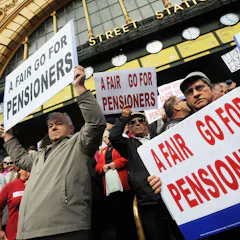
The policy solution to the ageing population laid out in the Intergenerational Report benefits the better-off in the future over the less well-off today.
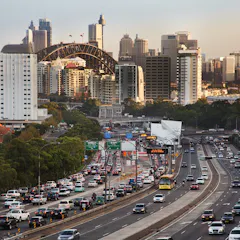
Linking population growth with productivity and labour participation is problematic, just one of many questionable assumptions made in the Intergenerational Report.
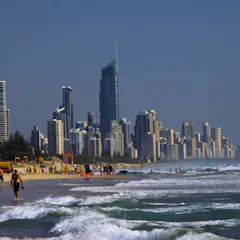
The 2015 Intergenerational Report underestimated the threat of climate change. An open letter from environmental and climate scientists.

If we accept that the rich should subsidise the poor, then Gen Y should be subsidising the baby boomers.
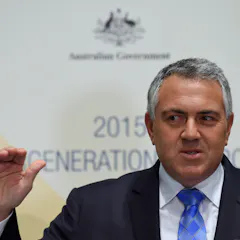
The Commonwealth appears to have its health outlays more or less under control. The problem for the states, however, is dire.

How appropriate were the fourth Intergenerational Report’s demographic assumptions? Should greater attention be paid to the potential consequences of population growth?
We have now had four IGRs and they’ve all said pretty much the same thing. Time to tackle the age-old problem.
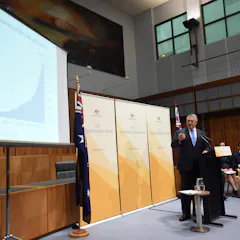
Forecasts released under the Charter of Budget Honesty are on the wrong time horizon and need greater transparency.
University of Canberra Vice-Chancellor Stephen Parker and Professorial Fellow Michelle Grattan discuss the week in politics.

Releasing Australia’s fourth Intergenerational Report, Joe Hockey described it as the “social compact between generations”, which would help “identify where the future opportunities will be” and “unlock…
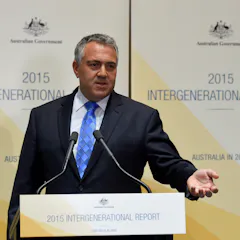
The Intergenerational Report may actually be underestimating the scale of the budgetary challenges ahead.

A discussion about what superannuation will look like in the future is essentially from the Intergenerational Report.
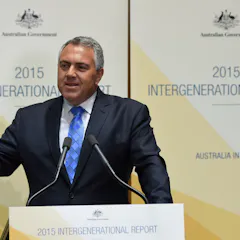
Climate change barely rates a mention in the Intergenerational Report, despite the huge potential costs. Peter Christoff says the only way to overcome this short-sightedness is to end the politics and make the review independent.
Top contributors
-

Adjunct Associate Professor of Sociology, Swinburne University of Technology
-
Professorial Fellow, University of Canberra
-
Professor of Economics, Monash University
-
Vice Chancellor's Fellow at Victoria University and Adjunct Professor of Economics, Victoria University
-
Honorary Professorial Fellow, Melbourne CSHE, The University of Melbourne
-
Professor, Crawford School of Public Policy, Australian National University
-
Professor, Australian National University
-
Associate Professor, gender, ageing and care, University of Sydney
-
Professor of Law, Discipline of Law, Justice and Society, Adelaide University
-
Chair in Governance, University of Southampton
-
Professorial Research Fellow, Deakin University
-
Associate professor in music studies, Griffith University
-
Senior Research Associate, International Centre for Future Health Systems, UNSW, UNSW
-
ARC Senior Research Fellow and Senior Lecturer in Sociology, The University of Melbourne
-
Adjunct Associate Professor, University of Tasmania