

The most recent data from Statistics Canada shows that, while gender inequalities in the workplace remain fairly large between women and men, there are some notable exceptions.
Articles on Workforce participation
Displaying 1 - 20 of 24 articles

The COVID-19 pandemic exacerbated social and economic inequality for women. Women have lost ground in the workforce and have been slower to return to work than men.

More than half of cancer survivors have to give up work, and employers are partly to blame.

Most women are not working full-time during most of their working lives, which holds them back from management positions and accentuates the pay gap with men, according to data released on Monday.

Up to 40% of all jobs now are tipped to be taken over by AI and robots in the next few decades. My grandmother, born on a farm almost a century ago, has some advice on how to cope.

The Coalition’s increase in child-care subsidies is a step in the right direction, though much more needs to be done.

Victoria’s closure of child-care services may be necessary, but it will put pressures on parents and likely drive down women’s workforce participation.

Western Sydney’s growth-driven boom had ended before COVID-19 hit. Some neighbourhood unemployment rates were 2-3 times the metropolitan average, with female workforce participation as low as 43%.

There is a strong economic case for a higher child-care subsidy to help rebuild the Australian economy after the coronavirus crisis.

With most new jobs going to women, their workforce participation rate is growing at nine times the rate for men. But, while participation is on track for parity in a decade, pay is another matter.

Workforce participation rates for older women have increased greatly, but most workplaces have yet to realise the benefits of helping them to manage the impacts of menopause.
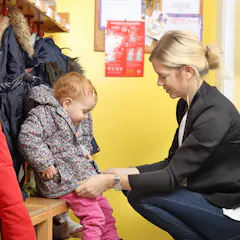
An 85-95% effective marginal tax rate means the second earner in a low-income family can increase from two days’ work a week to three, four or five days and be better off by only about $4,000 a year.

Discontinuing the demand driven system will mean less people are able to get a higher education, particularly groups of people who are already at a disadvantage.

Australians are living longer, and digital technologies could help them take control of retirement.
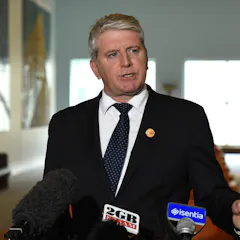
Shadow minister for employment Brendan O'Connor said the labour force participation rate was in “free fall” and that this showed “people have stopped looking for work”. Is that true?

Poor economic performance and high levels of skilled migration are standing in the way of young Australians entering the labour market for the first time.

The role of grandparents as the biggest providers of childcare is a huge blind spot in policy-making for workforce participation, childcare, early childhood education and retirement.

Divorce rates are on the decline in Australia, people are marrying and having children later in life, and more of us live alone. Our experts respond to the new report on Australia’s welfare.
Lost in the political debate about subsidising child care is the fact that universal free preschool care has been abandoned as a goal of good social policy.
Experts question where the jobs for older Australians will come from.
Top contributors
-

Chief executive officer, Grattan Institute
-
Democracy Deputy Program Director, Grattan Institute
-
Senior Associate, Disability Program, Grattan Institute
-
Honorary Enterprise Professor, School of Population and Global Health, and Department of General Practice and Primary Care, The University of Melbourne
-
Associate Professor, Bankwest Curtin Economics Centre, Curtin University
-
RBC Professor in Responsible Organizations and Full Professor, Concordia University
-
Professor of Ageing and Public Policy, Australian National University
-
Honorary Professor of Demography, Macquarie University
-
Emeritus Professor, School of Environment and Science, Griffith University
-
Visiting Professor of Tax Law, New York University, and Professor of Law, The University of Melbourne
-
Associate Professor in Health Economics, Curtin University
-
Chief Data Officer, University of the Sunshine Coast
-
Professor of Economics and Public Policy, ANU College of Arts and Social Sciences, Australian National University
-
ARC Senior Research Fellow and Senior Lecturer in Sociology, The University of Melbourne
-
Research Associate, School of Social Sciences, Monash University