

The dread that AI evokes seems a distraction from the more disquieting scrutiny of humanity’s own dark nature.
Articles on 2001: A Space Odyssey
Displaying all articles
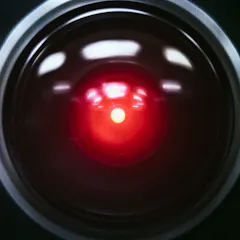
The prevailing human reaction to the idea of artificial intelligence has always been fear, revealed in the way film has portrayed our increasingly important relationship with AI over the years.

If you haven’t seen Stanley Kubrick’s 1968 sci-fi classic, then it’s likely you will have seen other films influenced by it.
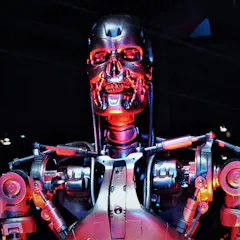
It is one thing to treat AI as a tool when it has no scope for emotion. It is quite another when AI has a full suite of emotional responses.
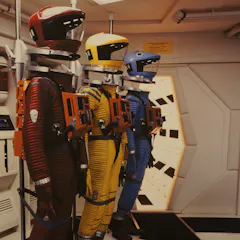
People are still wrestling with what artificial intelligence could and should do, half a century after the debut of the Kubrick-Clarke classic.

A 90-minute presentation in 1968 showed off the earliest desktop computer system. In the process it introduced the idea that technology could make individuals better – if government funded research.
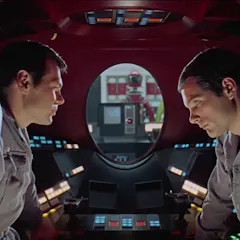
2001: A Space Odyssey’s sentient computer will only ever be a work of science fiction, says a cognitive neuroscientist.

Stephen Hawking raised the public profile of grand science, and speculated about the future of artificial intelligence, as well as contacting aliens. Does science mix easily with science fiction?
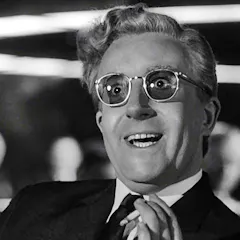
For a man who was “not really a Jew”, Kubrick’s feature films are woven with Jewish references.

The story of the Odyssey is a quintessential quest that relates to the passage through life and the importance of love, family and home. Odysseus’s adventures have influenced everyone from Batman to Bob Dylan.
Technology had enabled humans to explore the deep sea, the Earth’s poles, and outer space. But we shouldn’t forget historical lessons about frontiers in the process of traversing them.
Top contributors
-

Professor of Film Studies, Bangor University
-
Professor of History, University of Washington
-
Associate Professor in Archaeology and Space Studies, Flinders University
-
Emeritus Professor of Classics, La Trobe University
-
William H. Neukom 1964 Distinguished Professor of Computational Science, Associate Dean for the Sciences, Dartmouth College, Dartmouth College
-
Adjunct Research Fellow of The Cairns Institute, James Cook University
-
Professor of Cognitive Neuroscience, Bangor University
-
Assistant Professor, School of English, Dublin City University
-
Professor, Philosophy of Science, The University of Melbourne
-
Professor of English and Literary Arts, University of Denver