
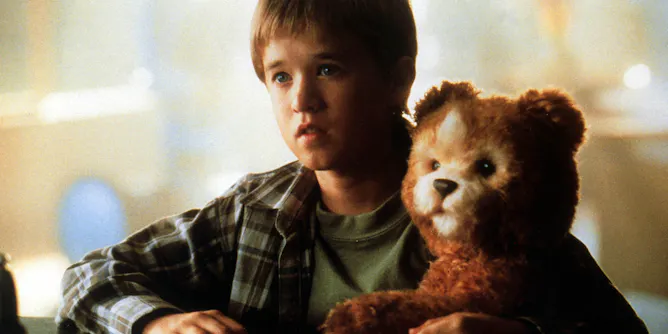
Long before ChatGPT, Spielberg’s A.I. explored love, loneliness and what it really means to be human.
Articles on Stanley Kubrick
Displaying all articles
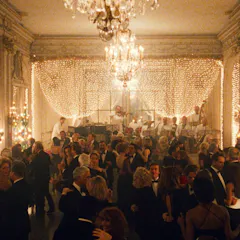
Kubrick’s final film isn’t just set at Christmas. It’s a subversive critique of class, desire and the fantasies we buy into during the festive season.
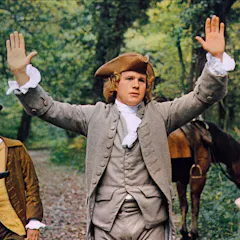
Barry Lyndon was a box office disappointment on its release in 1975. But it stands as one of Kubrick’s most visually stunning and emotionally rich films.
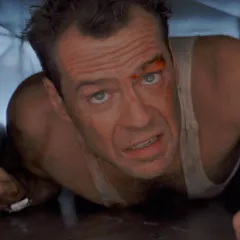
What about those who are sick of all the tinsel and baubles? They need the Christmas-adjacent film: films set during Christmas, that aren’t really about Christmas.
There are a couple of Trump jokes and a reference to the current Israel-Gaza conflict. But the production fails to commit fully to any incisive or urgent critique of the current global crises.

A unique and versatile actress, Duvall’s career took off in the 1970s thanks to her raw, off-beat and sensitive portrayals of unconventional women.
Eyes Wide shut was released shortly after the death of director Stanley Kubrick in 1999.
From 2001: A Space Odyssey to Eyes Wide Shut, the spectre of Kafka hangs over the work of Stanley Kubrick.
25 years after the death of the legendary director, a new book offers fresh insights into Stanley Kubrick’s personal and professional life.

If you haven’t seen Stanley Kubrick’s 1968 sci-fi classic, then it’s likely you will have seen other films influenced by it.
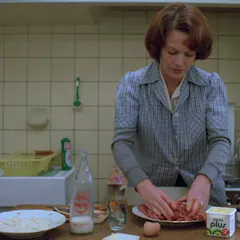
Every decade, the British Film Institute releases their 100 greatest films of all time. Here’s who made the cut.

It’s no surprise the unexplained structures have the internet buzzing. But they haven’t entered the ranks of other great conspiracy material — and history helps explain why they probably won’t.
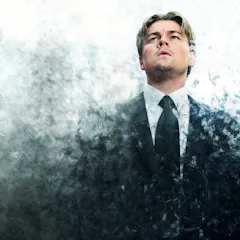
In the lead-up to Nolan’s new film Tenet, Inception is being re-released in cinemas. Even after ten years, the movie still holds surprises..

The Trouble With Being Born has been withdrawn from Melbourne International Film Festival – but individual viewers should be able to decide what films they want to see.
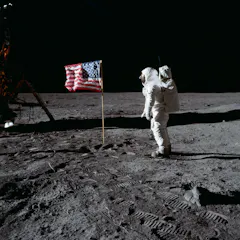
Conspiracy theorists claim NASA used the Apollo special camera to stage the moon landings in a studio and then slowed down the footage to make it look like there was less gravity.
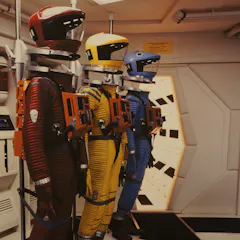
People are still wrestling with what artificial intelligence could and should do, half a century after the debut of the Kubrick-Clarke classic.
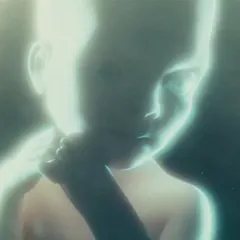
Kubrick’s 2001: A Space Odyssey broke all the rules of science fiction cinema, and allowed the audience to experience a uniquely philosophical film about the evolution of human consciousness.
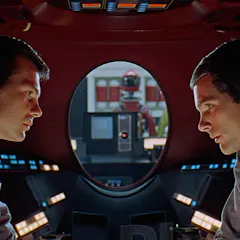
Since Stanley Kubrick’s masterpiece debuted in 1968, fictional stories of faulty or malevolent AI are legion. What have recent advances taught us and what might the future hold?
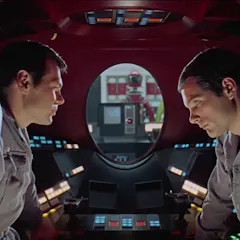
2001: A Space Odyssey’s sentient computer will only ever be a work of science fiction, says a cognitive neuroscientist.
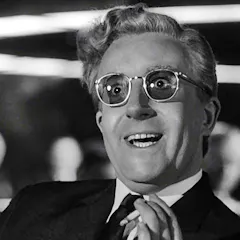
For a man who was “not really a Jew”, Kubrick’s feature films are woven with Jewish references.
Top contributors
-

Professor of Film Studies, Bangor University
-
William H. Neukom 1964 Distinguished Professor of Computational Science, Associate Dean for the Sciences, Dartmouth College, Dartmouth College
-
Directeur du Centre de recherche sur les risques et les crises et chercheur au sein du Collège des Sciences Navales, Mines Paris - PSL
-
Head of Post-Production and Programme Leader for MA Film and Television Production, University of Hertfordshire
-
Senior Lecturer in Philosophy and Education; Curriculum Director, UQ Critical Thinking Project, The University of Queensland
-
Associate Professor of French Studies, Adelaide University
-
Associate Professor, Film Studies, University of Sydney
-
Professor of Cognitive Neuroscience, Bangor University
-
Assistant Professor, Bond University
-
Senior Lecturer and Course leader of the Humanities Foundation Degree, Kingston University
-
Lecturer in Communications and Media, University of Notre Dame Australia
-
Senior Lecturer, Media Studies and Production, University of Southern Queensland