
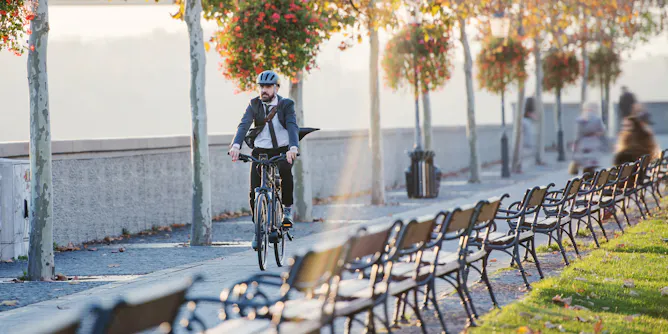
A big reason the idea is gaining momentum globally is that the benefits for the health of individuals, communities and the environment are clear and almost immediate.
Articles on 20-minute city
Displaying all articles

Ad hoc, lot-by-lot efforts to house more people in our ageing suburbs are failing to increase liveability and sustainability. Our cities need strategic, precinct-scale regeneration.
The differences in sentiment in areas of high and low neighbourhood amenity have been clear under Melbourne’s tough COVID restrictions. It’s further evidence of the impacts of inequity on well-being.
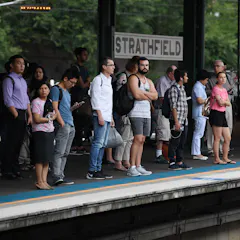
The change in our behaviour in response to COVID-19 has created an opportunity to build on this moment and transform our local neighbourhoods into vibrant mixed-use centres of activity.
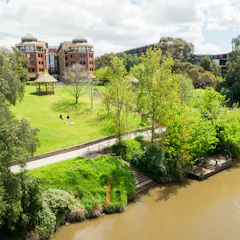
Only the inner suburbs of Melbourne and other capital cities meet the 20-minute neighbourhood test. But we could transform the other suburbs for much less than the cost of current transport projects.

While many talk about 30-minute cities, some aim for residents to be able to get to most services within 20 minutes. But cities like Melbourne have an awful lot of work to do to achieve their goal.
Top contributors
-

Housing Policy Researcher, Expert Advisor, Housing Assessment Resource Tools and Adjunct Professor, L’Université d’Ottawa/University of Ottawa
-
Postdoctoral researcher, Monash University
-
Senior Lecturer, Department of Strategic Sustainable Development, Blekinge Institute of Technology
-
Associate Professor of Urban Planning, Monash University
-
Professor and Research Director, Data Futures Institute, Monash University
-
Adjunct Professor, Deakin University; Professorial Fellow, Faculty of Architecture, Building and Planning, The University of Melbourne
-
Research Fellow, ARC Centre of Excellence for the Digital Child, University of Wollongong
-
Professor of Sustainability, Curtin University
-
Practitioner in Residence, The Henry Halloran Trust, University of Sydney
-
Senior Research Fellow, Centre for Urban Transitions, Swinburne University of Technology
-
Associate Professor, School of Nursing, University of Wollongong
-
Emeritus Professor in Sustainable Urbanism, Swinburne University of Technology
-
Adjunct Professor, Institute of Transport and Logistics Studies, University of Sydney Business School, University of Sydney
-
Professor and Director of Urban Planning & Design, Monash University
-
Professor and Senior Data Scientist, Data Futures Institute, Monash University