

Fiona McFarlane’s ‘masterful, complicated’ novel explores the exploitative nature of storytelling. She asks us to consider the truth of the tales we tell about ourselves and our identities.
Articles on 19th century
Displaying 21 - 40 of 55 articles
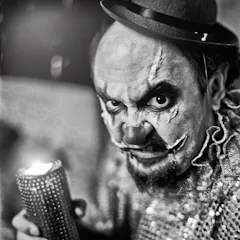
Today’s creepy clowns are not a divergence from tradition, but a return to it.

The women’s rights movement in the 1800s did not openly support legalizing abortion or birth control. But the reasons why are complex.
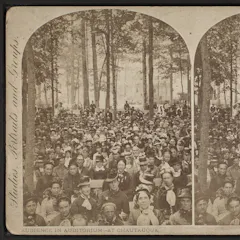
The Chautauqua movement symbolized progressive reformers’ hopes that public learning could create a healthy democracy.
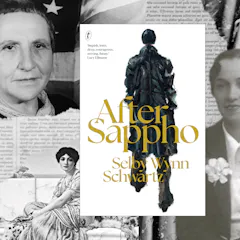
Selby Wynn Schwartz’s inventive, poetic reimagining of lives like those of Virginia Woolf and Sarah Bernhardt – against a backdrop of Sappho – has just been longlisted for the Booker Prize.
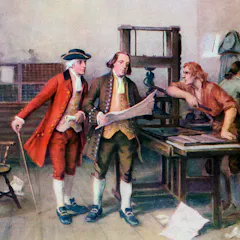
A scholar of 18th-century America and the founders analyzes the Supreme Court opinion overturning the constitutional right to abortion, which he says relies on an incomplete version of US history.

Nineteenth-century European settlement is often depicted as a triumphal ‘taming of nature’. But does that collective memory impede more honest appraisals of the environmental risks we face today?

In this episode of The Conversation Weekly podcast, we also explore the reasons for India’s neutrality over the Ukraine war.
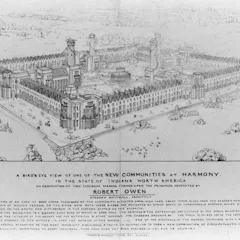
The wealthy textile manufacturer harbored ambitions that went far beyond the well-being of his own workforce and depleted his fortune.

Chinese-Canadian journalist Edith Eaton documented anti-Asian racism in Canada in the late 19th and early 20th century. Over 100 years later, not much has changed.

Penny dreadfuls told real stories of murder and mayhem to 19th-century audiences seeking escape from city life. True crime podcasts have a lot in common with them.

Only one American president – Grover Cleveland – has lost reelection and then won back his office.
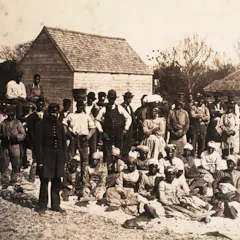
The health care inequities suffered by Black Americans today began centuries ago.
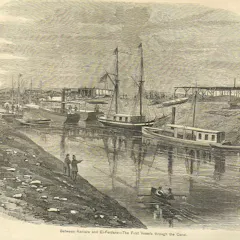
The science of politics became popular across Europe, alongside the rise of capitalism and empire in the 19th century.
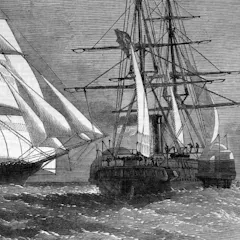
Britain’s Royal Navy embarked on a huge anti-slavery campaign, but those ‘rescued’ didn’t always feel the benefits.

After several decades in which many housewives turned their backs on slave sugar, it suddenly made a comeback.
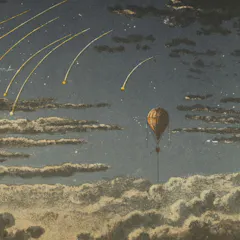
Not so long ago, people had no idea what would happen to them – and what they would see – once they ascended into the clouds.
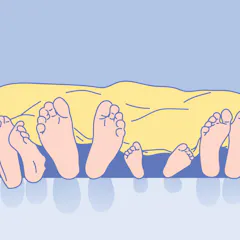
Today’s beds are thought of as bastions of privacy. But not long ago, they were the perches from which kings ruled and places where travelers hunkered down with complete strangers.
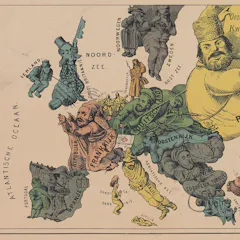
The battle between nationalism and a wider European identity in the 19th century has influenced philosophy to this day.
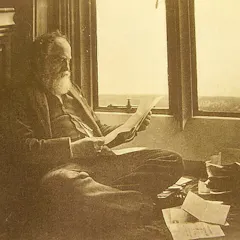
W.T. Stead’s 1885 account of the process by which wealthy Londoners procured teenagers for sex became a global news story, but the police refused to investigate.
Top contributors
-

Professor of English, Macalester College
-
Visiting Assistant Professor of History, Miami University
-
Maitre de conferences en histoire de l'Europe moderne, Université de York, Fellow 2018 - IEA de Paris, Institut d'études avancées de Paris (IEA) – RFIEA
-
Associate Professor of History, Michigan State University
-
Doctoral Researcher in Politics, University of Surrey
-
Associate Professor of Communication, Texas A&M University
-
Professor of History and Chair of the Program in History of Science and Medicine, Yale University
-
Professor of Political History, University of Nottingham
-
Professor of American History, Università di Torino
-
Research Associate on the Davy Notebooks Project, Lancaster University
-
Associate professor, Indiana University
-
Research Fellow, School of Advanced Study, University of London
-
Frank C. Erwin, Jr. Centennial Professor in Drama, The University of Texas at Austin
-
Professor of English and former Academic Director of the Public Humanities Hub, University of British Columbia
-
Chancellor and Professor of English, Indiana University Kokomo