
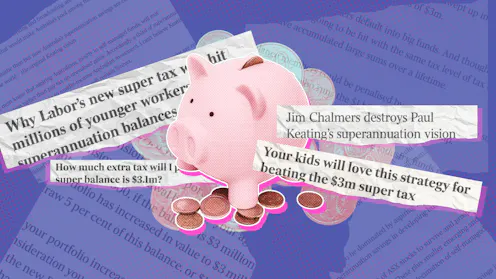
Rather than being the biggest losers from super tax rates not being indexed to inflation, younger Australians are the biggest beneficiaries.
- Program Director, Housing and Economic Security, Grattan Institute

Councils have made it hard to build more townhouses and apartments in the suburbs. That’s why these planning reforms are needed.

Wealth inequality in Australia has grown over the past quarter century. Surging house prices that have outpaced incomes are to blame.

New research shows how much we’d need to increase Commonwealth Rent Assistance to bring retirees who rent out of poverty.

Research suggests having an income that is guaranteed to last until death can reduce stress and boost retirees’ spending.

Australians have been told for decades that they’re not saving enough for retirement. But the vast majority of retirees today and in future are likely to be financially comfortable.

The system isn’t working well – and among the biggest losers are state governments themselves.

Simple changes to Australia’s skilled migration points test could boost visa-holders’ earnings, government budgets and Australia’s productivity.

Governments need to follow through on what we know will work, not give in to the housing policy din.

Neither investors nor super funds are prepared to wear the losses needed to put low-income Australians into housing. The government should double the size of its Housing Australia Future Fund.
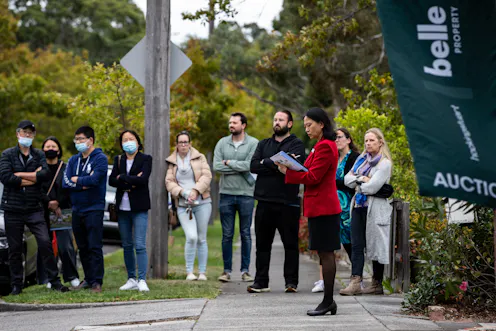
A new government housing assistance scheme risks becoming a lottery because many more people are eligible than the 10,000 places available each year.

Genuine reform should include tackling tax concessions on superannuation, capital gains and trusts and redesigning the GST.

A large majority of Australian taxpayers will benefit from the revised tax package, despite the impact of bracket creep over the next decade. But long term, these tax cuts come at a high price.

Australia needs more housing and is getting more migrants. But we need more of those migrants to be able to help build those houses.

The number of unemployed international graduates in Australia is set to rise if the temporary graduate visa program isn’t overhauled.
In agreeing to pass the Housing Australia Future Fund bill the Greens have got a lot of what they wanted. Their idea of funding building and Labor’s idea of subsidising rent aren’t that far apart.

Grattan Institute calculations suggest that the 200,000 homes the state and territory leaders have agreed to build over five years will result in billions in savings for renters.

Last year, the workplace cop fined employers just $4 million for underpaying workers. The Tax Office collected $3 billion in penalties from people who didn’t pay their tax.

What will work for commercial and industrial properties ought to work for homes.

Migrants in Australia less than five years are twice as likely to be underpaid as other employees.

Billions of dollars in super tax breaks simply end up boosting the inheritances of well-off children. Our new report shows how we can save money, while making super fairer for all Australians.

Australia can’t run an uncapped temporary migration program with a capped permanent program and offer all temporary migrants a road to permanent residency.

Neither NSW Labor nor the NSW Coalition is actually proposing to axe stamp duty. Neither are any of the other states or territories, apart from the ACT.

High home prices are boosting inheritances, meaning positions in society increasingly owe more to which family you’re born into than to talent or hard work. But there are solutions.

One challenge is the minimum wage for temporary skilled migrants; another is the pathway from temporary to permanent residency.
Contact Brendan for
- General
- Media request
- Speaking request
- Consulting / Advising
- Research collaboration
- Research supervision
