
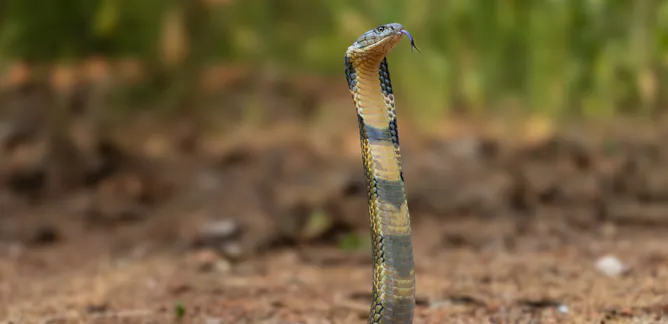
Horses have been used to make antivenom for more than a century. Could our new research offer a better way?
Technical University of Denmark

For almost two centuries DTU, Technical University of Denmark, has been dedicated to fulfilling the vision of H.C. Ørsted – the father of electromagnetism – who founded the university in 1829 to develop and create value using the natural sciences and the technical sciences to benefit society.
Today, DTU is ranked as one of the foremost technical universities in Europe, continues to set new records in the number of publications, and persistently increase and develop our partnerships with industry, and assignments accomplished by DTU’s public sector consultancy.
The number of student enrolment is higher than ever and, for the eleventy consecutive year, we have received a record-breaking number of applications from students who want to pursue a degree from a technical elite university with a global outlook.
The international dimension is of vital importance to DTU. In 2011, we welcomed 336 international students into our MSc programmes, half of our PhD students are recruited from abroad, and more than one third of our scientific staff are highly qualified researchers of international backgrounds. In addition, the extent and intensity of our collaborations with other leading technical universities around the world continue to grow.
DTU has international educational exchange programmes with over 200 universities around the globe, and enjoys close research collaborations with its partners in addition to building research and educational programmes in Nordic Five Tech, the Euro Tech Universities - Excellence in Science and Technology, as well as with Rensselaer in the U.S., Nanyang in Singapore, and KAIST in South Korea.
Links
Articles
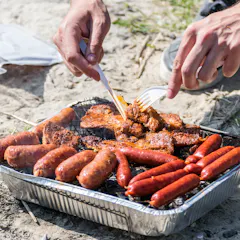
Disposable BBQs are a major, yet preventable, fire risk. Other picnics are a better bet.

In sub-Saharan Africa, over 300,000 people are envenomed each year, leading to over 7,000 deaths and almost twice as many amputations.

Burnout isn’t a personal failure. It’s a design flaw. But there is another way.
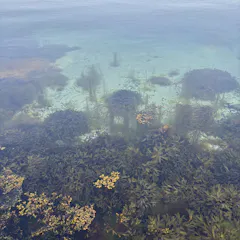
Restoring boulder reefs provides vital habitat for marine animals and helps reduce coastal erosion in the face of climate change.
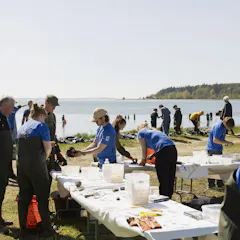
People counted and collected invasive Pacific oysters found on the seabed and then went on to cook them.

Nearly a third of the cod we tested had a different origin than the one reported.
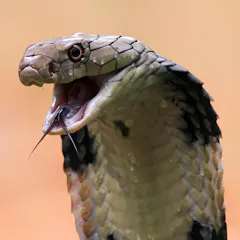
Snake venom experts Stuart Ainsworth and Christoffer Sørensen talk to The Conversation Weekly podcast about the search for an antivenom that could neutralise toxins from multiple different snakes.
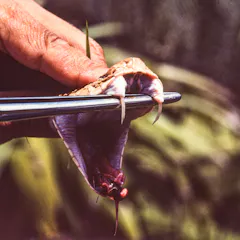
By reporting this new way that future antivenoms can fail, the research has highlighted a problem with current antivenom testing recommendations.

Sols en vinyle, jouets en plastique, meubles… De nombreux objets de notre environnement contiennent des produits chimiques volatiles ou semi-volatiles qui peuvent être inhalés ou passer par notre peau.

These pollutants can originate from many common household products – including vinyl flooring, plastic toys, cleaning products and furniture.
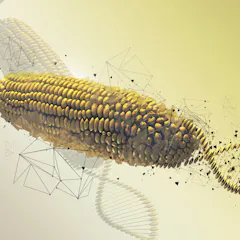
Genetically modified crops are increasing yield and food security in developed countries, but in Africa, a lack of adoption is limiting success.

The lack of a clear formula to distinguish between donors’ adaptation and mitigation funds is hurting Africa’s climate response.
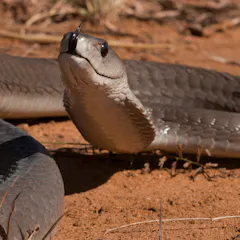
The World Health Organisation has a plan to halve deaths and disability from snakebites
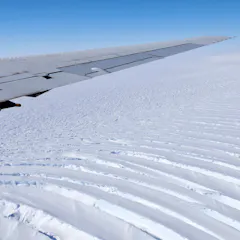
Scientists have found that the bedrock underneath the West Antarctica Ice Sheet has the potential to rebound in response to melting faster than thought, which could act to stabilize the ice.
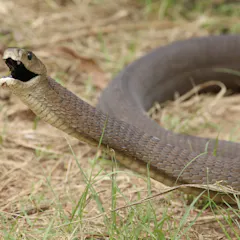
Coordinated international efforts may be key to improving the life expectancy and health of many snakebite victims.
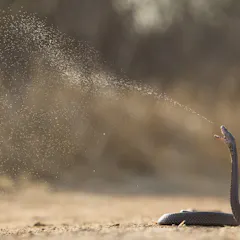
The best cure against a snakebite is to avoid being bitten at all. Here is what you need to know about snakebites, antivenom, and what you need to do if bitten.
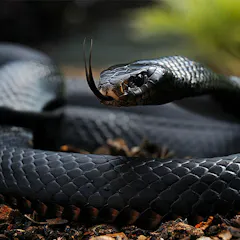
One way to tackle the snakebite antivenom crisis may be through biotechnological innovation to make antivenoms more cost-effective, easier to produce, and more efficacious against snakebites.
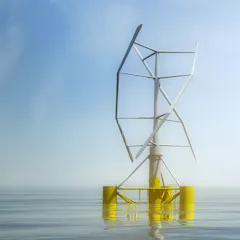
As wind power companies venture into ever-deeper waters, the traditional windmill-style turbine may not be the most suitable solution. It’s time to look at alternatives. Wind turbines traditionally had…
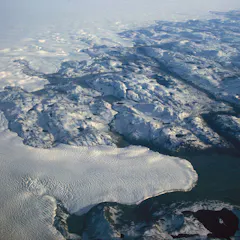
Warming in the Arctic has now reached the northernmost sections of the Greenland ice sheet. After a long period of stability (more than 25 years), we have found in a new study of the region that the northeast…
Authors
-

Visiting Professor of Sustainability Science, Technical University of Denmark
-
Professor & Head of Section at the Department of Biotechnology and Biomedicine, Technical University of Denmark
-
Senior Scientist in the Department of Biotechnology and Biomedicine, Technical University of Denmark
-
Senior Researcher, Coastal Ecology, Technical University of Denmark
-
Professor in Technology Implementation, Technical University of Denmark
-
Postdoctoral researcher, Department of Biotechnology and Biomedicine, Center for Antibody Technologies, Technical University of Denmark
-
Associate Professor, Department of Environmental and Resource Engineering Indoor Environment, Technical University of Denmark
-
Senior Researcher, National Institute of Aquatic Resources, Technical University of Denmark
-
PhD Candidate, Department of Biotechnology and Biomedicine, Technical University of Denmark
-
Pew Marine Fellow; Marine Policy Advisor, Oceana Europe & Research Scientist, Technical University of Denmark
-
Postdoctoral Research Associate, DTU Space, Technical University of Denmark; King's College London
-
Assistant Professor, Department of Biotechnology and Biomedicine, Technical University of Denmark
-
Senior Researcher in Coastal Ecology, Technical University of Denmark
-
Post Doctoral Researcher, Technical University of Denmark
-
Postdoctoral researcher in geodynamics, Technical University of Denmark