

Paris’ International Space Summit was an opportunity to understand what and who Europe needs to reliably sustain its launch ambitions and become a world-class leader in Space.
European Academy of Management (EURAM)

The European Academy of Management is a learned society founded in 2001. It aims at advancing the academic discipline of management in Europe. With members from 60 countries in Europe and beyond, EURAM has a high degree of diversity and provides its members with opportunities to enrich debates over a variety of research management themes and traditions.
The European Academy of Management (EURAM) is a professional community of engaged management scholars and reflective practitioners - open, inclusive, international and cross-cultural. EURAM places a strong emphasis on multidisciplinary theoretical perspectives and methodological pluralism, and promotes critical examinations of the historical and philosophical roots of management theory and praxis. EURAM aims at enhancing the quality of research, improving its relevance for responsible and effective practice and contribute to the social and political discourse on management.
EURAM’s goals are:
*To facilitate the continued evolution of an open, inclusive international and cross-cultural EURAM community of engaged scholars;
*To support scholars in designing, producing and disseminating higher quality and impactful research at each stage of their career;
*To influence the development of management education;
*To provide platforms and facilitate networks for the dialogue between scholars, reflective practitioners and policy makers.
With over 2.000 members, EURAM has quickly developed a community of engaged management scholars in Europe.
Links
Articles
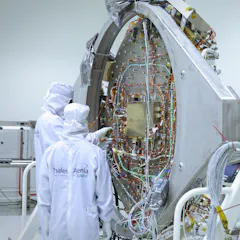
Europe’s leading aerospace industry players have no choice but to work hand in hand to further its space missions and develop critical infrastructure for security and climate protection.

Bringing employees back to work in person and smart office-based people management drives companies forward and is conducive to engineering change. Here’s how.

Learning communities are supporting circularity across Europe by rethinking processes for recycling waste or reconditioning clothing and vehicles, and navigating policy U-turns.
Compassion is an underrated leadership strength among both men and women, and research shows it is an asset that is key to efficient team management, particularly in challenging times.

Change Management expert Dr Dino Dogan offers insights on an early warning signs initiative for detecting weak signals and avoidable pitfalls that lead to businesses going bust.

A group of researchers examine the communication barriers impacting social science professionals’ credibility and how people make sense of their expertise.

A group of researchers explored governance models in ten countries to see whether they help plan and deliver large-scale infrastructure works more responsibly and efficiently.

Understanding the coopetition mechanics behind Europe’s defence dilemma is vital and key for making much-needed headway.
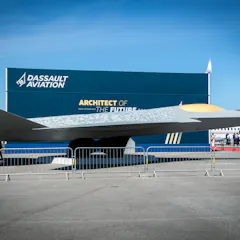
The collapse of the Future Combat Air System programme led by France and Germany highlights how diverging national interests and coordination difficulties are challenging European armament cooperation.

Make way for the Chief Purpose Officer - a corporate compass for keeping firms’ strategy in line with their purpose statements, but can they genuinely change organizations for the better?

La guerre des étoiles change de dimension. Les acteurs industriels du secteur spatial doivent dorénavant travailler ensemble pour créer de nouveaux projets.

Companies and managers aiming for organizational excellence should “wise up”. Here’s how.

Companies have a lot to gain from implementing external corporate innovation programs such as sending their employees on work placements in open labs.

Silver economy: an in-home help service provider in the Netherlands is revolutionising care delivery for the elderly with a streamlined, patient-centred approach that trusts community nurses and caregivers.

Research into these entrepreneurs may carry lessons for societies and governments around the world.

Neurodivergent people may struggle with casual conversations and networking. Efforts to ameliorate workplace settings and routines only go so far.

Airbus, Saab, Dassault and others are part of an initiative involving ‘coopetition’, a practice that can help firms tackle complex challenges like sustainability.

The integration of spirituality into business has moved toward the mainstream. But is it a way for companies to gloss over systemic problems in the workplace?

The Renault-Nissan alliance, forged in 1999, defied norms of strategic partnerships, enduring a 2018 crisis to showcase lessons in collaboration and resilience. Now Nissan and Honda are in talks to merge.
Authors
-

Associate Professor of Management , European Academy of Management (EURAM); Al Akhawayn University
-
Professeur des Universités, Université de Montpellier; European Academy of Management (EURAM)
-
Enseignante-chercheuse en Management Stratégique, Montpellier Business School, Montpellier Business School; European Academy of Management (EURAM)
-
Assistant professor, European Academy of Management (EURAM); TBS Education
-
Professor, strategic management and innovation management, co-director of the new PICchair at the Paris School of Business - VP EURAM Dialogue with Practitioners, European Academy of Management (EURAM); PSB Paris School of Business
-
Strategic Management expert and former Dean of Luxembourg School of Business, European Academy of Management (EURAM); Luxembourg School of Business
-
Researcher/External Lecturer, IEDC-Bled School of Management; European Academy of Management (EURAM)
-
Professeure agrégée, Gestion de projets, HEC Montréal; European Academy of Management (EURAM)
-
Professor of Strategy & Entrepreneurship (University of Southampton) and Vice-President for Talent Development (EURAM), European Academy of Management (EURAM)
-
Assistant Professor, ESCP Business School; European Academy of Management (EURAM)
-
Professeur agrégé en gestion de projet, European Academy of Management (EURAM); Université du Québec à Rimouski (UQAR)
-
Professeur Stratégie & Management de l'Innovation, TBS Education; European Academy of Management (EURAM)
-
Lecturer at the University of Essex and Assistant Professor at the VU Amsterdam, European Academy of Management (EURAM)
-
Enseignant chercheur en management de l'innovation et de la créativité, PSB Paris School of Business; European Academy of Management (EURAM)
-
Professor, European Academy of Management (EURAM); Norwegian University of Science and Technology