
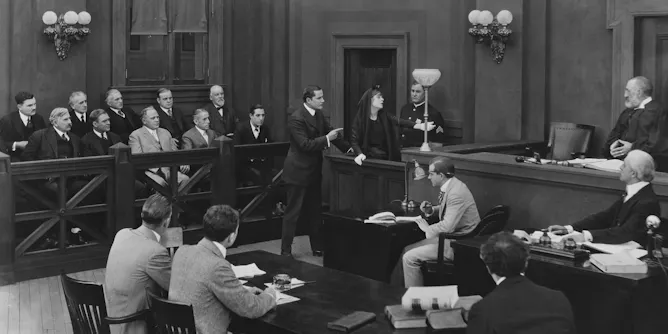
Not all false beliefs arise from malicious misinformation. Some legal precedents rest on the status of everyday ‘common knowledge’, since shown to be false, but embedded in our law nonetheless.
Articles on Post-Truth Initiative
Displaying all articles

The best defence against post-truth politics is not ‘the truth’. Democracy should resist the political tyranny of claims to some immutable truth as a basis for governing the lives of others.

As Orwell knew only too well, if the concept of objective truth is moved into the dustbin of history there can be no lies. And if there are no lies there can be no justice, no rights and no wrongs.
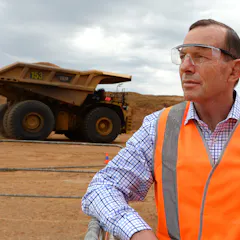
There are telltale signs when regard for the facts of the matter is sacrificed to ‘truthiness’ to win a political debate.

It would take a lifestyle upheaval to drop most Australians’ household emissions to a sustainable level. Even many of us who urge equitable action on climate change act as if this doesn’t apply to us.

While climate denialism impedes policymaking in both the US and Australia, there are key differences in their political and public cultures.
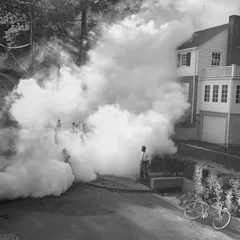
The undermining of environmental science, and the creation of lies and bribes to distort public policymaking, is as old as industries that know their products do harm, but lie to keep them in use.

The global food system has been operating in post-truth mode for decades.
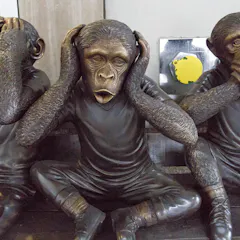
Pundits have been keen to link post-truth to post-modernists, post-positivists or any other ‘postie’. They should turn their energy to forming a real popular front against Trump’s faux populism.
Beneath simple labels like post-truth, alternative facts and fake news is a complex set of issues. Any debate about the problems needs to start from some common points of reference.
Top contributors
-

Director Sydney Environment Institute and Professor of Environmental Politics, University of Sydney
-
Professor of Politics, University of Sydney
-
Senior Lecturer in Anthropology, University of Sydney
-
Assistant researcher, University of Sydney
-
Professor and Chair of Linguistics, University of Sydney
-
Michael Hintze Chair of International Security, University of Sydney
-
Senior Lecturer in Communication and Media, University of Sydney
-
Senior Research Fellow in Integrated Sustainability Analysis, School of Physics, Faculty of Science, University of Sydney
-
Senior Lecturer, Department of Media and Communications, Faculty of Arts and Social Sciences, University of Sydney
-
Professor of International Relations, University of Sydney
-
Director of the Research Hub for Language in Forensic Evidence, The University of Melbourne