

The bigger movement in the data over the past quarter-century is at the other end of the age spectrum: A reliable base of older Conservative Party voters is largely gone.
Articles on Young voters
Displaying 1 - 20 of 59 articles

It’s not that youth don’t care enough to vote. It’s that they are turning away from conventional, formal participation in favour of alternative ways of sharing and expressing their views.

Informal voting at federal elections has more than doubled since 1987. New research shows why some young people spoil their ballots.

Popular Chinese apps WeChat and RedNote are a tool for political campaigning – but such content is banned. Here’s how parties work around it, including by avoiding proper disclosures.

Young voters will decide who makes up Australia’s next government. Here’s how they might vote.
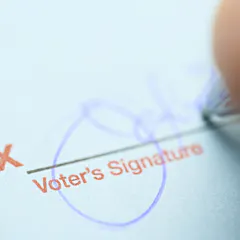
Ballot curing aims to ensure that every valid vote is counted, even those with messy signatures, misspelled names or missing IDs.

TikTok was once the realm of teenagers dancing and cute animal clips. But as the platform has grown in popularity, so too has it’s usefulness as a political too, but there are pitfalls to avoid.

The 2024 election has upended traditional voting blocs, with young people trending rightward and seniors embracing Harris. New research proposes an intriguing theory: It may come down to happiness.
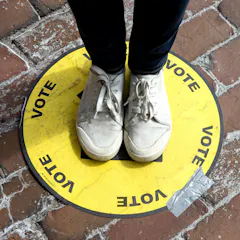
In 1970, Canadian MPs used the act of lowering the federal voting age as a tool to prevent further youth protests and unrest. No such catalyst exists today amid calls to lower the voting age to 16.

Voter turnout among young people is historically low in the United States. And there is indication that a relatively small percentage of young voters could cast their ballot in November.

While Kamala Harris’s ‘brat summer’ and its TikTok enthusiasts seemingly took flight overnight, the real question is whether young voters show up to cast their ballots in November.
If political parties respect voters and focus on policy rather than polls and partisan hackery, Canadians might have something substantive to choose from when the next federal election is called.
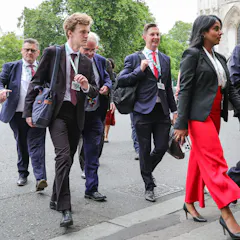
Young representatives pay special attention to reflecting the concerns of young people.

In democracies around the world, voters aged 18-34 are abandoning the incumbent in favour of opposition parties, often choosing populist-style politicians. Why? Blame the broken social contract.

Taking your friends to the polling station on election day can make all the difference.

The votes-at-16 story reveals a lot about how people actually consume politics.
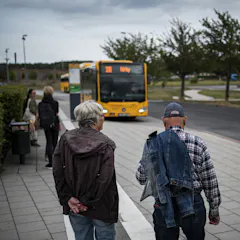
Researchers find a relationship between population declines in rural areas and support for populist radical right parties in 28 EU countries.
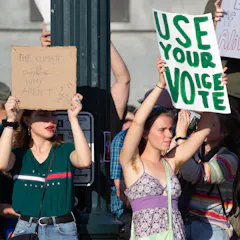
Young voters have not always swung in different ways to older generations, as a look at historical data shows.
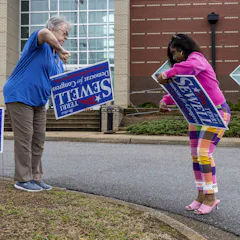
It’s not just polarization that’s driving voters’ malaise − it’s something else, which carries a stark warning for the health of American democracy.
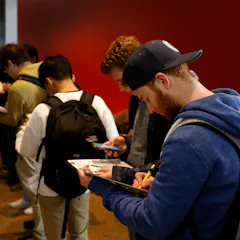
While young voters say they would be more likely to vote for Biden after they learn more about the economy and other topics, they did not appear affected by Donald Trump’s norm-defying behavior.
Top contributors
-

Senior lecturer, Manchester Metropolitan University
-
Director, Center for Information and Research on Civic Learning and Engagement in the Jonathan M. Tisch College of Civic Life, Tufts University
-
Professor of Politics, Adelaide University
-
Associate Professor of Public Policy, Politics, and Education, University of Virginia
-
Assistant Professor of American Politics, Mississippi State University
-
Lecturer in Government, Jeff Bleich Centre for Democracy and Disruptive Technologies, Flinders University
-
PhD Candidate in Youth Political Engagement, Nottingham Trent University
-
Professor of Social Research, Nottingham Trent University
-
Professor of Higher Education, The Ohio State University
-
Professor of Politics, Royal Holloway, University of London
-
Associate Professor in Education, The University of Queensland
-
Research Fellow (Henry Jackson Society - Centre on Radicalisation & Terrorism), Royal Holloway, University of London
-
Professor of EU law and employment law, University of Cambridge
-
Associate Professor and Keidanren Chair in Japanese Research, University of British Columbia
-
Senior Lecturer, School of Government and International Relations, Griffith University