
AI has broken the economic bargain behind the web, and everybody is losing.
Articles on World wide web
Displaying 1 - 20 of 37 articles

News outlets want readers – and big tech – to pay for their content. But blocking the Internet Archive will leave major holes in the public record of the web.

The 25th anniversary of Wikipedia’s first public entry comes amid the rapid growth of Elon Musk’s AI-powered alternative, Grokipedia.

Neo-Nazis and other far-right extremists were early adopters of bulletin board systems, pioneering online recruiting and radicalization techniques long before the social media revolution.

In his new book, This is for Everyone, the creator of the web argues for protection against the power and privacy invasion of big tech companies.
As AI floods the internet with text, it could mean human voices will matter more – not less.

Links have been essential tools for navigating the web and sourcing information – but they are on the decline as tech companies try to keep audiences from clicking away.

The padlock symbol simply means that the data being sent between the web server and the user’s computer is encrypted and cannot be read by others. But many people don’t know that.
In the days of online bulletin board systems, community members decided what was acceptable. Reviving that approach to content moderation offers Big Tech a path to legitimacy as public spaces.

There’s really no such thing as one global internet – it all depends on your perspective. But the internet is poised to fracturing even more.

Almost everybody uses the internet just about every day. But do you really know what the internet is?

Many digital services currently hosted on social media platforms are critical to democracy. Governments must build alternative infrastructures that allow citizens to control their own data.

Explorer came at the dawn of the public internet. For millions of people, it will always be their first experience of the World Wide Web.

The amount of online data and transactions are growing exponentially. Related is the increasing possibility of cyberattacks — one way to address these is by regulating parts of the internet.
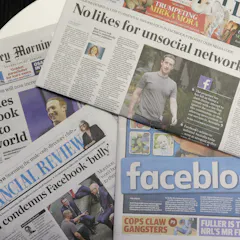
The internet of 2021 is not the open public sphere that early visionaries had imagined.
There are other ways to search the web without Google, and some options help protect your privacy while another is good for the planet.
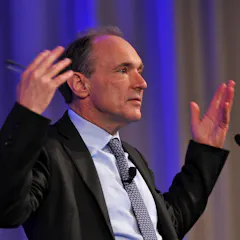
The code could require Google and Facebook to pay up for simply including links to news articles from other sites. This has never been a requirement on the web.

Private mode browsing is a useful way to cover your online tracks. Just don’t read too much into the word ‘private.’
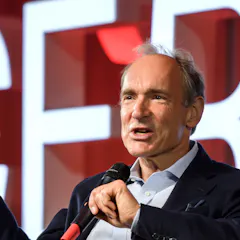
Can we make the web more inclusive or will our online reality always be a lawless wasteland of trolls and lies?

The father of the web wants to address issues including malicious content circulation, misinformation, and the polarisation of online debate. But the methods he is proposing aren’t great.
Top contributors
-

Senior Lecturer, Communications and Media Studies, Monash University
-
Associate Dean, Interaction, Technology and Information, RMIT University
-
Adjunct professor, Swinburne University of Technology
-
Assistant Professor in Digital Media, University of Canberra
-
Professor of Electrical and Electronic Engineering and Deputy Dean Research at Faculty of Engineering and Information Technology, The University of Melbourne
-
Director, Information Retrieval and Data Science Group and Adjunct Associate Professor, USC and Principal Data Scientist, NASA
-
PhD researcher in Network Security Systems, Queen's University Belfast
-
Professor of Information and Library Science, University of North Carolina at Chapel Hill
-
Associate Professor of Communications (Social Media), Syracuse University
-
Edward A. Malloy Chair of Catholic Studies, Professor of Theological Studies, Vanderbilt University
-
Former data protection and surveillance stream lead, Allens Hub for Technology, Law and Innovation, UNSW Law Faculty, UNSW
-
Lecturer in Geographic Information Science, Birkbeck, University of London
-
Lecturer, Edith Cowan University
-
Associate Professor in Media Theory and History, Università di Torino
-
Professor in the Faculty of Law and Justice at UNSW; Director of the UNSW Allens Hub for Technology, Law and Innovation, UNSW