

We interviewed Indigenous business owners, managers and employees to explore how these businesses support strong levels of Indigenous employment.
Articles on Workplace safety
Displaying 21 - 40 of 77 articles

Chlorine is a widely used industrial chemical that’s frequently a factor in toxic accidents and workplace injuries. A pharmaceutical expert explains why it’s so hazardous.

Testing workers for drug and alcohol use can reduce injuries but is less effective than a comprehensive approach to improving staff health.
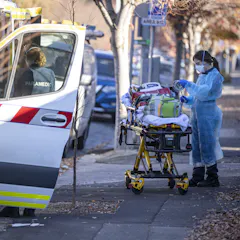
Research on both sides of the globe shows that unmanageable workloads is the main reason why many ambulance service staff are considering quitting the profession.

The electronic monitoring and surveillance of employees is on the rise as growing numbers of people switch to hybrid and at-home work.

Companies like Uber and Lyft have a long way to go in improving worker safety to ensure both drivers and passengers feel safe on the road.
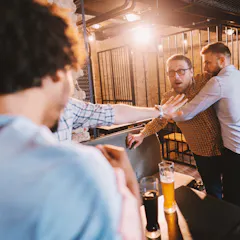
Our research with 124 Australian hospitality staff found women bar workers were routinely seen as ‘better suited’ to manage the threat of violence - which is both risky and exploitative.

Changing workplace culture and the way jobs are designed can stave off depression, anxiety and burnout.

A growing body of evidence shows that the emotional health and well-being of the workforce is of equal or greater importance than physical safety.

Manufacturers don’t usually have to disclose what’s in products like shampoo and household cleaners, but a new study finds that these products can contain hazardous ingredients.

National Day of Mourning should be used to challenge misconceptions about occupational health and safety, and advance safer workplaces for Canadians.

Telling others about an autism diagnosis can lead to understanding and support, but it also exposes the Autistic person to greater risks of discrimination and bullying.

If you feel safer, you might take more risks – canceling out the benefits of various safety interventions. But educating people about this paradox and allowing for some personal choice might help.
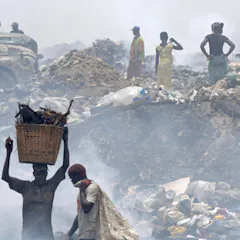
Employing children as waste pickers lowers costs but exposes them to hazards.

The future of our health system depends on recruiting and retaining passionate and highly skilled health-care workers. It’s essential to build work environments where they feel supported and safe.
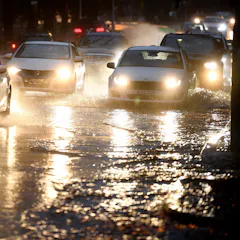
Society is built on intersecting workplaces – and workers from many industries are being affected by climate change.
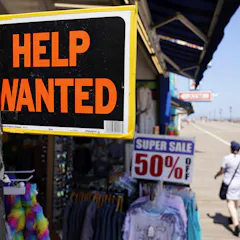
Young workers are particularly vulnerable in the workplace because they tend to do short-term work, often lack training and safety education, and may see injury as just “part of the job.”

While a workplace fatality is a great tragedy, an even greater tragedy is not learning from it.
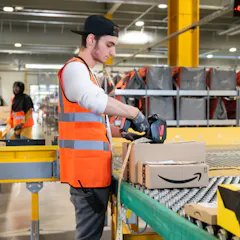
We reviewed hundreds of documents and reports on workplace safety in Amazon warehouses.
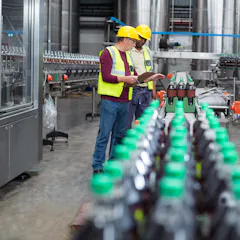
To get more workers to be active, public health messaging must recognize the important role employers can play in creating the conditions for workers to focus on exercise.
Top contributors
-

Professor and Ken Croft Chair in Management, Haskayne School of Business, University of Calgary
-
Associate Professor, Auckland University of Technology
-
Professor, Construction Occupational Health and Safety, RMIT University
-
Senior Lecturer in History, University of Portsmouth
-
Professor of Health and Safety, Te Herenga Waka — Victoria University of Wellington
-
Lecturer in Occupational Health and Safety, Te Herenga Waka — Victoria University of Wellington
-
Professor and Risk, Innovation & Sustainability Chair (RISC), University of Alberta
-
Professor in Human Resource Management and Employee Relations, Swinburne University of Technology
-
Distinguished Professor and Borden Chair of Leadership, Smith School of Business, Queen's University, Ontario
-
Lecturer in Occupational Health and Safety, Te Herenga Waka — Victoria University of Wellington
-
Professor of Social Work and Director, Safe Relationships and Communities Research Group, Adelaide University
-
Postdoctoral Research Fellow, The School of Social Science, The University of Queensland
-
Associate Professor, Faculty of Law, Monash University
-
Sessional Academic
-
Professor of Advanced Manufacturing, Instituto Tecnológico y de Estudios Superiores de Monterrey
