

Canada has a promising gender-based violence legal and policy framework, but none of it accounts for the people actually delivering frontline services.
Articles on Workplace safety
Displaying 1 - 20 of 77 articles
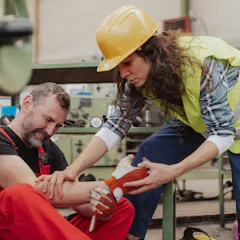
High temperatures raise the risk of everyday workplace injuries, yet Canada still has no common standard to protect workers from extreme heat.
The government’s proposed workplace safety reforms aim to create simpler rules for employers. Critics argue they may also move risk onto workers.

Parents who hire their own kids often skip the safety conversations they’d have with any other new employee. But that assumption can put young workers in danger.

Ambulance workers are increasingly being verbally abused and physically attacked. Two paramedicine researchers explain how we can better protect them.

Agricultural workers are six times more likely to die on the job than the average American worker.

An engineer who’s helped set the standards for Australian rides explains what tests are done each day on roller coasters – and why he let his own kids ride them.

With robust governance frameworks, AI-enabled technologies have the potential to make high-risk workplaces safer.

A new study shows firms led by CEOs who experienced major disasters early in life report significantly fewer worker injuries, suggesting leadership values matter alongside regulation.

Interpersonal fear often explains why workplace hazards go unreported, even in high-risk industries.

More than one in six cases of sexual harassment in Australia happen at work social events. If it happens to you, or you’re a bystander – here’s what you can do.

Immigrants face a double challenge when they are injured at work — healing and making their voices heard in a system that struggles to recognize their experiences.
Records of historic tragedies held in a new online database offer lessons for today’s workers.
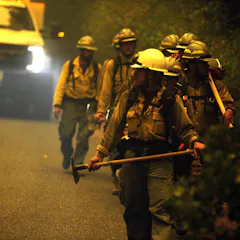
Firefighters work long hours to protect communities, often in dangerous conditions and for low starting pay. Surveys show the impact that can have on their physical and mental health.

The Health and Safety at Work Act of 1974 brought legislation to protect employees out of the Victorian age.
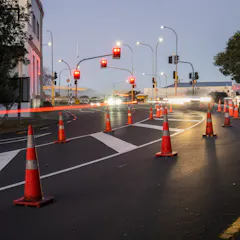
With 70 work-related deaths each year, the government’s review of health and safety rules is very timely. But simply reducing red tape won’t fix the deeper problems.

Here are some options and what they mean for the health of tradies who cut and install them.

Organizations may gain an advantage by not investing in worker health, instead simply replacing burned-out employees with new ones in order to ensure a supply of healthy employees.

Regulations protecting children in hazardous jobs are insufficient or non-existent, leaving, a significant part of the Australian workforce open to exploitation.
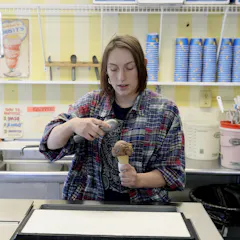
Better training and supervision make younger workers less vulnerable to injuries.
Top contributors
-

Professor and Ken Croft Chair in Management, Haskayne School of Business, University of Calgary
-
Associate Professor, Auckland University of Technology
-
Professor, Construction Occupational Health and Safety, RMIT University
-
Senior Lecturer in History, University of Portsmouth
-
Professor of Health and Safety, Te Herenga Waka — Victoria University of Wellington
-
Lecturer in Occupational Health and Safety, Te Herenga Waka — Victoria University of Wellington
-
Professor and Risk, Innovation & Sustainability Chair (RISC), University of Alberta
-
Professor in Human Resource Management and Employee Relations, Swinburne University of Technology
-
Distinguished Professor and Borden Chair of Leadership, Smith School of Business, Queen's University, Ontario
-
Lecturer in Occupational Health and Safety, Te Herenga Waka — Victoria University of Wellington
-
Professor of Social Work and Director, Safe Relationships and Communities Research Group, Adelaide University
-
Postdoctoral Research Fellow, The School of Social Science, The University of Queensland
-
Associate Professor, Faculty of Law, Monash University
-
Sessional Academic
-
Professor of Advanced Manufacturing, Instituto Tecnológico y de Estudios Superiores de Monterrey
