

When working from home, women struggled more than men to find time for the sustained effort needed to produce good, publishable research. Lack of thinking time is a problem for all knowledge workers.
Articles on Working from home
Displaying 41 - 60 of 147 articles

Hybrid work is here to stay. Employers will either embrace the change or find themselves being left behind.

There is no universal minimum for the amount of living space we need. Rising spatial inequality, however, adversely impacts us on both individual and collective levels.

The threat of COVID may be receding, but the fall-out will continue to affect business in the coming year, requiring strong leadership to navigate uncertain times.

Sick pay is not available to everyone.

Zoom parties are one thing. Harder for organisations to replicate online are ‘casual collisions’ between colleagues.
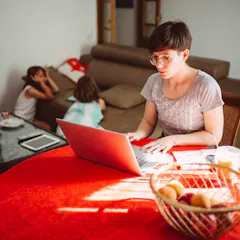
Even when the pandemic ends, the vast majority of US companies are expected to let many employees continue to work at least part time from home.

Experts agree there is no one-size-fits-all model for hybrid work.

Working from home and performing multiple roles leads to constant guilt, which has personal health consequences for women academics.

Academics in all areas have deep concerns about their ability to undertake research during the pandemic and the flow-on effects of this. Women and early career researchers were particularly hard hit.

The environmental benefits of less commuting and fewer in-person events could be lost.

Has COVID rendered concepts such as “work-life conflict” or “work-life balance” redundant?
Maybe we need new ways to describe and navigate the new pandemic reality.

Mixing working from home and the office is attractive but comes with challenges.

How we read messages is as important as what we write when it comes to happy workplace relations – especially in lockdowns or when working from home.

Feeling exhausted, unable to concentrate and wanting to withdraw and disconnect from the world and those around you? You could be heading towards burnout.

UK chancellor Rishi Sunak has warned that young people’s career chances could suffer without returning to the office. But lockdown has bigger lessons for workplaces.

The post-pandemic return to work will provide an opportunity for employers and employees to reconsider relationships. Here’s how organizations can build morale and stop valued employees from leaving.
Our approach to work has had to adjust, so let’s change even more.
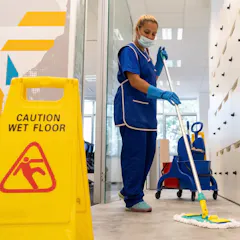
Focusing solely on home working neglects the fact that most employees in the UK rarely or never worked from home after the pandemic

Post-pandemic, the world of work will probably never be the same again. And that’s probably a good thing. We now have an opportunity to make it better.
Top contributors
-

Associate Professor of Organisational Behaviour, Bond Business School, Bond University
-
Professor of Work and Employment, University of Southampton
-
PhD Candidate in Anthropology, UCL
-
Management Professor, McGill University
-
Senior Lecturer, Organisational Behaviour & Management, Adelaide University
-
Professor of Management, Deakin University
-
Associate Professor, Ethics and Labour Relations, University of Regina
-
Lecturer in Entrepreneurship, Innovation and Organisational Design, RMIT University
-
Assistant Professor, Smith School of Business, Queen's University, Ontario
-
Assistant professor in leadership, IÉSEG School of Management
-
Senior Lecturer, Employment Relations, Griffith University
-
Laurie Carmichael Distinguished Research Fellow at the Centre for Future Work, Melbourne; and Professor Emeritus, Griffith Business School, Griffith University
-
Professor in Social & Health Psychology, Durham University
-
Postdoctoral Research Fellow, Muscle Physiology, Karolinska Institutet
-
Associate Professor HRM/IR, CQUniversity Australia