

If you have a toxic boss – and who hasn’t? – you can find solace online, or at home.
Articles on Telecommuting
Displaying 1 - 20 of 27 articles
It turns out that there are some benefits to all the time we spend commuting.

Urban economics experts are creating simulated cities to forecast the effect that permanent telecommuting could have on city centers and housing.
While the uptick in the unemployment rate in January may seem like bad news, the reason it rose actually shows the labor market returning to normal.

The potential benefits of telecommuting could quickly be erased because of the behavioural changes it brings about in the medium and long term.

A divide is growing between workers and management over the return to the office and other issues.
Most Australians working from home were happy to do so before COVID hit, but research has identified several key factors in whether these arrangements are likely to work out well for you.
One in five now work exclusively from home in the UK. But remote workers still drive about as often as commuters – though for different reasons.
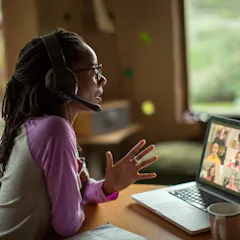
From setting passwords to cultivating patience, a mindful approach to virtual working, studying and socializing can make life online manageable.

We asked 1,400 managers to rate working from home. Some 8.4% said their teams were less productive, 57% said it was the same, and 34% said it was higher.
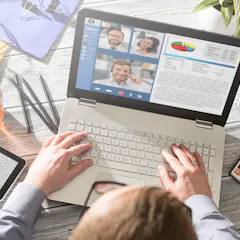
Working from home has become the new norm for many during the pandemic. But it’s an opportunity that divides along racial and economic lines – and isn’t as beneficial to the environment as many believe.

We estimate 39% of all jobs in Australia can be done from home, with men more likely to have teleworkable jobs.
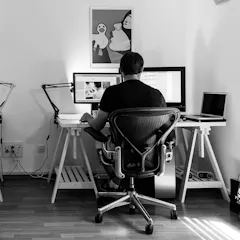
Some companies are moving permanently to remote work during and after the COVID-19 pandemic. But are they simply passing on costs to employees while invading their personal space?
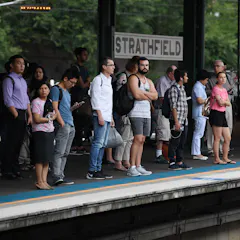
The change in our behaviour in response to COVID-19 has created an opportunity to build on this moment and transform our local neighbourhoods into vibrant mixed-use centres of activity.

Some new habits we’ve seen emerging during the pandemic could help us solve tricky problems like traffic congestion, which have challenged our cities for a long time.

The higher a person’s salary, the most likely they are to be able to work from home; it’s not an option for most low-income workers. Here’s what governments can do to help encourage more remote work.

With vast swaths of society forced to work from home, people with disabilities can overcome many of the challenges they face in a normal office environment.

After the ‘world’s biggest work-from-home experiment’, many people (and their employers) might decide they needn’t commute every day. If even a fraction do that, infrastructure needs will change.

The coronavirus pandemic is a stressful time for everyone. Here are some ways employers can help their employees through this crisis.
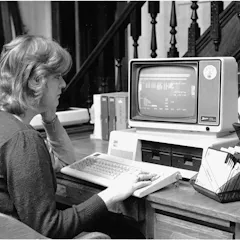
Futurists have been predicting a working-from-home revolution since the 1970s. The pace of the revolution has been limited by factors other than technology.
Top contributors
-

Research Consultant and Lecturer in Policy, Planning and Development, California State University, Dominguez Hills
-
Assistant Professor of Public Administration, California State University, Dominguez Hills
-
Professeur titulaire, Université du Québec à Montréal (UQAM)
-
Professeur au département d'études urbaines et touristiques, Université du Québec à Montréal (UQAM)
-
Associate Professor of Public Affairs and Administration, Rutgers University - Newark
-
Associate Professor of Organisational Behaviour, Bond Business School, Bond University
-
Professor of Economics, University of Nebraska Omaha
-
MBA Candidate, Questrom School of Business; Research Assistant, Institute for Sustainable Energy, Boston University
-
Assistant Professor of Urban Planning and Design, Islamic Azad University
-
Professor, Oregon Health & Science University
-
Professor of Management, Manning School of Business, UMass Lowell
-
Professor of Earth and Environment, Boston University
-
Professor of Economics, Head of the Department of Economics, and Director of the Centre for Disaster Resilience and Recovery, Deakin University
-
Professor of Labor Studies and Employment Relations, Rutgers University
-
Reader in Quantitative Human Geography, University of Bristol