
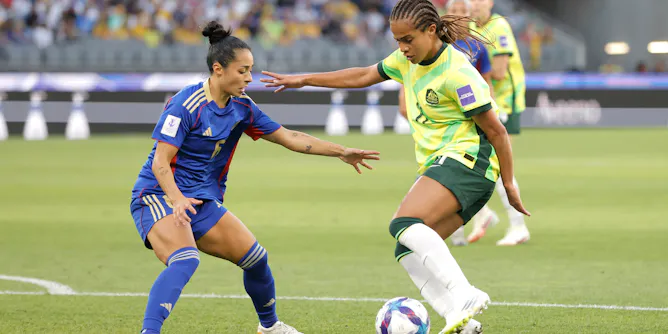
A new study reveals the surprising impact women’s’ sex hormones have on things like attention, anticipation and decision-making in sport.
Articles on Women's soccer
Displaying all articles
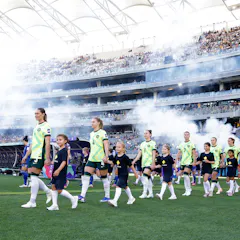
The 2026 Women’s Asian Cup, hosted by Australia, represents a chance to prove the hype around women’s soccer is more than a one-time thing.
The majority of Australia’s squad is based overseas, which will impact their sleep and recovery in the early stages of the Women’s Asian Cup.
This incident potentially impacts the nation’s international reputation and trust in Canadian athletes and raises questions about Canada’s commitment to ethical standards in sports.
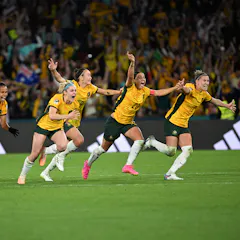
We’re experiencing a great sporting and cultural moment. But the Women’s World Cup needs to be more than a four-week football festival.

Like the rest of Australia, we have been following the world cup with growing emotional intensity. From the group chat to TikTok, the online alt-commentary on the game has been a joy.
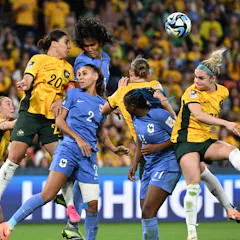
Have you found yourself liking sport for the first time and wondering how you got here? Here’s what might be going on – and why it might be the best thing for your wellbeing.
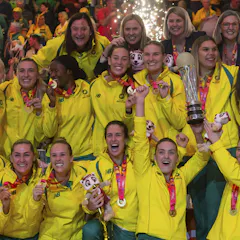
On August 6, the Australian Diamonds won the Netball World Cup for the 12th time – but it received a fraction of the coverage the Matildas are getting.

The implications of the Canadian women’s soccer team’s World Cup loss goes beyond Canadian national pride.

Gender disparities in sport extend to injuries too. Female soccer players are at greater risk for ACL tears than males and it is clear immediate action is needed to address the non-biological factors for the injury.
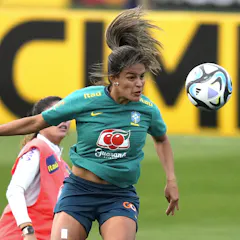
Many concussions in soccer occur when two players compete to head the ball. But extra technique training, modifying how we play the game, and more ‘red cards’ help cut the risk.
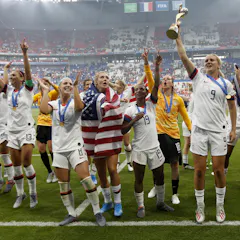
The US national team is the favorite going into the tournament in New Zealand and Australia. But growth in the global game has seen others catch up.
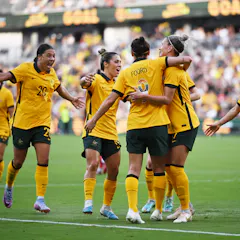
It’s the biggest sporting event in Australia since the 2000 Sydney Olympics.

A new report has highlighted ‘systemic’ verbal, emotional and sexual abuse of women’s soccer players. Many feared retaliation if they spoke out, while others didn’t think it was their place.

The thorny issue of testosterone testing has made news, not just the growing skills on the field.

The 2015 FIFA Women’s World Cup ushered in a new age for media coverage of women’s sport. A new survey of fans shows that while many men feel threatened, a growing number are on board.
Women’s football has made great strides, but when it comes it comes to media coverage, governance or funding, female athletes still suffer greatly from gender bias.
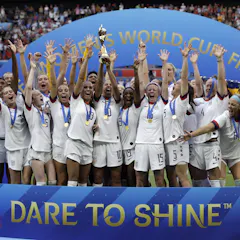
Women’s sports have been stuck in a boom-and-bust cycle for the past 20 years. It’s time to start a new narrative.
Top contributors
-

Adjunct Lecturer at the Centre for Justice, Queensland University of Technology
-
Assistant Professor of Child and Adolescent Development, San José State University
-
PhD Candidate, Rehabilitation Sciences, University of British Columbia
-
Vice-Chancellor Independent Research Fellow, Sport, Business and Society Research Group, Loughborough University
-
Associate Professor, The University of Sydney School of Education and Social Work, University of Sydney
-
Associate Professor of Sociology, Clemson University
-
Associate Professor, Gordon S. Lang School of Business and Economics, University of Guelph
-
Associate Dean Academic, Gordon S. Lang School of Business and Economics, University of Guelph, University of Guelph
-
Professor, Kinesiology & Physical Education; Fellow, Balsillie School of International Affairs, Wilfrid Laurier University
-
Emeritus Professor of Cultural Research, Institute for Culture and Society, Western Sydney University
-
Lecturer of Communication, Sports Media, Deakin University
-
Professeur Associé/ Head of Department 'Strategy & Entrepreneurship', ICN Business School
-
Lecturer, Faculty of Health, Southern Cross University
-
Associate Professor of Sport Leadership and Management, Miami University
-
Professor, Film Studies, University of Sydney