

An organizational researcher argues that biases about who leads and who cares are baked into the structures of work itself, which is detrimental to women.
Articles on Women in the workplace
Displaying all articles
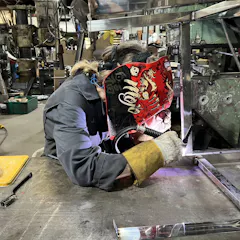
Jean Reith Schroedel’s 1985 book captured the struggles and triumphs of tradeswomen. Forty years later, its lessons remain urgent.

A gender studies expert explains why the Trump administration’s claim that everyone is male or female defies science and ignores the complexity of human sexuality.
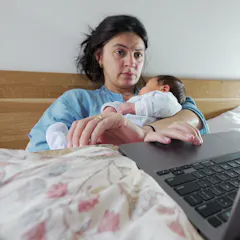
Mothers and those who care about them must come together to demand better workplace conditions, not just for mothers, but for others as well.

It’s often too challenging or dangerous for workers to stand up to men in positions of power.

Allyship is most needed in male-dominated environments, where gender equity efforts are often met with the greatest resistance.

From being overlooked to assumptions that a promotion is about diversity rather than ability, Black and Asian women face a variety of obstacles.

With women still underrepresented in leadership globally, why aren’t organizations and investors doing more to realize the benefits that diversity brings? Perhaps it’s the C-suite that needs changing.

New research shows that women’s earnings are negatively impacted by having children, while men’s aren’t. The effects can be long-lasting and contribute to the gender pay gap.

Labels that reflect our gender, racial or age-specific biases can often undermine others.

Feminine leadership encompasses aspects of ourselves that have been pushed aside within conventionally male-dominant spaces. Recentring them can foster leadership that is more inclusive.

The recent federal election could be a game-changer for organizational gender inequality. The proposed Canada-wide child-care strategy could have a profound impact.

The language in job postings may be hampering the efforts of organizations in male-dominated industries to create more gender-diverse workforces.

Does having children make the goal of fairly dividing work at home more elusive?
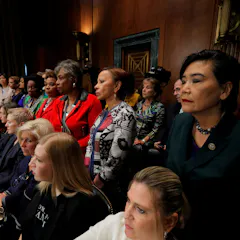
In the last year, workplace culture faced major upheaval for working women. We at The Conversation put together our reporting on that very topic from 2018.

An employment law expert explains why it’s time CEOs had to follow the same rules and harassment policies as every other employee.
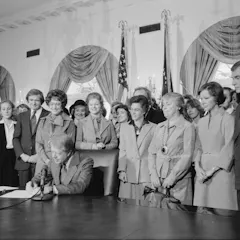
In the #MeToo era and with more women entering Congress, activists are hopeful another state could ratify the Equal Rights Amendment. But is it too late?
Top contributors
-

RBC Professor in Responsible Organizations and Full Professor, Concordia University
-
Associate Professor, Management, Saint Mary’s University
-
Professor, Communication and Culture, Royal Roads University
-
Professor of Sociology, Florida State University
-
PhD Student, Social Sciences, Royal Roads University
-
Associate Professor, Social Innovation Design, Faculty of Design, OCAD University
-
Professor of Law, University of Oregon
-
Dean, University of Regina
-
Professor of Economics, Université du Québec à Montréal (UQAM)
-
Full Professor, Economics Department, Université du Québec à Montréal (UQAM)
-
Assistant Professor of Sociology, Catholic University of America
-
Senior Lecturer Work, Organisation and Management, University of Liverpool
-
Assistant Professor, Beedie School of Business, Simon Fraser University
-
Professor and Ken Croft Chair in Management, Haskayne School of Business, University of Calgary
-
Assistant Professor in Management and Organization Studies, Beedie School of Business, Simon Fraser University