
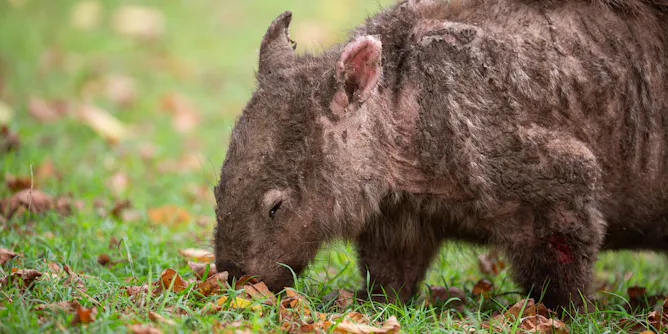
The tiny scabies mite burrows beneath the skin of many animals, including Australia’s bare-nosed wombat.
Articles on Wombats
Displaying all articles
From wombat and mozzie surveillance to deciphering climate history and spotting star explosions, citizen scientists are instrumental in contributing knowledge.
Wombats’ whiskery noses help them snuffle for food, navigate burrows and sense friend or foe.
‘Momma’s right here and she’s pissed’: influencers can show wildlife to their audience without traumatising baby wombats
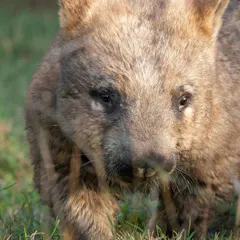
Native wombats and invasive rabbits are important to Australian ecosystems, but how do you work out where they live? That’s where satellite photos come in.

Are wombats the accidental heroes of the Australian bush? After the Black Summer bushfires, we set up 56 cameras to capture animal activity in areas with and without wombat burrows to find out.
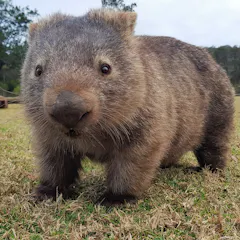
Contributors to the WomSAT website have already reported more than 23,000 wombat sightings. We can use the data to cut the risks to wombats – and anyone with a smartphone can help.
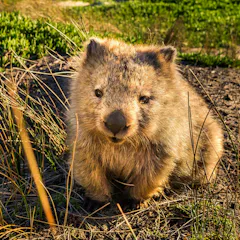
Despite their solitary lifestyle, wombats are at risk from a disease that spreads via their burrows.
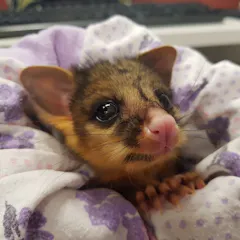
It can be hard and costly to collect data on the threats to species at specific locations. Wildlife emergency response services have long-running records for hundreds of species that suffered harm.

Nimbadon lived 15 million years ago, in forests with flesh-eating kangaroos and tree-climbing crocodiles. Our first look inside their fossilised bones has revealed how these giants grew.
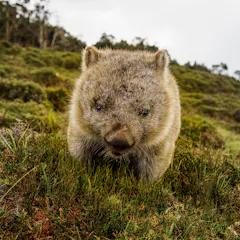
Death by exhaustion, cannibalism, complete body fusion: across the animal kingdom, mating takes many strange forms.
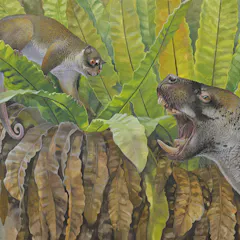
Australia’s Red Centre was once a lush forest filled with strange creatures – and we are slowly discovering more about this enigmatic past.

80,000 years ago, Australia’s landscape was dominated by much larger versions of today’s marsupials – including enigmatic and enormous wombats.
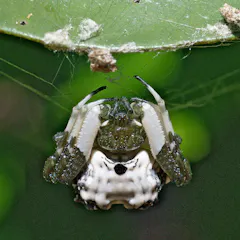
Many animals have evolved very entertaining – if not impolite – strategies for evolutionary success.

As the holiday season begins after months of reduced travel, wildlife hospitals are braced for a new wave of admissions.
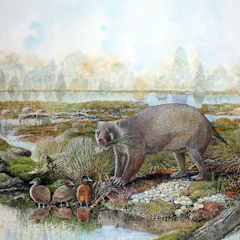
The extinct Mukupirna - which translates to ‘big bones’ - is estimated to have been more than four times larger than any living wombat.
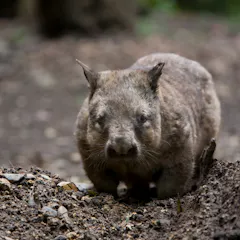
Wombats don’t herd animals to shelter in their fire-proof burrows, they just tolerate uninvited house guests.
Top contributors
-

Associate Professor in Biology, Zoology and Animal Science, Western Sydney University
-
Associate Professor, Animal Anatomy and Physiology, Charles Sturt University
-
Professor in Ecology, Charles Sturt University
-
Professor, Earth and Sustainability Science Research Centre, UNSW
-
Professor, Palaeontology, Griffith University
-
Lecturer in Biology, University of Salford
-
Professor Emeritus, Palaeontology, UNSW
-
PhD candidate, Flinders University
-
Research fellow in spider crab ecology, Deakin University
-
UNSW
-
Lecturer in Palaeontology, Flinders University
-
Associate Professor, Wildlife Ecology, University of Tasmania
-
PhD Candidate in Ecology, Charles Sturt University
-
Honorary Research Associate in BioSciences, The University of Melbourne
-
Lecturer in Palaeontology, The University of Queensland