
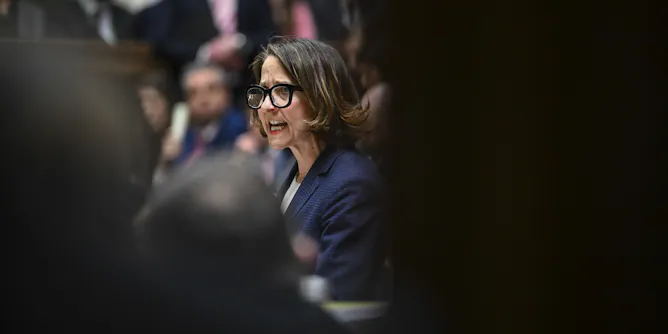
Labour governments have always had to anger their supporters to win ‘credibility’.
Articles on Welfare
Displaying 21 - 40 of 336 articles

Disparaging people who get government benefits to make ends meet, especially if they’re Black, is no longer a recipe for political success in America.

At the centre of the immigration debate is the notion of “welfare magnetism”: the idea that migrants are drawn to Germany by its generous welfare system.

Presidents often come into office with a blueprint to transform government. Project 2025 – assembled by Trump allies – is part of a lineage of conservative reactions to liberal presidents’ plans.

The government is accused of a ‘hurt first, fix later’ approach to welfare.

Labour has vowed to end divisive discourse demonising out-of-work people as ‘scroungers’ - but how does this fit with its tough warnings about people who don’t ‘engage’?

Thousands will be left in fuel poverty by the move – and pension rises won’t kick in until after the worst of the cold weather.

The next government should restore the value of benefits to cover the costs of living.
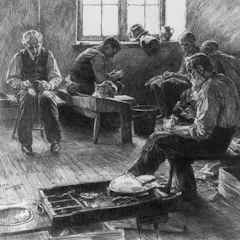
Amid rising unemployment, inflation and poverty in the 1830s, Philadelphia taxpayers believed welfare scammers were bleeding coffers dry. Poor lists from 1829 show they were wrong.

Eliminating poverty has not been a major campaign issue during the 2024 presidential campaign.

Disabled people need £975 more per month to maintain the same standard of living as a non-disabled person.

Many people who rent or have a mortgage rely on the accommodation supplement to afford their homes. So how could the government make the scheme fairer and more effective than it is now?

Homeless families rehoused in temporary are bearing the brunt of the high travel costs and policies ill-designed to accommodate their specific needs.
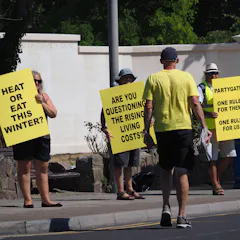
Governmental support is failing the country’s most vulnerable households. Politicians need to act now.

People on benefits are borrowing from the government to pay for essentials like power bills and car repairs. But repayments leave them with even less than before.

Low-income mothers with infants are struggling with food insecurity, which can lead to long-term health impacts for both mothers and children.

Welfare advocates in this country can now forcefully critique any government program that trades on stigma or vulnerability and ignores real-life suffering.

Beware those who offer ‘cultural’ fixes and non-binding reassurances. The government shouldn’t fall back on the very institutions that never fully acted until a royal commission.
It’s not always the case that poorer citizens want more public spending and richer people want less.

People who have experienced domestic violence can have trouble finding and keeping jobs because of physical injuries and their abusers’ efforts to sabotage their employment.
Top contributors
-

Professor, Crawford School of Public Policy, Australian National University
-
Professorial Fellow, Jumbunna IHL, University of Technology Sydney
-
Professorial Fellow, University of Canberra
-
Research Associate, School of Social Sciences, Monash University
-
Professor, College of Business, Government & Law, Flinders University
-
Associate Professor, POLIS@ANU Centre for Social Policy Research, Australian National University
-
Visiting Academic, The Open University
-
Professor in Social Policy, University of Glasgow
-
Associate Professor of Public Policy, Crawford School of Public Policy, Australian National University
-
Adjunct Research Fellow, School of Government, Te Herenga Waka — Victoria University of Wellington
-
Professor of Social Development Studies, University of Johannesburg
-
Professor & Director, Jeff Bleich Centre for Democracy and Disruptive Technologies, Flinders University
-
Professor of Economics, Queen's University Belfast
-
Associate Professor in International Macroeconomics, Cambridge Judge Business School
-
Professor of Social Policy, Loughborough University