
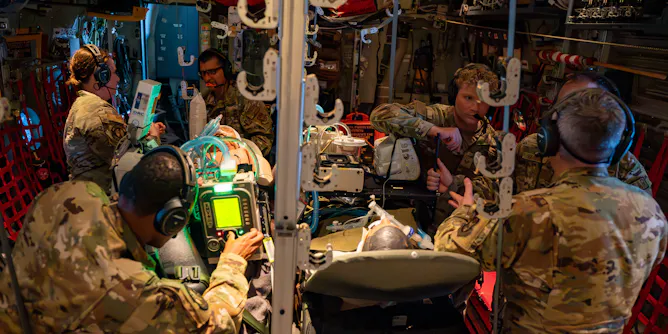
How much oxygen does the military need for wounded soldiers? Turns out not much. Military-civilian research is paving the way for new developments.
Articles on War
Displaying 141 - 160 of 701 articles
M23’s advances highlight Rwanda’s role in the Democratic Republic of Congo, and the risk of an escalating regionalised conflict.

No-fly zones in Europe and the Middle East are making planes travel further and burn more fuel.

Although concentration camp survivors followed different trajectories and displayed different levels of resilience, four main survivor profiles emerge.
Antimicrobial resistance is yet another catastrophic legacy of war, threatening human health and security for generations to come.
The US ambassador to the UN has considerable power and influence over US international affairs.
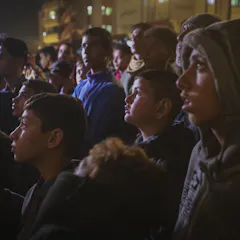
Why did it take so long to reach an agreement? How will aid get to Gazans in need? These are just some of the issues left unresolved.
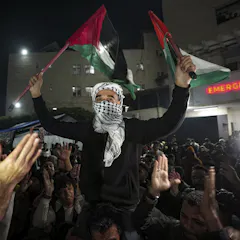
After 467 days of violence, Israel and Hamas have agreed to a detailed peace plan. But with more negotiating ahead, the future is far from certain.
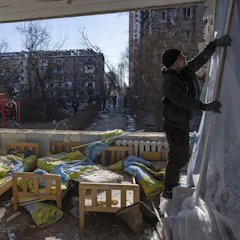
Wars always include killings and destruction, but there are limits. An expert in international law explains the rules of war laid out in the Geneva Conventions − and why they’re so hard to enforce.

Russia went to war with the west, but it didn’t really notice until recently.
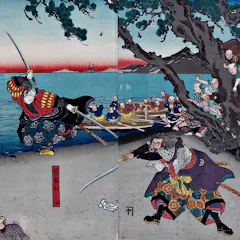
The study of martial arts involves physical training − but also raises larger questions about ethics and what justifies the use of force.
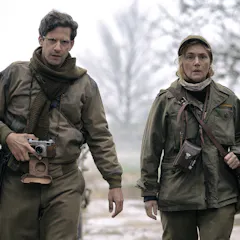
Photographer Lee Miller’s experience at Dachau, depicted in the film Lee, reminds us of the importance of photojournalists in war zones today.
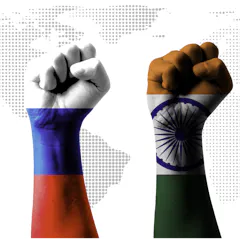
Brics+ countries want a new international monetary order to reduce dependency on certain foreign currencies.
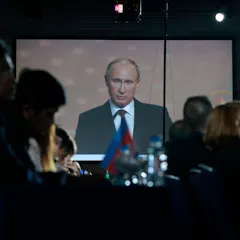
What might the age of generative AI tools mean for strategic thinking and planning within organisations losing key figures?

The scene shows two warships at a face-off while sharks circle in the waters below.
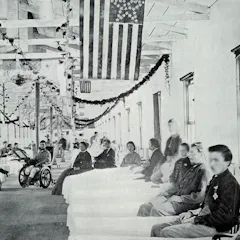
Lacking formal training in medicine or nursing, Walt Whitman nonetheless realized ‘the simple matter of personal presence, and emanating ordinary cheer and magnetism’ could go a long way.
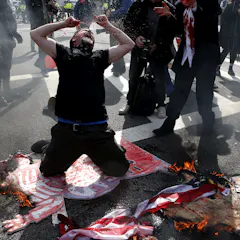
Mexican philosophers have a word for the peculiar anxiety you may be feeling: ‘zozobra,’ a dizziness that arises from social disintegration.
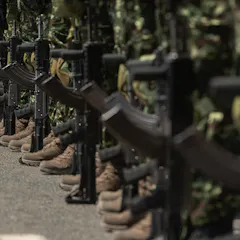
Rituals can function as a source of strength for soldiers, providing a sense of confidence and security.

The impact of wars on children is vast and multifaceted. The trauma inflicted is enduring and will shape the rest of their lives — and by extension, the societies in which they and we live.
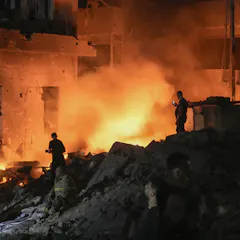
In times like these, validation, human connection and support are some of the best things you can do to protect your own and other people’s mental health.
Top contributors
-

Associate Professor and Edward and Emily McWhinney Professor in International Relations, Simon Fraser University
-
Associate Professor, School of Languages, Literatures, Cultures and Linguistics, Monash University
-
Professor of Military History, University of Calgary
-
Emeritus Professor of International Law, Western Sydney University
-
Lecturer in Middle East Studies, Deakin University
-
Professor of Law, American University
-
Associate Professor in Politics and International Relations, Monash University
-
Maitre de conférences en sciences de la communication, Chercheur au PREFICS (Plurilinguismes, Représentations, Expressions Francophones, Information, Communication, Sociolinguistique), Université Rennes 2
-
Director of Dickinson Program in New Zealand & Associate Professor of Politics at the University of Otago, Dickinson College
-
Senior Lecturer, School of Humanities and Social Sciences, Deakin University
-
Researcher, Air and Space Law, McGill University; Bond University
-
Full Professor, Former Director, Institute of Air and Space Law, McGill University
-
Research Professor in the Australian Centre for the Study of Armed Conflict and Society, UNSW
-
Professor of International Politics, Clinton Institute, University College Dublin
-
Associate Professor in Linguistics, Macquarie University