
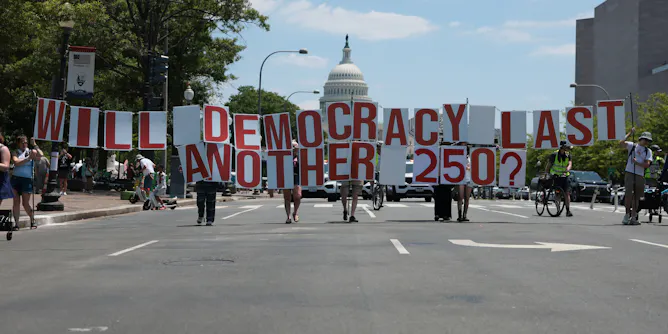
While only a sliver of Americans say they support violating core democratic norms, many more say they’re ambivalent about politicians who undermine democracy.
Articles on Voting behavior
Displaying all articles

Democrats are desperate to retake control of Congress; Republicans want to keep it. To win, it helps to know what kind of voter is willing to cross party lines.

While the US supports nonpartisan election observers in other countries, the practice has a low profile in this country.
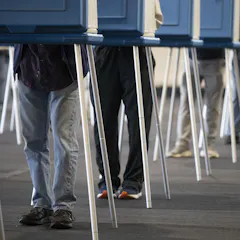
While Harris and Trump diverge on many key policy issues, they find common ground in other areas.
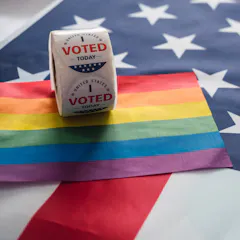
LGBTQ+ voters make up a relatively small percentage of the American electorate. But they’re poised to play an outsize role in the
‘tipping-point’ states most likely to decide the election.
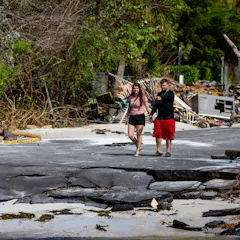
Natural disasters create practical challenges for voters and election administrators. But in some cases, voters can also pin the blame on the government, or judge a candidate by the federal response.
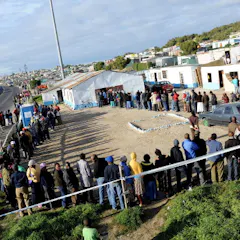
Concerns about socioeconomic well-being were the main reason why people voted for a certain political party.
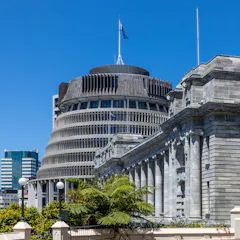
Jacinda Ardern is at stratospheric support levels due to her government’s management of the COVID-19 crisis. That lead will inevitably narrow by the election – but by how much?

Social media sites aren’t the only online systems that can secretly influence people’s votes. Search engines can too and may be even more successful – and undetectable.
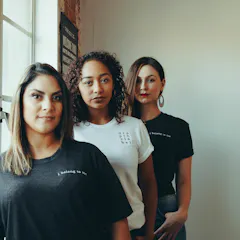
Findings suggest parties should rethink the way they chase the ‘female vote’.

Pre-referendum polling suggested South Asian voters were quite pro-Remain, but more recent data tells another story.

Third-party candidates often claim they bring out new voters. Is it true?

Given the failure of British polls to predict the outcome of Brexit, is it possible Donald Trump could produce a surprise result of even greater proportions?
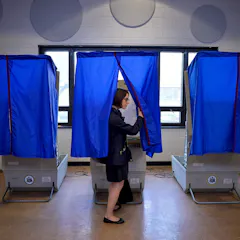
Imagine you’re in a voting booth faced with a choice between bad candidate #1 and bad candidate #2. Surprisingly, science says this may actually be a good thing. Here’s how.
Top contributors
-

Assistant professor of Political Science, Georgia State University
-
Postdoctoral Research Fellow, Inter-disciplinary Conservation (ICON) Science Research Group, RMIT University
-
Ph.D. Student in Network Science, Northeastern University
-
Associate professor emeritus, Georgia State University
-
Political Science Graduate Student, Georgia State University
-
Dwight F. Benton Professor of Marketing, University of Michigan
-
Research Fellow (Henry Jackson Society - Centre on Radicalisation & Terrorism), Royal Holloway, University of London
-
Professor, Urban Ecology and Biodiversity, The University of Melbourne; RMIT University
-
Research assistant professor, University of Michigan
-
Professor, School of Biosciences & School of Historical and Philosophical Studies, The University of Melbourne
-
Professor of Social Development Studies, University of Johannesburg
-
Emeritus professor in Politics, University of Johannesburg
-
Professor of Political Science, Te Herenga Waka — Victoria University of Wellington
-
Senior Lecturer in Politics, University of Manchester
-
Associate Professor of Political Science, Fordham University