
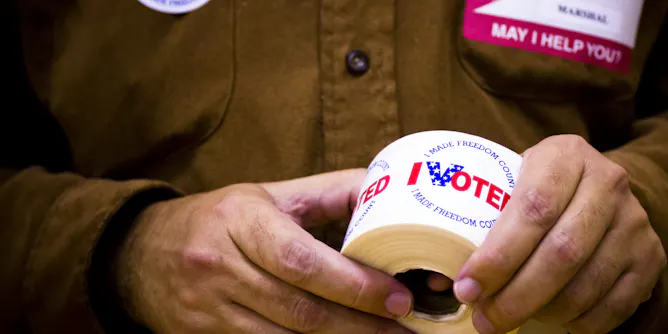
Hispanics oppose Trump’s immigration policies in larger numbers than the rest of the population. But their opinions are divided sharply across partisan lines.
Articles on Voting
Displaying 281 - 300 of 478 articles
After the 2016 US election and ensuing Cambridge Analytic scandal, there was a lot of scaremongering around digital election campaigning. But this hysteria is, for the most part, unfounded.
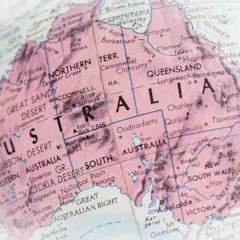
Keep up-to-date with how the federal election is playing out locally. Our State of the States series takes stock of the key issues, seats and policies affecting the vote in each of Australia’s states.
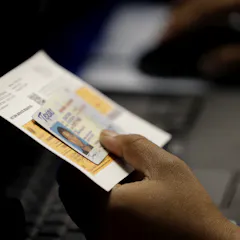
States may have passed these laws with the aim of reducing turnout. But new evidence suggests that they have a minimal or nonexistent effect.
School textbooks from Germany deal with Europe in much greater detail and with more of a positive angle than those published in England.

According to a new study, Mandarin-speaking voters look to their friends and key social media influencers to inform how they should vote in Australian elections.
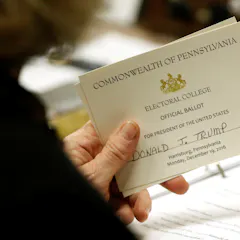
Does the Electoral College encourage candidates to campaign in rural areas, as its supporters claim? And do electors actually filter the ‘passions’ of voters, as the founders wanted them to?
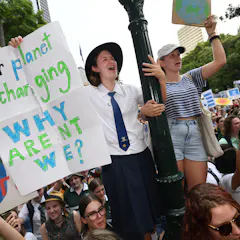
People under 18 can leave school, get a job, drive a car and pay taxes. Should they be allowed to vote too?
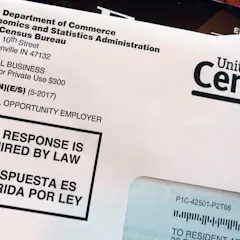
If undocumented immigrants choose not to fill out the questionnaire, then the official population of several states would deflate, costing them House seats and federal funding.
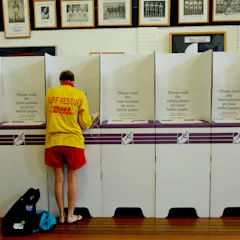
With world-first compulsory and preferential voting, Australia was born not on the battlefield but at the ballot box.
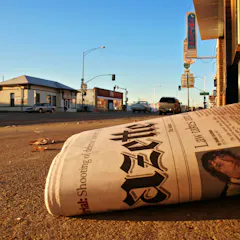
American politics has gotten more partisan in the last 50 years. One of the reasons: the closing of local newspapers.

Polls suggest that the majority of Americans think climate change is real, is caused by humans and needs to be addressed. But climate change isn’t a priority when Americans go to vote.
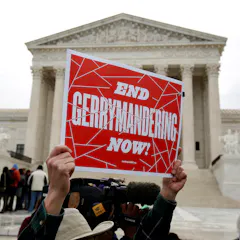
Many states are arguing over how to draw district lines. But drawing legislative district lines is an exercise in tradeoffs.
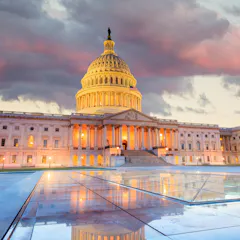
The new Congress is divided into a GOP Senate and Democratic House. History provides a glimpse of what this could mean: Democrats hold the power to investigate, if not to legislate.
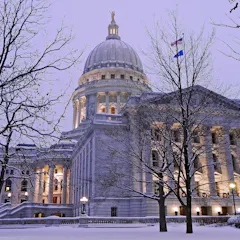
Democracies survive if political norms and traditions are upheld. So the recent actions of GOP legislators in Wisconsin and other states to hamstring incoming Democrats put democracy at risk.
It’s the fairest way to settle this debate – though in the absence of a clear majority supporting either “remain” or a “no deal” it would probably mean accepting Theresa May’s deal.
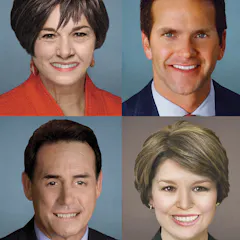
Research shows that in elections with low information and poor engagement, candidate attractiveness plays a significant role in how people vote.
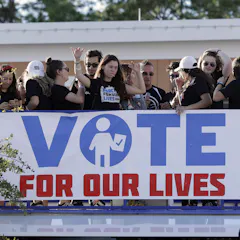
Young people have the right, the skills and the numbers to make a difference in politics and society in North America and beyond. Their voices, energy and vision contribute to a healthy democracy.
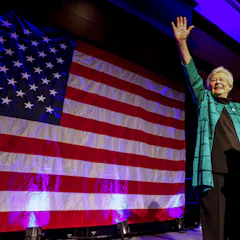
While a record number of women are headed to Congress, a number of conservative measures passed across states. What explains this?

For teenagers, blogging about politics in school can help them hone their views – and be more tolerant of others’.
Top contributors
-

Professor of Politics and Public Policy, University of East Anglia
-
Senior Lecturer, Department of Languages and Linguistics, La Trobe University
-
Professor of Politics, Adelaide University
-
Professor of Law, University of Notre Dame
-
Associate Professor of Political Science, University of Pittsburgh
-
Professor of Political Science, Newcastle University
-
Senior Lecturer, School of Political and Social Inquiry, Monash University
-
Lecturer in Government, Jeff Bleich Centre for Democracy and Disruptive Technologies, Flinders University
-
Law Professor in Constitutional Law, Criminal Law, Election Law, University of Memphis
-
Teaching Professor of Computer Science and Electrical Engineering, and Associate Director, UMBC Cybersecurity Institute, University of Maryland, Baltimore County
-
Senior Lecturer in Politics, York St John University
-
Senior Lecturer, School of Government and International Relations, Griffith University
-
Research Fellow (Henry Jackson Society - Centre on Radicalisation & Terrorism), Royal Holloway, University of London
-
Doctoral Candidate, Australian National University
-
Associate Professor of Political Science, University of Dayton