
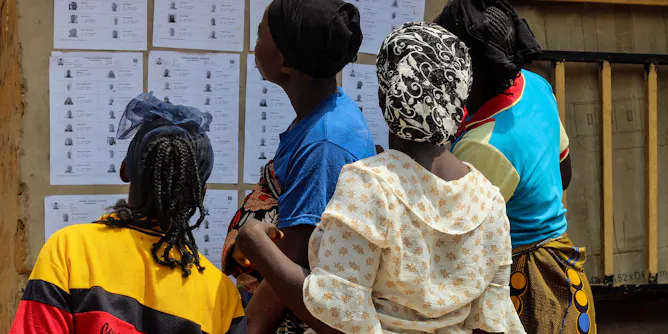
It’s not lack of ambition that keeps young women out of politics.
Articles on Nigeria elections
Displaying 1 - 20 of 21 articles

Nigeria’s new electoral act doesn’t tackle some of the real problems of electoral governance.
Students more informed about politics scorn party membership and campaigning, which are often associated with corruption and violence.

Young Nigerians must follow demonstrations with active political consciousness.

Greater awareness of the importance of voting is needed to improve the voter turnout in Nigeria’s elections.
Here’s what Nigeria’s new president should do to elevate science in the country.

The use of the Bimodal Voter Accreditation System or BVAS and the result-viewing portal IReV improved the running of the elections.
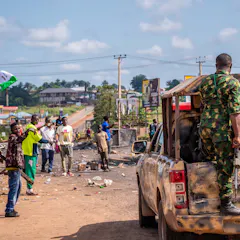
Africa’s powerhouse is about to elect its president in a highly volatile climate. Scholars have noted that each election gives way to violence, resulting in a high death toll.

Afrobeats truly conquered the globe, influencing music styles, packing out stadiums and lifting awards.
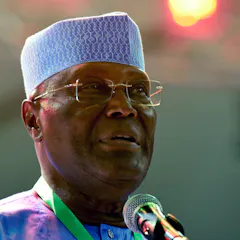
There are hurdles in the way of Nigeria’s major opposition party’s presidential candidate for the 2023 elections.
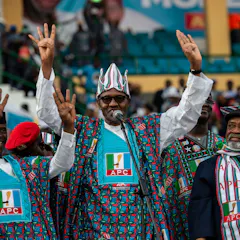
One year after the 2019 general elections in Nigeria, courts and not the electorate, are busy deciding actual winners of the polls.
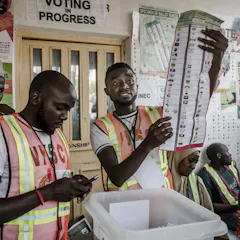
Nigeria’s Independent National Electoral Commission recently deregistered some political parties, leading to debates over whether this was a step in the right direction.

What role do foreign actors play in African elections? Cambridge Analytica’s case sheds some light.
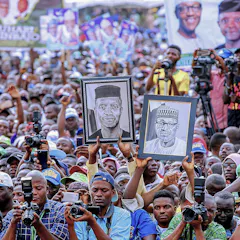
In the recent Nigerian election WhatsApp was used to mislead voters in increasingly sophisticated ways. But it also strengthened democracy in other areas.

Investors favoured Muhammadu Buhari’s opponent, Atiku Abubakar. So what are the Nigerian president’s economic priorities?
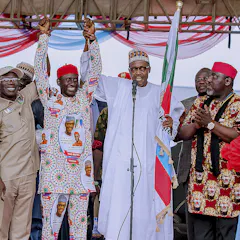
This is not the first time a Nigerian poll has been postponed but it is certainly the most dramatic.
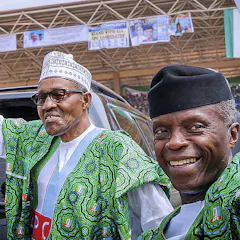
Buhari’s handling of the economy has been somewhere between poor and appalling. But the same could be said of past administrations.

Cultural icons like Achebe, Fela and Saro-Wiwa were among those who highlighted Nigeria’s failings.
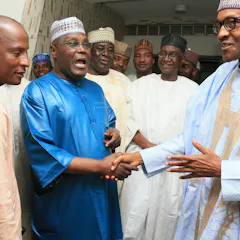
Despite the large number of aspirants for Nigeria’s 2019 elections, women and young people remain underrepresented.
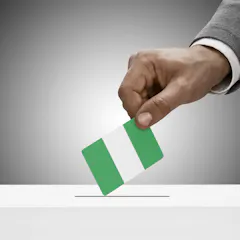
Young aspirant politicians lack support structure and the money, both of which remain strong factors in deciding politics in Nigeria.
Top contributors
-

Associate professor in Politics and International Relations, Leeds Beckett University
-
Fellow, Nigerian Academy of Science
-
Research associate NigeriaWatch & IFRA-Nigeria, Institut de recherche pour le développement (IRD)
-
Chair of the Journalism Department, Texas Christian University
-
Associate Professor and Director, School of Journalism and Mass Communication, University of Iowa
-
Research Associate, University of Bristol
-
PhD, Research Fellow at IFRA-Nigéria, University of Ibadan
-
Senior Lecturer, Department of Political Science, University of Nigeria
-
Professor of Democracy, University of Birmingham
-
Professor of Law, University of East London
-
Associate Professor of Journalism & Mass Communication, University of Iowa
-
Senior Research Fellow, University of the Witwatersrand
-
Research Fellow, Rhodes University
-
Associate Professor in the Department of Political Science and International Relations, Nile University of Nigeria
-
Senior Lecturer in Economics, University of East London