
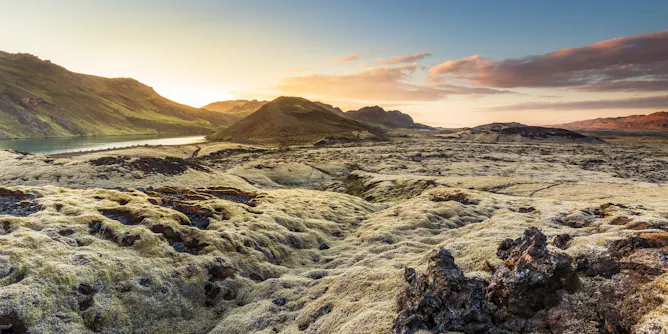
The last time south-west Iceland experienced a turbulent period of earthquakes and volcanic eruptions was in the 1300s.
Articles on Volcanology
Displaying 21 - 40 of 51 articles
Icelandic authorities have recently raised the threat level of the Grímsvötn volcano.
Volcanic ash is made of tiny crystal and rock fragments that during an eruption can reach as high as the cruising altitude of commercial aircraft, and that’s a concern for airlines.
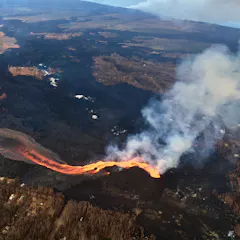
Scientists say they’ve found a new method to help predict when volcanoes will erupt, based on data crunched from an eruption last year in Hawaii.
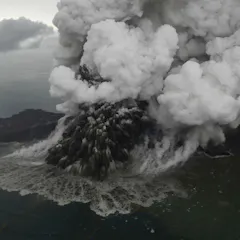
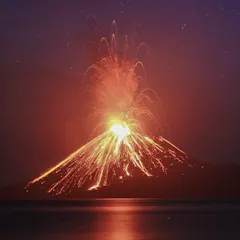
Research into volcanic activity in the waters off Indonesia shows how active this region is and how destructive landslide-caused tsunamis can be.
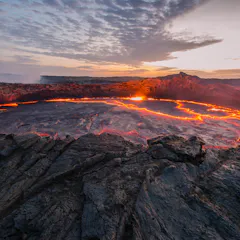
To be better prepared for future eruptions there’s a need to understand and monitor poorly known volcanoes, even in remote places.
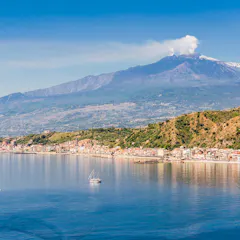
Gravity, not magma, is forcing Etna to move, increasing the chances of collapse.
Compared to Earth, more “oomph” is required to bring magma to the surface of Mars, and this is probably why we haven’t seen any recent eruptions on the red planet.
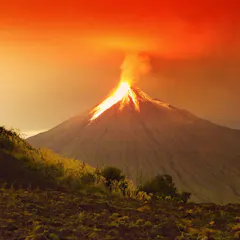
When magma rises towards the surface gas bubbles start to form. Whether or not they can escape as the magma is rising affects how explosive the eruption will be.
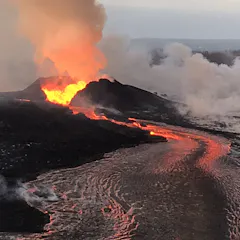
A mysterious cone has developed due to unusual volcanic activity on Hawaii.
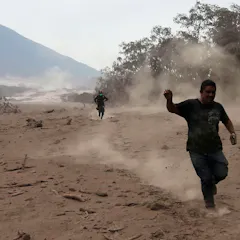
Important points about volcanoes: location matters, explosiveness can be predicted to an extent, and fast-moving flows of volcanic materials (known as pyroclastic flows) are deadly.
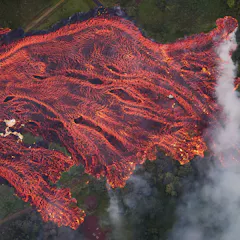
The current eruption of Kilauea on Hawai'is big island can tell us a lot about what is going on beneath the volcano and may provide lessons for future eruptions.
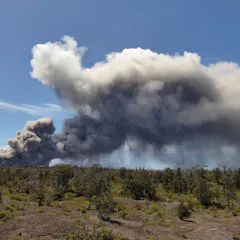
The Kīlauea volcano on Hawai'i’s big island is threatening to produce violent and energetic eruptions not seen since 1924.
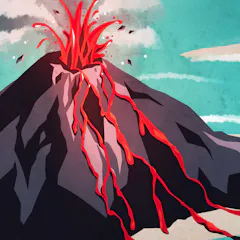
The short answer is that while lava is hot, it’s not hot enough to melt the rocks that make up the side of the volcano.
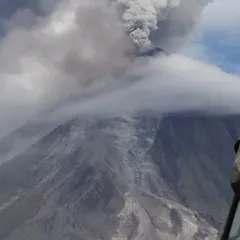
It feels as if volcanoes in our region are going off at a high rate right now - but it’s reasonably normal activity for the “Ring of Fire” belt running around the Asia Pacific.
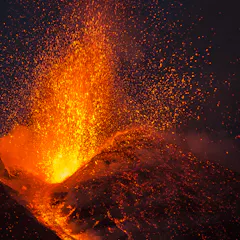
A new study has found a way to predict eruptions at Mount Etna within two weeks.
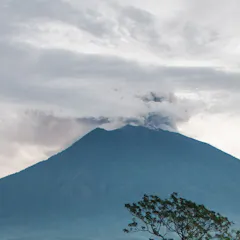
‘Volcano forensics’ involves a mixture of modern day monitoring and analysis of past eruptions. Geologists use volcanic rocks as a kind of time capsule to assess what happened previously.
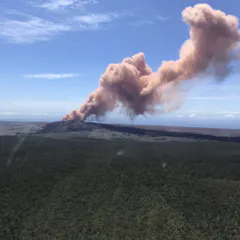
How do scientists predict volcanic eruptions? To do so with accuracy, they need to know the individual volcano and its history very well.
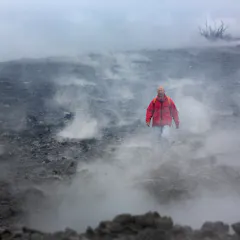
Volcanologists study the formation and eruptions of volcanoes - surely one of the most interesting jobs around. However, it can also be very dangerous.
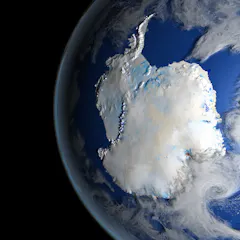
More than 100 volcanoes lie beneath the continent’s ice sheet.
Top contributors
-

Senior Curator of Geosciences, Museums Victoria Research Institute; Monash University
-
ARC Future Fellow and Associate Professor in Igneous Petrology/Volcanology, The University of Queensland
-
Lecturer in Volcanology, University of Hull
-
Professor of Geology, West Virginia University
-
Associate Professor in Earth Sciences, University of Tasmania
-
Professor of Earth Sciences, University of Auckland, Waipapa Taumata Rau
-
Volcanologist, Lancaster University
-
Emeritus professor in geology, Australian National University
-
Professor of Earth Sciences, University of Oxford
-
Assistant Lecturer in Volcanology, Monash University
-
Senior Instrument Scientist, Australian Nuclear Science and Technology Organisation
-
Professor, University of Edinburgh
-
Associate Professor of Geology, University at Buffalo
-
Professor of Planetary Geosciences, The Open University
-
Professor of Volcanology, University of Leicester