
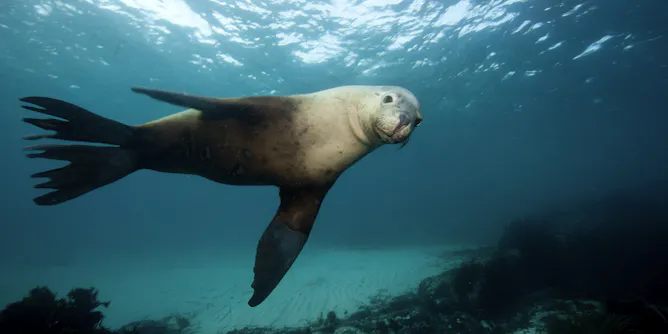
How does a dolphin or seal even get bird flu? Most likely through contact with sick birds – or eating their carcasses.
Articles on Virus transmission
Displaying all articles
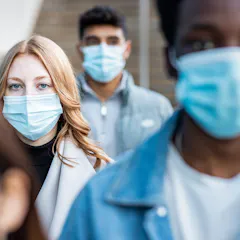
Decades of research show that respiratory illnesses are dramatically reduced when people wear face masks.
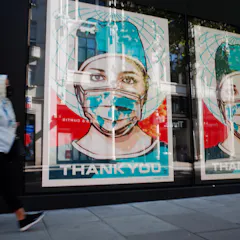
None of our authors can see the future, but many do have expertise that offers insights about what’s reasonable to expect.
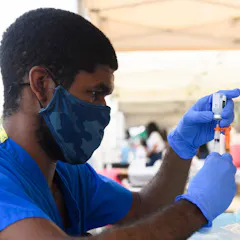
Some viruses go extinct, while others stick around. The virus that causes COVID-19 seems likely to remain with us for the long term.
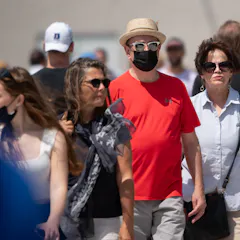
The COVID-19 vaccines are a smash success. But that doesn’t mean they keep every vaccinated person completely free of the coronavirus.

Will new guidelines on how to protect front-line workers acknowledge the coronavirus can spread via the air we breathe? It’s time they did.
COVIDSafe was only able to detect a handful of cases successfully, but that doesn’t mean Bluetooth isn’t a helpful tool for addressing viral spread.
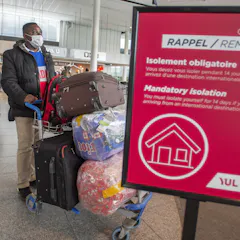
Our buildings and cities were not designed to handle a pandemic. But countries around the world are coming up with design ideas, some high-tech and some more basic, to reduce the infection risks.
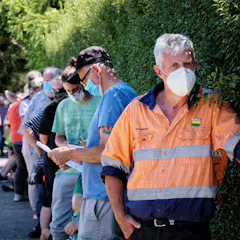
Investigations are continuing into the case of a returned traveller in NSW who tested positive to COVID two days after leaving hotel quarantine. Could they have had an abnormally long incubation period?

Super-spreader events typically have the ‘three Vs" in common: indoor venues, poor ventilation and vocalisation. But many buildings frequented by the public lack ventilation or the means to monitor it.
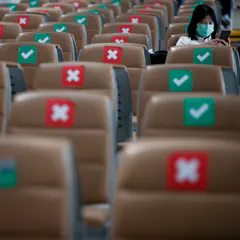
Hard evidence on how much coronavirus transmission occurs on transport is hard to come by. But there are ways to reduce your risk.
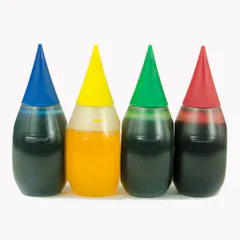
Aerosols of some FDA-approved food coloring could deactivate airborne viruses.

Our experts offer safer ways to bring back amateur sports.

Many people delayed routine doctor visits during social distancing. Now that distancing guidelines have eased, people still are concerned about going to the doctor. Here, two doctors offer guidance.
Top contributors
-

Postdoctoral Fellow in Virology, University of Colorado Boulder
-
Professor of Molecular, Cellular and Developmental Biology, University of Colorado Boulder
-
Postdoctoral Fellow in Virology and Immunology, University of Colorado Boulder
-
Postdoctoral research associate, Biomedical Engineering, Purdue University
-
Chair in Epidemiology, Deakin University
-
Professor of Biomedical Engineering, Purdue University
-
Adjunct Professor of Architecture, University of Technology Sydney
-
Emeritus Professor, Faculty of Science, University of Technology Sydney
-
Postdoctoral Fellow, Biomedical Engineering, Purdue University
-
Associate Professor of Epidemiology, University of Michigan
-
Pediatric Infectious Diseases Fellow, University of Pittsburgh
-
Associate Professor in Environmental Engineering, UCL
-
Doctoral student in Biomedical Engineering, Purdue University
-
Associate Professor of History, Rutgers University - Newark
-
Research associate, Warren Alpert Medical School, Brown University, Brown University