

During the pandemic, online learning suddenly replaced traditional teaching methods.
Articles on Virtual learning
Displaying 1 - 20 of 22 articles
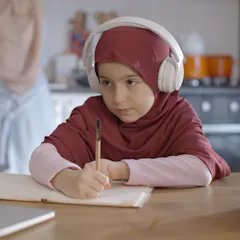
COVID public health measures included school closures and a shift to online learning. This placed immigrant families at a disadvantage as they saw to their children’s emotional and educational needs.

Courses designed to foster peer-to-peer learning in virtual spaces can yield research insights across disciplines.
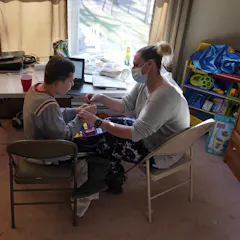
Many students with disabilities got few or no services during the pandemic, and aren’t now receiving the support they need to regain their lost ground and continue to learn

While the metaverse offers new virtual space for classrooms of the future, it is also rife with potential pitfalls, a scholar of philosophy writes.
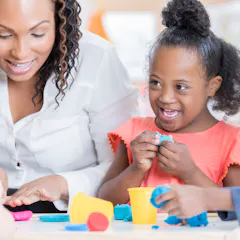
The pandemic and shifts to virtual learning have set many children back academically. The setbacks can be particularly challenging for children with disabilities, but recovery is possible.
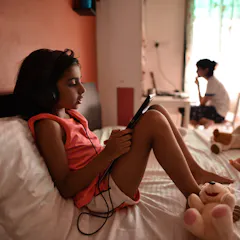
Children missed being with friends but liked the freedom to move around at home. These are some of the takeaways from an education researcher who talked to 30 kids ages 5-8.
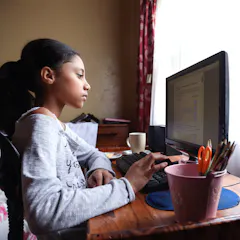
Whether they’re in a classroom or online, students should be encouraged to move around. An expert on learning with technology explains why.
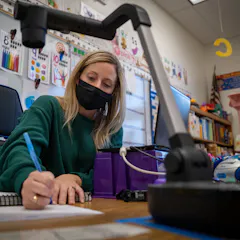
Virtual education piggybacked onto classroom learning demonstrates a lack of respect for teachers, student equity and public education.
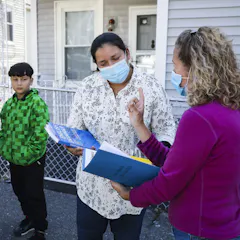
Teachers and students are likely to use a lot more online learning tools than they did pre-pandemic even after in-person classes resume.
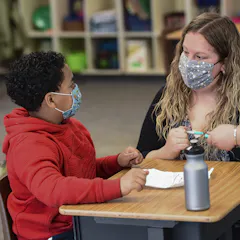
New research on Atlanta-metro students suggests they fell 7-8 months behind on learning during the pandemic.
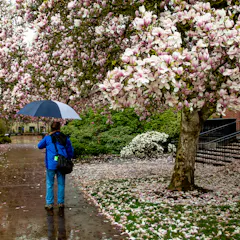
Strategic planning experts say public universities in developed countries can no longer depend on government funding, and must restructure to reduce costs and increase revenue or face failure.

The forced transition to online university learning will mean teaching practices will be permanently changed.
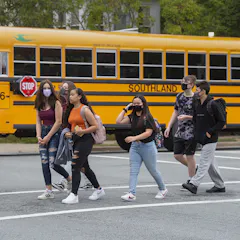
A policy of “choice” for full-time online schooling would weaken public education, erode funding for in-classroom supports and drive those who can afford it to private education.

Not everyone needs to be on campus to learn. Governments, which subsidize higher education, need to change their funding models to support affordable remote learning.
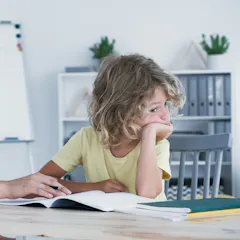
Moving between in-person and virtual schooling affects children with anxiety disorders like selective mutism. In addition, access to diagnosis and support is delayed because of pandemic restrictions.

Teachers’ optimism is strained when they know much more could be done to minimize COVID-19 safety risks in schools and to help them support student needs during COVID-19.
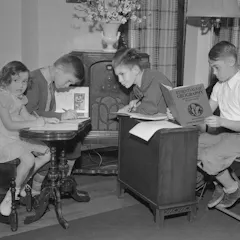
This isn’t the first time America’s schoolchildren have studied remotely – and Chicago’s 1937 ‘radio school’ experiment shows how technology can fill the gap during a crisis.

Before the pandemic, only a fraction of students made use of the wide range of curricular and extracurricular experiential learning opportunities, but through online engagement that can change.
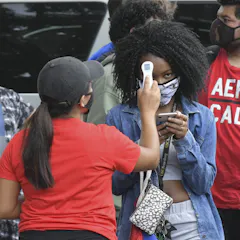
Checking for symptoms is just the beginning. Here are 10 ways schools can help keep children, families and faculty safe.
Top contributors
-

Professor of Nursing, Johns Hopkins University
-
Associate Professor of Learning Sciences and Human Development, University of Washington
-
Director of Research at Georgia Policy Labs, Georgia State University
-
Associate Professor, Faculty of Education, University of Windsor
-
2023 California Health Equity Fellow, University of Southern California
-
Professor of Accounting, Athabasca University
-
Associate Professor of Special Education, UMass Lowell
-
Senior Research Scientist, African Population and Health Research Center
-
Professor of Applied Developmental Psychology, University of Maryland, Baltimore County
-
Doctoral Student, Curriculum Studies, University of Saskatchewan
-
Professeur agrégé, École d'études politique, Directeur, Centre d'études en gouvernance / Associate professor, School of Political Studies, Director, Centre on Governance, L’Université d’Ottawa/University of Ottawa
-
Assistant Professor of Education and Human Development, Texas A&M University-San Antonio
-
Senior Associate Dean, Business, University of Calgary
-
Professor of Philosophy and Director of Applied Ethics Center, UMass Boston
-
Associate Professor of Early Childhood Education, University of Maryland, Baltimore County