

Artificial intelligence technologies are changing how users experience intimate romantic and sexual connections. These technologies bring many positive benefits, but there is a dark side.
Articles on virtual assistants
Displaying all articles

The latest update to ChatGPT includes a voice assistant that sounds like Scarlett Johansson. The use of the “eerily similar” voice reflects a longstanding gender issue with technology.

Scarlett Johansson said one of the five voices used for OpenAI’s new product sounded very like her.

AI tools are becoming increasingly personalised to cater to our every need. Will outsourcing the handling of information to AI make us ‘dumber’?
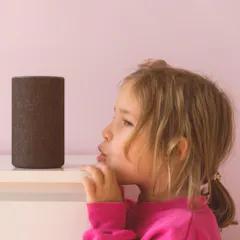
Children’s voices and actions are recorded by virtual assistants, but what is being done with all the collected information?

Digital assistants have been defaulted to having female voices because of how developers and coders view women’s labour.
As the use of virtual assistants like Siri and Alexa expand in homes and workplaces, designers are working to make voice exchanges more natural.
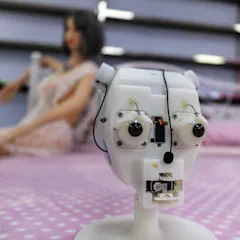
The age of ‘artificial intimacy’ is upon us. What does it mean for the way we love, have sex and build friendships?

They’re associated with fake news and celebrity porn videos but there are some unexpected upsides to these slippery clips.

The likes of Alexa and Siri shouldn’t blindly aim to sound and behave like us - their voices need to reflect what they can actually do.

The first thing to know is that Siri is not a “who” – Siri is a “what”.

Tech companies portray virtual assistants like Alexa and Siri as our helpers. In reality, we’re helping them gather the behavioural data they need to turn a profit.
Reports of the death of accents have been greatly exaggerated.

Virtual assistants are often assumed to be female – perpetuating gendered assumptions in our imagined future.

Amazon, Google and Apple’s attempts to understand the tone of human voices can reflect human biases.

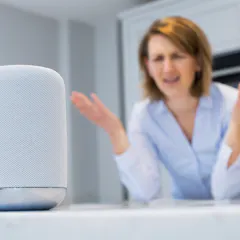
Siri is sassy. But when does the tone of voice in digital help override usefulness?
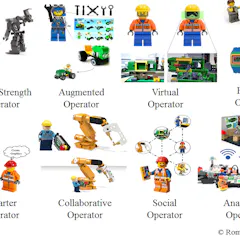
People will still be needed on factory floors, even as robots become more common. Future operators will have technical support and be super-strong, super-smart and constantly connected.
Top contributors
-

Senior Lecturer in Film and Media Studies, Manchester Metropolitan University
-
PhD Candidate, Communication & Culture, York University, Canada
-
Adjunct Senior Lecturer, Edith Cowan University
-
Professor of Acoustic Engineering, University of Salford
-
Senior Director, Collaboration and Continuity Technologies, Duke Health, Duke University
-
Professor of Production Systems, Chalmers University of Technology
-
Professor of Advanced Manufacturing, Instituto Tecnológico y de Estudios Superiores de Monterrey
-
Senior Lecturer in Linguistics, Manchester Metropolitan University
-
Senior Lecturer, School of Design, University of Technology Sydney
-
Professor of AI and Spatial Computing, Liverpool Hope University
-
Assistant Professor & J. Wayne and Kathy Richards Faculty Fellow in Engineering, West Virginia University
-
Communications Manager, University of British Columbia
-
PhD Student of Communication & Culture, York University, Canada
-
Senior Research Fellow, Human-AI Decision Making, The University of Queensland
-
Scientia Professor of Evolution, UNSW