
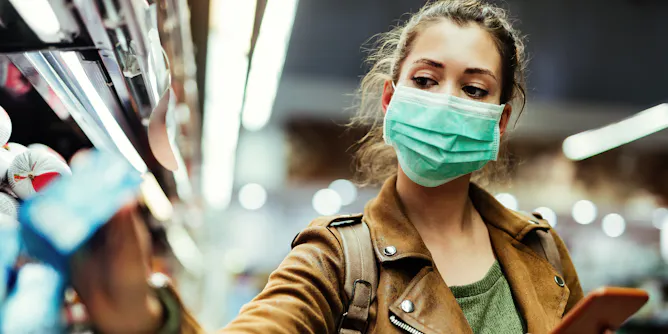
Delta is more contagious and appears to be more deadly. And it’s more likely to land those infected in hospital and intensive care. Here’s what the latest evidence says about the dominant variant.
Articles on Virology
Displaying 41 - 60 of 89 articles
It’s unclear whether the patients were already predisposed to these diseases, or the infection unmasked a process that had already begun. Or perhaps the infection triggered a completely new illness.

It’s not spreading widely, and it’s not at Australia’s doorstep. The tools we have in place work against the coronavirus.
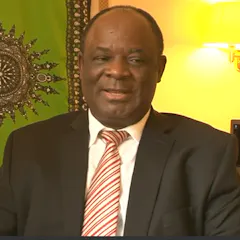
Nigeria’s academic community is mourning the death of virology professor and leading researcher, David Olufemi Olaleye.
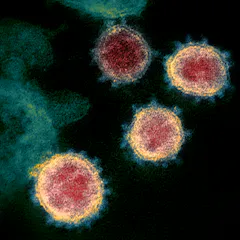
New DNA evidence shows humans may have been battling coronaviruses for longer than recorded history.
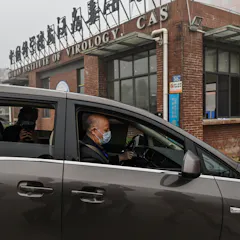
The research community is taking a closer look at the lab-leak hypothesis for the origin of COVID-19, prompting discussion about the risks and benefits of engineering viruses.
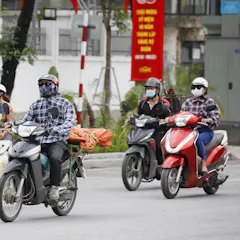
We recently heard reports of a new and dangerous ‘hybrid’ variant circulating in Vietnam. There is such as a thing as a hybrid viral variant — but this doesn’t appear to be it.
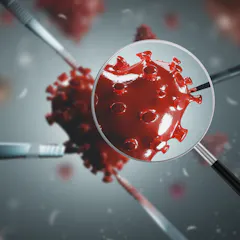
Bat hosts, lab leaks – tracing SARS-CoV-2 to its origins involves more than just tracking down patient zero.
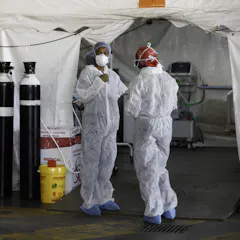
We can help vaccines keep up with the mutating coronavirus by doubling down on preventive measures.
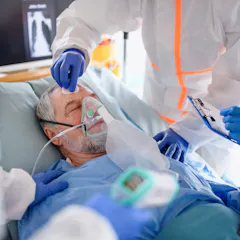
The UK government has claimed the new British variant of the coronavirus may be 30% more deadly.
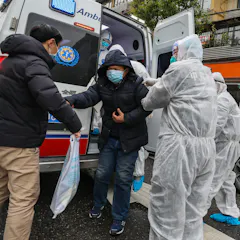
The Conversation first reported on the novel coronavirus on January 13 2020. A virologist reflects on what happened since he first wrote that article.
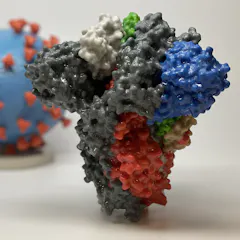
It’s the part of coronavirus that helps the virus get into your cells – and also the target of the leading vaccines.

As the world waits for vaccines against COVID-19, testing wastewater can give communities and smaller locales, such as school districts, valuable signals about infections trends.
Canada has set aside a total of 414 million doses of different types of vaccine. Some exploit known mechanisms, others are based on previously untested approaches.
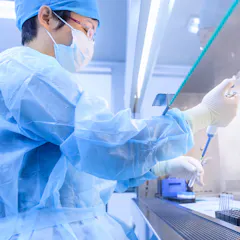
Scientists handle virus samples every day but infections are incredibly rare – here’s why.

An unprecedented level of research has gone into understanding the novel coronavirus. Here’s what we still don’t know.
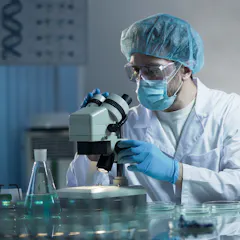
The evidence suggests the novel coronavirus evolved naturally.
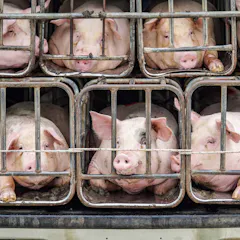
It’s excellent this virus has been found early, but there is no evidence yet of human-to-human transmission.
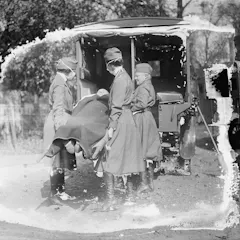
Differences in the viruses’ biology and societal contexts mean there’s no guarantee today’s pandemic will mirror the ‘waves’ of infection a century ago.
The US and its allies are demanding answers over how COVID-19 became a pandemic. But instead of pointing fingers at China, the inquiry should focus on scientific clues to help us thwart future disasters.
Top contributors
-

Associate Professor and Research Leader in Virology and Infectious Disease, Griffith University
-
Lecturer in Virology, Queen's University Belfast
-
Professor of Biological Sciences, University of Maryland, Baltimore County
-
Lecturer, Biomedical and Life Sciences, Lancaster University
-
Professor, MRC-University of Glasgow Centre for Virus Research, University of Glasgow
-
Associate Professor of Neurology, University of Colorado Anschutz
-
Director and CEO, Burnet Institute
-
Professor of Global Biosecurity, NHMRC L3 Research Fellow, Head, Biosecurity Program, Kirby Institute, UNSW
-
Adjunct Associate Professor, Faculty of Medicine
-
Professor of Virology, University of Reading
-
Scientific Officer in Biomedical Sciences, University of Leeds
-
Professor Microbiology, The University of Texas Medical Branch
-
Assistant Research Scientist in Epidemiology, University of Michigan
-
Professor of Infectious Diseases, King's College London
-
Associate Professor of Complex Systems, Epidemiology and Mathematics, University of Michigan