
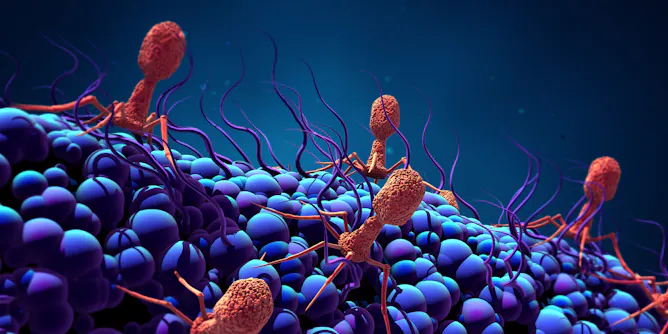
Phages, or viruses that infect bacteria, can lie dormant within chromosomes until they’re triggered to replicate and burst out of their hosts.
Articles on Viral infections
Displaying 21 - 40 of 67 articles
Coinfections with bacteria can make viral infections even deadlier. Researchers have identified a protein in immune cells that may play a role in fighting both types of pathogens.
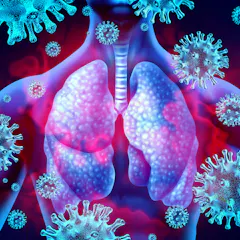
While a strong immune response is essential to fight against viral infection, an immune system that continues to stay active long after the virus has been cleared can lead to lung damage.
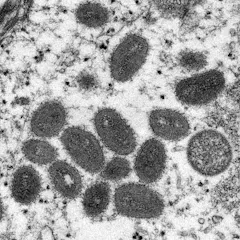
This is not the first time that the monkeypox virus has spread beyond Africa, its continent of origin. But the current epidemic is unprecedented for a number of reasons.
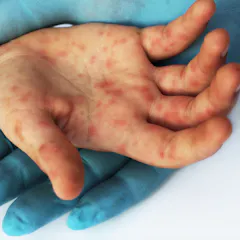
The latest report from the WHO and Unicef found cases have increased nearly 80% worldwide.

Decreases in respiratory infections during the pandemic suggest there may be a continued role for the selective, non-mandated use of measures like masks and social distancing even post-COVID-19.

Rhinoviruses may play a critical role in controlling the spread of SARS-CoV-2 among the human population.

SARS-CoV-2 is much like a zombie virus. It interferes with normal sickness behavior and blocks pain, turning its victims into unsick spreaders of the virus.

Resistant bacteria aren’t the only risk posed by overprescribing antibiotics. A more immediate risk is side-effects and reactions, which a new review shows are surprisingly frequent and often severe.
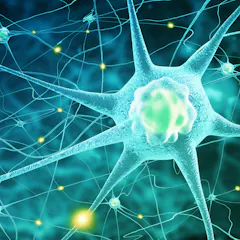
This antibody protects patients from viruses, even while on immunosuppressant drugs.
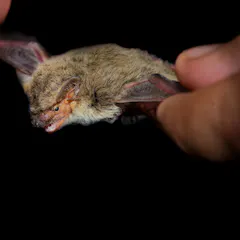
Bats have been the reservoir for recent disease outbreaks, including SARS and the current COVID-19 pandemic. But it’s human activity that allows the virus to cross over.
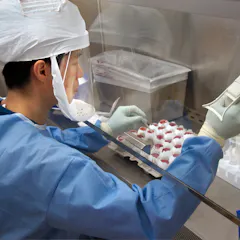
The conspiracy theory that Covid-19 was created in a laboratory has been widely reported, yet there is no evidence to support it. Why such theories thrive can easily be explained, however.
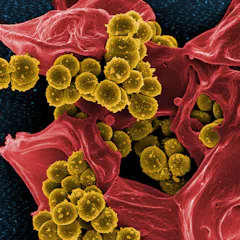
Antimicrobial resistance is a public health and economic disaster waiting to happen. If we do not address this threat, by 2050 more people will die from drug-resistant infections than from cancer.
Scientists and academics on how the world might change once this is all over, and if a return to ‘normality’ is even possible.

Since the pandemic began, the new coronavirus has infected more than 780,000 people and killed at least 37,000. The experts at The Conversation offer its readers insights from every continent.

Citizens around the world look warily at the rates of illnesses and deaths at home and abroad as the economic effects of COVID-19 start to hit.

Among the more than 20,000 drugs approved by the FDA, there may be some that can treat COVID-19. A team at the University of California, San Francisco, is identifying possible candidates.

The SARS-CoV-2 virus responsible for the COVID-19 pandemic is undergoing extensive genetic analysis around the world to understand its origin and evolution.

Currently, the number of confirmed global COVID-19 cases is doubling about every six days. At this rate, Australia’s health sector will be unable to cope.
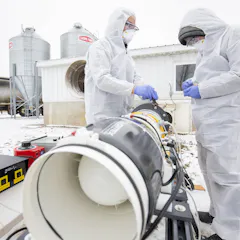
Viruses are small enough to pass through filters, including face masks. Disabling viruses with electrically charged gases could be a better way to curb airborne transmission.
Top contributors
-

Biologiste, Immunologiste. Directeur de recherches au FNRS, Université Libre de Bruxelles (ULB)
-
Professor of Global Biosecurity, NHMRC L3 Research Fellow, Head, Biosecurity Program, Kirby Institute, UNSW
-
Associate Professor of Neurology, University of Colorado Anschutz
-
Senior Research Fellow, School of Medicine, The University of Western Australia
-
Professor, College of Medicine and Public Health, Flinders University
-
Laureate Professor Emeritus, The Peter Doherty Institute for Infection and Immunity
-
Associate Member, Fred Hutchinson Cancer Research Center and Affiliate Associate Professor of Genome Sciences and Microbiology, University of Washington
-
Professor, Biomedicine Discovery Institute, Monash University
-
Dean Students, College of Health, Adelaide University
-
Professor in Microbiology and Molecular Biology, UNSW
-
Public Health Registrar in the Division of Public Health Medicine, University of Cape Town
-
Clinical Senior Lecturer, Clinical Medicine, Trinity College Dublin
-
Distinguished Professor, Division of Family Medicine and Primary Care, Stellenbosch University
-
Chief Research Scientist, Virology Project Leader, CSIRO
-
Professor, National Centre for Epidemiology and Population Health, Australian National University