

What’s really the most dangerous American city? The way crimes are currently counted in the US can easily confuse and mislead.
Articles on Violence
Displaying 321 - 340 of 577 articles
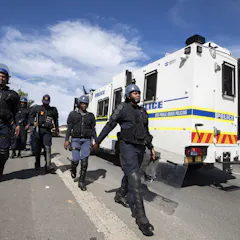
Increasing police patrols won’t solve South Africa’s high rates of violent crime. Underlying problems need to be addressed.
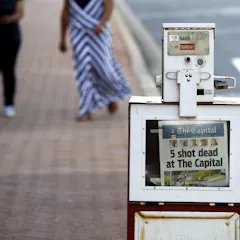
Violence against journalists is on the rise. Many people don’t realize that such acts have a long tradition in the US, where partisan rancor was once a hallmark of American journalism.
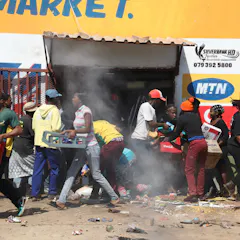
Framing xenophobic violence as a question of immigrant victimisation invites divisions between neighbours.
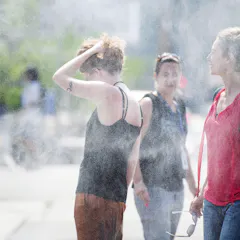
Climate change poses a threat to our mental health. Building connected communities is one way to combat a rise in suicide rates as global temperatures increase.
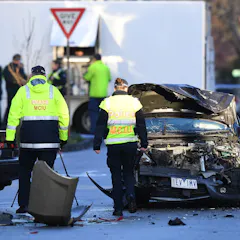
After a violent brawl involving African Australians on Sunday, Prime Minister Scott Morrison suggested Victoria Police needed to take a firmer hand – but it’s far more complicated than that.

Frantz Fanon recognised mental illness as a real experience and offered an understanding of it being influenced by society and culture.

Sobriety tags monitor how much alcohol a person drinks – can they work to reduce crime?
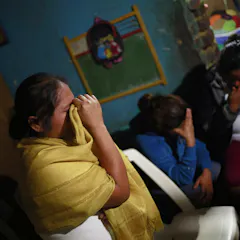
Ciudad Juárez, on the US-Mexico border, has suffered high levels of deadly violence for over a decade. New suicide data reveals the severe mental health impacts of living with chronic violence.

Rigid gender roles and stereotypes are key drivers of violence against women. So let’s challenge these by starting young.
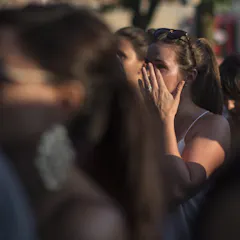
After acts of violence, we want to make sense of what is right and wrong and where we stand in the world. But we must ensure our belief systems are periodically and systematically checked.
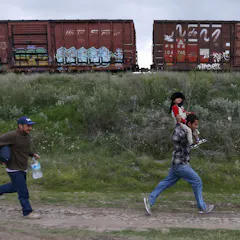
Central American youth are 10 times more likely to be murdered than children in the US. Child homicides in Guatemala, Honduras and El Salvador are rising even as other violence declines.

Low-income women suffer evictions and violence in Canada’s most “livable” cities.
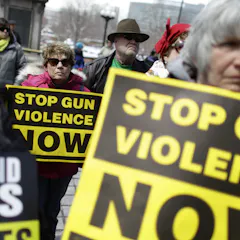
After mass killings, politicians feel compelled to offer solutions to gun violence. One of the most common answers is better access to mental health care, but research has found that’s not effective.
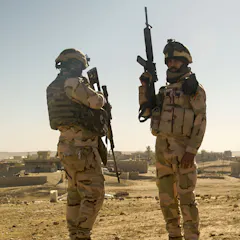
Ten years after the publication of two major works about violence, their authors meet to discuss their theories and renew the debate.
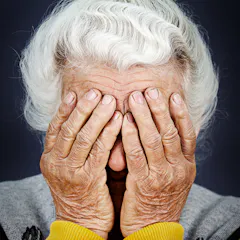
At least one in six older people experience some form of physical, emotional, sexual or financial abuse each year.
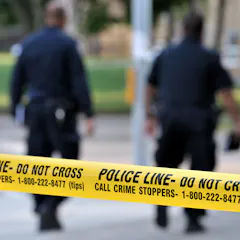
Experiencing and witnessing violence in their communities can lead to emotional, social and cognitive problems for kids. A new study shows it affects how their developing brains grow, as well.
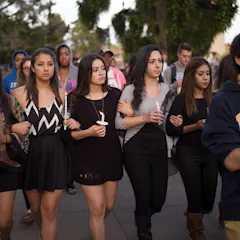
Incels compare themselves to other men, before blaming women for withholding sex from, in their perception, deserving men.

We should consider the messages that violence and aggression in sports of all kinds give children and young people – and devise strategies to lessen the impact.
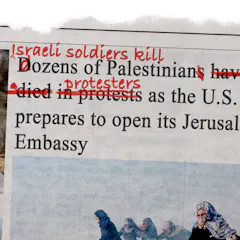
When reporting violence, grammar matters: the use of voice is key to apportioning blame and, importantly, an accurate depiction of what has taken place.
Top contributors
-

Professor (Practice), Faculty of Business and Economics, Monash University
-
Principal Research Fellow, Griffith University
-
Professor of Violence Prevention and Addiction Studies, Deakin University
-
Senior Lecturer, School of Media, Film and Journalism, Monash University
-
Co-Director of the Wits-Oxford Mobility Governance Lab, University of the Witwatersrand
-
Professor of International Politics, Lancaster University
-
Professor of Sociology, School of Justice, Queensland University of Technology
-
Professor of Communication, The Ohio State University
-
Professor of Criminal Justice, Metropolitan State University
-
Professor Gender and Childhood Sexuality, University of KwaZulu-Natal
-
Associate Professor in Criminal Justice and Criminology, Bond University
-
Richard von Weizsäcker Fellow na Bosch Academy e Co-fundador, Instituto Igarapé; Princeton University
-
Professor of Family Violence Prevention, The University of Melbourne
-
Associate Research Professor of Social Psychology, Louisiana State University
-
Emeritus Professor Monash University, Monash University