
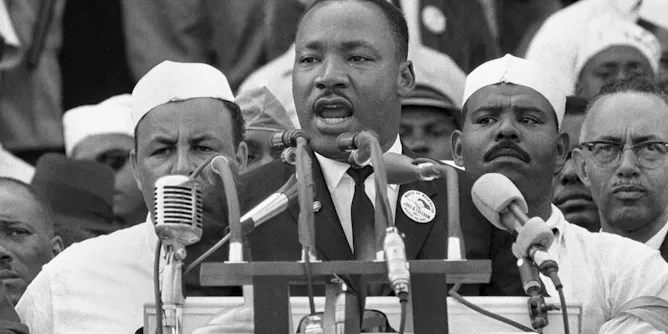
King Jr., remembered today mainly for his non violent resistance, was a radical reformer who called for a fundamental redistribution of economic power and resources .
Articles on Vietnam War
Displaying 141 - 160 of 177 articles
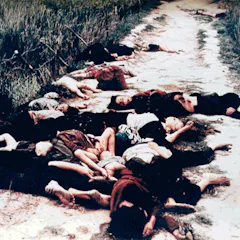
If Americans remember My Lai, they likely know that something awful happened there. On this 50th anniversary, it is worth recalling the grotesque details, in the hope of preventing a future My Lai.

As Toronto reacts to the news that a killer was preying on victims in the city’s gay village, an expert on serial killers explains how violent offenders are more strategic than previously thought.
The protest song “Malcolm’s gone” not only pays tribute to one of the most influential black leaders, but provocatively likens him, as a Muslim and so-called enemy of the state, to Jesus Christ.
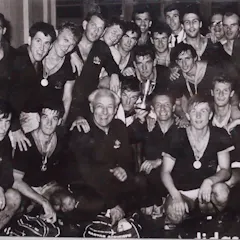
At the height of the Vietnam War, the Holt government agreed it would be a good idea if the national football team took part in a tournament in Vietnam to boost morale.

John Lennon and Yoko Ono visited Canada on a peace mission: They met with leaders and asked difficult questions, relevant today. How do we effectively protest against social injustices and war?
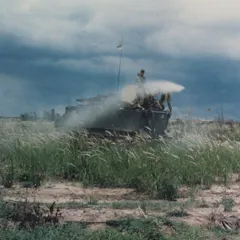
The use of Agent Orange in Vietnam had deep impacts, including a poisoned water supply, birth defects and cancer. Despite decades of attempted litigation, justice for spraying victims seems unlikely.
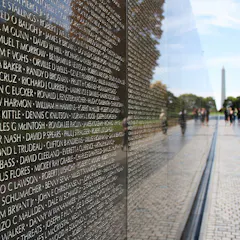
Almost hidden in the orderly rows of men’s names on the Vietnam War Memorial are those of eight female nurses who died in the conflict.
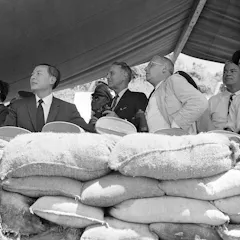
Walt Rostow argued communism was incompatible with economic development and was influential in persuading Presidents Kennedy and Johnson to get more involved in Vietnam.
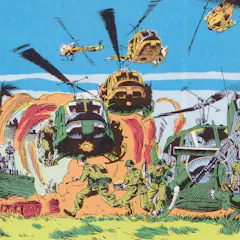
Because they’re mass-produced and written in a serialized format, comics can be seen as historical documents that reflect the political moment.

Not all who fled Vietnam at the end of the war wanted to be resettled in the US. But those who returned faced an unwelcoming government.
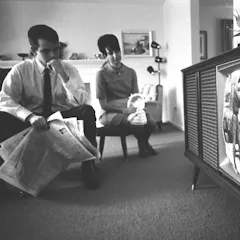
After footage from America’s first ‘living room war’ shocked the public, the government would clamp down on media coverage of future military conflicts.
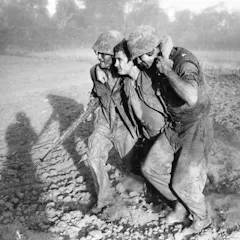
Is there honor in a losing battle? The US military faced this question in Vietnam. Its response would eventually change how the media covered war and how Americans perceive it.
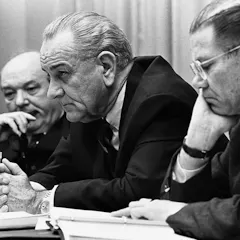
Was Vietnam ‘a quagmire’ or a ‘stalemate machine’? Understanding this 50-year-old debate can shed light on why the US is currently locked into a ‘forever war.’
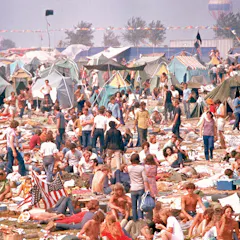
Musicians were able to connect with confused, scared and angry Americans – including those who supported the war – in a way actors, broadcasters and writers could not.
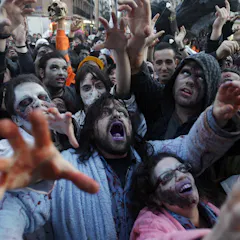
Romero’s ‘Night of the Living Dead’ and ‘Dawn of the Dead’ will be remembered among the first films to use horror as a form of political critique.
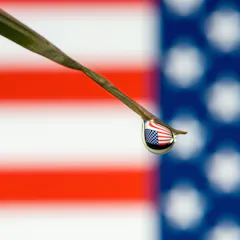
American citizens have long favored government openness over secrecy. But with heightened anti-leak and anti-press rhetoric, do some now want strengthened government control of information?

The inability to reconcile wartime actions with a personal moral code can create lasting psychological consequences for veterans.
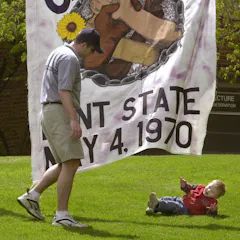
The May 4, 1970 shootings at Kent State still loom large in our national conscience. What do these events tell us about the role of the university in today’s climate of student protest?
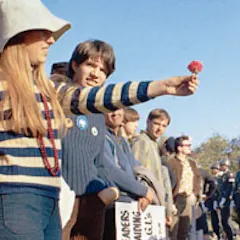
Student protest has been in the political spotlight since Trump’s election. Todd Gitlin, former president of Students for a Democratic Society, shares his perspective on protest in the 60s and now.
Top contributors
-

Professor of Law, University of Waikato
-
Emeritus Professor of History, University of Toronto
-
Professor of Communication and Journalism, University of Maine
-
Research Fellow and Historian of War and Conflict, Deakin University
-
Associate Professor of Legal Studies and Political Science, UMass Amherst
-
Senior Lecturer in History, Australian Catholic University
-
Emeritus Professor of Politics, Monash University
-
James S. Sherman Professor of Government, Hamilton College
-
Lecturer in Modern US History, University of Essex
-
Honorary Fellow, School of Historical and Philosophical Studies, The University of Melbourne
-
Professor of Political Science, Macalester College
-
Professor of History, Vanderbilt University
-
Professor of Film Studies, Bangor University
-
Senior Lecturer in History, University of Newcastle
-
Professor of History and Law Faculty, The Ohio State University