
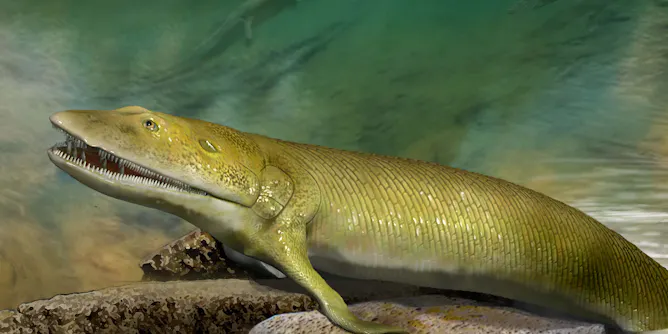
The arrangement of bones in our specimen’s fins are the same as those of ‘fingers’ in tetrapods. The only difference is the digits are locked within the fin, and not free moving.
Articles on Vertebrates
Displaying 21 - 30 of 30 articles
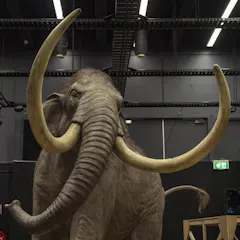
Knowing an animal’s normal lifespan is hugely important for conservation efforts, but it’s harder to find out than you’d think.
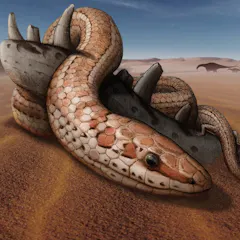
The discovery of a perfectly preserved snake skull fossil answers many questions about the evolution of snakes from lizards.
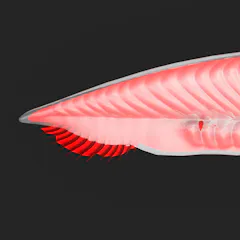
The marine creature amphioxus allows scientists to explore some of the steps that took place as simple creatures evolved to become complex animals.
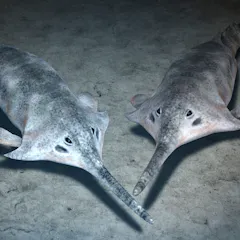
New research shows shallow, near-land seas similar to Bass Strait were critical in the early days of fish evolution. These are the waters we need to protect now to ensure ongoing biodiversity.
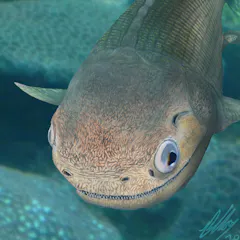
A 400 million year old fossilised fish skull gives us very early and previously unknown clues about how boney fishes evolved into the vertebrates we see today on Earth - including us humans.

Little skates that ‘walk’ across the ocean floor show how fish brains evolved to pave the way for working legs.
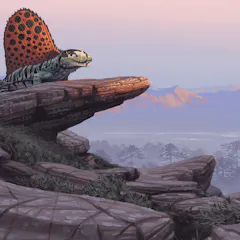
A drying climate caused a mass extinction among plants, but paved the way for the ancestors of modern reptiles, mammals, and birds.
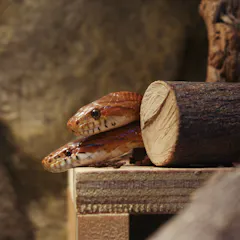
If one venomous snake bites a mouse and injects venom into it, you can then feed that same dead mouse to another snake. The second snake won’t die.
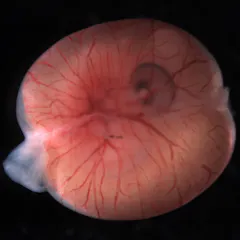
Taking the placenta as a case study, researchers are able to piece together how new organs evolve, by repurposing old tissues and using them to do new jobs.
Top contributors
-

Emeritus Strategic Professor in Palaeontology, Flinders University
-
Jenny Graves is a Friend of The Conversation.
Distinguished Professor of Genetics and Vice Chancellor's Fellow, La Trobe University
-
Associate Professor, James Cook University
-
Research Associate in the College of Science and Engineering, Flinders University
-
Lecturer, Macquarie University
-
Assistant Professor in Palaeontology, Trinity College Dublin
-
Research Fellow, School of Biological Sciences, Monash University
-
CSIRO
-
Palaeontologist, Albany Museum (supported by the Millennium Trust and the DSI-NRF Centre of Excellence in Palaeosciences, the NRF and the NSCF), Rhodes University
-
Research group leader, Naturalis Biodiversity Center and Senior researcher, Instituut Biologie Leiden, Leiden University
-
Jodrell Professor of Zoology and Comparative Anatomy, UCL
-
PIO, Florida International University
-
Researcher, Evolutionary Biology, University of Zurich
-
Professor, Curator of the Palaentological Museum, University of Zurich
-
Lab Head-Developmental Epigenomics and Senior Research Fellow, Garvan Institute