
While it doesn’t constitute a national ban on gender-affirming care for minors, the executive order contains provisions that could have a chilling effect on health care providers around the country.
Articles on US Supreme Court
Displaying 201 - 220 of 951 articles
The new study reinforces warnings from doctors about abortion laws with limited or no exceptions.
If a federal prosecutor were to put a city’s mayor or a state’s governor in jail, what may be the greatest source of conflict in the Constitution will become clear to the public.
While the Court’s politics have veered right over the past decade, the justices’ prose has shifted left, becoming more colloquial and accessible.
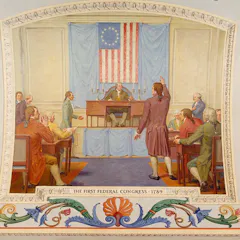
The mechanics of upending American democracy would entail surmounting a thick tangle of constitutional, bureaucratic, legal and political obstacles.

Joe Biden’s imprint on the federal judiciary goes far beyond his naming of the first Black woman justice to the Supreme Court.
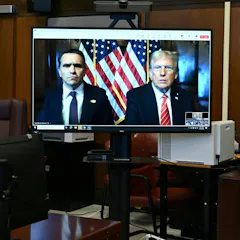
Donald Trump sentenced in New York in hush money case, but he avoids prison, probation or fines.

Enforcing environmental laws isn’t a job that makes people popular. But polls show that Americans generally want more environmental protection, not less.
A New York state court judge sentenced Donald Trump in his hush money case to ‘unconditional discharge.’ What does that mean?
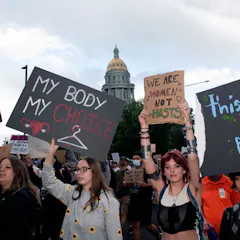
Colorado voters have been asked 10 times since 1970 to vote on abortion ballot measures.
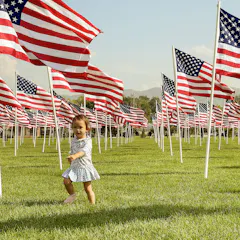
Since the earliest days of the nation, any person born on US soil is a US citizen. A new Supreme Court ruling limits judges’ ability to block Trump’s order.
The Supreme Court will consider how far outward federal agencies should look when they analyze how a proposed action could affect the environment.

The First Amendment might complicate plans to prosecute the people who sent up to 500,000 anonymous messages in November calling Black people ‘slaves,’ among other hate speech.
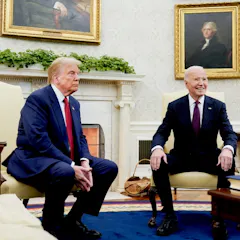
Donald Trump have found some of his cabinet nominees have not been confirmed in the past. This time he seems to think he can avoid that.
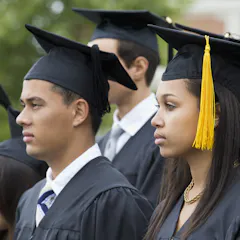
A year after the Supreme Court banned race-based admissions, students’ choices and college policies have affected a view of its impact.

The Supreme Court’s approach toward religion in schools has been shifting, adding to uncertainty about legislation such as Louisiana’s.
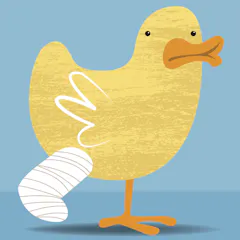
The lame-duck period in the US is longer than in other Western democracies, which tend to make the transition over a period of just days.
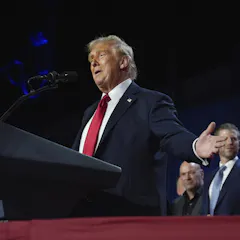
His return follows the trail of another American president who rebounded from defeat to victory and then four years of unchecked power.
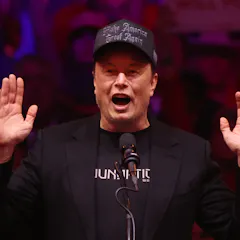
The outcome of the election could have important implications for the world’s richest man.
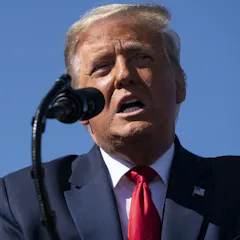
Conservatives defend efforts to dismantle the federal bureaucracy as tactics against tyranny, but Americans exercise their sovereignty through these civil services.
Top contributors
-

Professor of American Civics, University of Tennessee
-
Joseph Panzer Chair in Education and Research Professor of Law, University of Dayton
-
William Nelson Cromwell Professor of Jurisprudence and Political Science, Amherst College
-
Professor of Legal Studies and Political Science, UMass Amherst
-
Professor of Law, University of Virginia
-
Associate Professor of Political Science, College of Charleston
-
Professor of Law, George Washington University
-
Associate Professor of American History and Politics, University of East Anglia
-
Associate Professor of Law, Quinnipiac University
-
Professor of Law Emeritus, Vermont Law & Graduate School
-
Professor of Law and Adjunct Professor of Political Science, Wayne State University
-
Professor of Law and Director of the Center for Professional Ethics, Case Western Reserve University
-
Professor of Law, University of Richmond
-
President, Dickinson College
-
Associate Professor of Philosophy and Law, Wayne State University; Institute for Humane Studies