

The disputes raise questions about the region’s economy and environment, as well as national priorities over energy, water, climate and Indigenous rights.
Articles on US Supreme Court
Displaying 121 - 140 of 951 articles
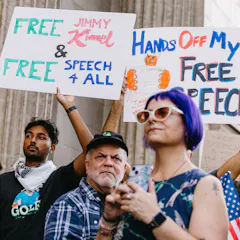
Think you know what the First Amendment means and protects? You − and a lot of Jimmy Kimmel’s defenders − may well be wrong.
The First Amendment is not just about the right to speak without fear of jail. It’s also about ensuring that government cannot punish speech indirectly by threatening livelihoods and institutions.
Donald Trump’s unprecedented firing of a Federal Reserve board member isn’t just about her job status. It’s about what checks remain on a president bent on vastly expanding his office’s power.

You’re probably hearing references in the news to “Article 1,” “Article 2” and “Article 3.” Why are phrases usually associated with discussions of constitutional law now cropping up in politics?

A new study found that, on average, infant deaths increased by more than 7% in states with laws that limited abortions.
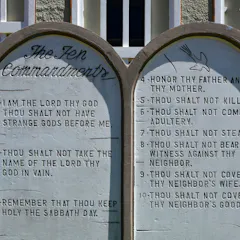
Louisiana, Texas and Arkansas are testing a Supreme Court precedent barring displays of the Ten Commandments’ display in public school classrooms.

Donald Trump has plans to prosecute anyone who burns the US flag, but not all Republicans agree.

Research shows that Supreme Court justices affiliated with the group are more consistently conservative than other justices, meaning they seldom deviate from their voting behavior.
Griswold v. Connecticut, decided in 1965, set the precedent for several other landmark cases about sex and privacy.
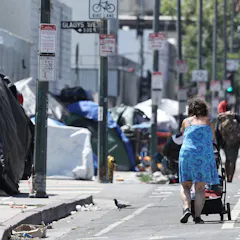
More than one year after the Supreme Court’s Grants Pass v. Johnson ruling, a geographer who researches homelessness finds that the ruling is leading to more places criminalizing homelessness.

School lawyers are petitioning the Supreme Court to hear Cambridge Christian School v. Florida High School Athletic Association.

A landmark 1964 Supreme Court ruling protects the press in lawsuits by public officials angry about how they’ve been covered. It’s being targeted by President Donald Trump.
The meaning and application of due process has become a crucial issue in the US, most often with respect to the Trump administration’s migrant deportation efforts.
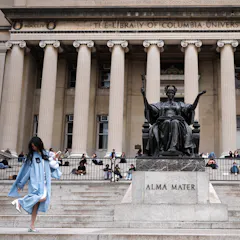
While Columbia University can afford to pay the government $200 million in order to unfreeze federal grants and contracts it was awarded, many other universities and colleges could not.

Hiding ICE attorneys’ names in immigration court proceedings violates a fundamental principle that has protected Americans for centuries: open courts.
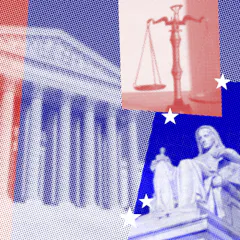
The public typically finds out about the Supreme Court from the news media. And the way reporters have covered the court has recently changed – dramatically.
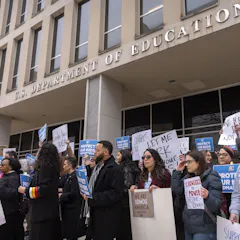
The justices overruled a lower court that had paused the Trump administration’s plan to fire over 1,300 workers.
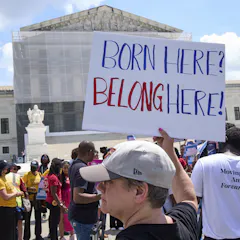
The Supreme Court can still invalidate the newest national injunction and allow the order to go into effect anywhere it is not currently barred from doing so. That would create administrative chaos, the authors write.
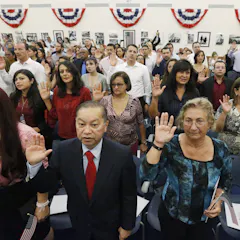
In 1967, the Supreme Court said the government usually cannot take away citizenship without a person’s consent.
Top contributors
-

Professor of American Civics, University of Tennessee
-
Joseph Panzer Chair in Education and Research Professor of Law, University of Dayton
-
William Nelson Cromwell Professor of Jurisprudence and Political Science, Amherst College
-
Professor of Legal Studies and Political Science, UMass Amherst
-
Professor of Law, University of Virginia
-
Associate Professor of Political Science, College of Charleston
-
Professor of Law, George Washington University
-
Associate Professor of American History and Politics, University of East Anglia
-
Associate Professor of Law, Quinnipiac University
-
Professor of Law Emeritus, Vermont Law & Graduate School
-
Professor of Law and Adjunct Professor of Political Science, Wayne State University
-
Professor of Law and Director of the Center for Professional Ethics, Case Western Reserve University
-
Professor of Law, University of Richmond
-
President, Dickinson College
-
Associate Professor of Philosophy and Law, Wayne State University; Institute for Humane Studies