

In 1974, the Supreme Court accepted, heard and decided a case within two months because the justices understood its importance to the public.
Articles on US Supreme Court
Displaying 281 - 300 of 951 articles

The case stems from a complaint filed after seven baristas who were attempting to organize a union at a Starbucks shop in Memphis, Tenn., were fired.
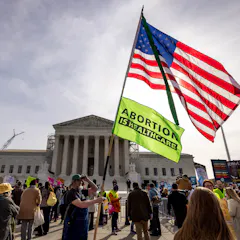
EMTALA requires hospitals to provide stabilizing treatment to all patients – but Idaho is arguing that its abortion ban means it doesn’t have to allow the procedure, even if it is medically needed.
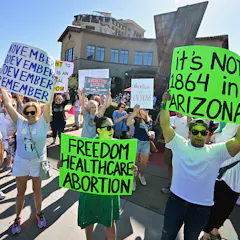
There are many outdated laws that states keep on the books, even if they aren’t used. If the Supreme Court overturns legal precedents on rights like same-sex and interracial marriage, that can change.
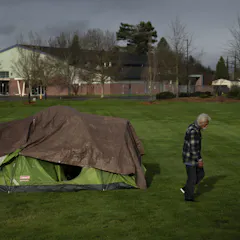
Legal precedents hold that criminalizing someone for their status, such as being homeless, is cruel and unusual punishment. But what if that status leads to actions like sleeping in public spaces?
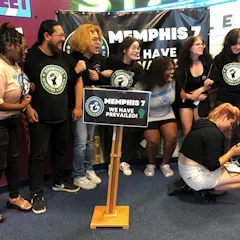
The case stems from a complaint filed after seven baristas who were attempting to organize a union at a Starbucks shop in Memphis, Tennessee, were fired.
What counts as fast for a court is slow for the rest of the world, and judges can give contradictory or vague rulings that delay final decisions into the future.

People love to hate bureaucracy, but regulatory agencies play key roles in modern society. Conservatives want to cut back their power, but a political scientist proposes a different option.
Donald Trump claims support in crucial court cases and historical documents for his assertion that presidents are immune from criminal prosecution. A law scholar says those documents say the opposite.

Fanatics’ consolidation of the sports card industry risks a stagnant future for the hobby.
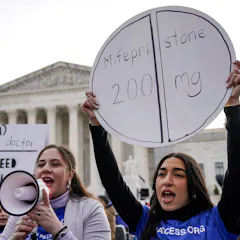
Two legal scholars who study abortion-related laws explain what happened at the Supreme Court in a case that could make it harder to get an abortion.

When the US Supreme Court legalized sports betting, states were quick to get in on the action. But as lawmakers grow reliant on taxes from betting, what do they owe problem gamblers?

In 1922, Oregon voters approved an initiative to require public school for most students ages 8-16 − but it didn’t hold up in court.
While both Congress and the president have extensive powers, they cannot easily change the law to protect abortions.
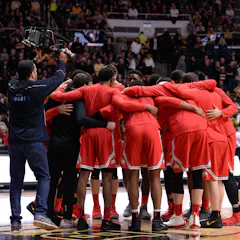
March Madness might look very different if not for the Supreme Court.

The Supreme Court announced that Texas can have state authorities arrest and deport undocumented migrants. A lower court has temporarily blocked the law.

These cases have asked the justices to consider how to apply some of the most sweeping constitutional protections – those of free speech – to an extremely complex online communication environment.
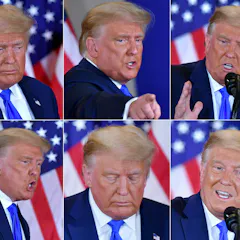
Donald Trump tried to overturn the 2020 election results. But the work of others, from lawmakers to judges to regular citizens, stopped him. There are cautionary lessons in that for the 2024 election.

Since the 1970s, corporate boards have included more women and minorities. But those gains are likely to change after a US Supreme Court ruling and increased conservative resistance.
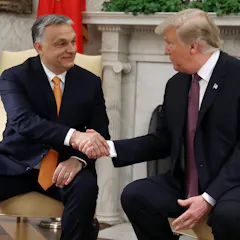
One of Donald Trump’s favorite politicians is the Hungarian authoritarian leader Viktor Orbán. Would a country led again by Trump embrace similar antidemocratic politics?
Top contributors
-

Professor of American Civics, University of Tennessee
-
Joseph Panzer Chair in Education and Research Professor of Law, University of Dayton
-
William Nelson Cromwell Professor of Jurisprudence and Political Science, Amherst College
-
Professor of Legal Studies and Political Science, UMass Amherst
-
Professor of Law, University of Virginia
-
Associate Professor of Political Science, College of Charleston
-
Professor of Law, George Washington University
-
Associate Professor of American History and Politics, University of East Anglia
-
Associate Professor of Law, Quinnipiac University
-
Professor of Law Emeritus, Vermont Law & Graduate School
-
Professor of Law and Adjunct Professor of Political Science, Wayne State University
-
Professor of Law and Director of the Center for Professional Ethics, Case Western Reserve University
-
Professor of Law, University of Richmond
-
President, Dickinson College
-
Associate Professor of Philosophy and Law, Wayne State University; Institute for Humane Studies