
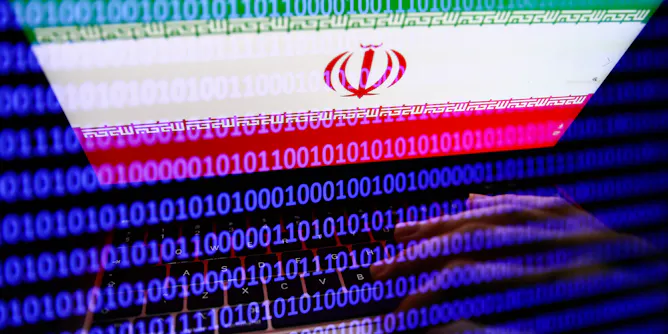
A cyberattack on a US corporation illustrates how state-aligned hackers operate, and how damage in war today isn’t always readily visible or geographically confined.
Articles on US-Iran conflict
Displaying 201 - 220 of 429 articles

There’s been a surge of interest in EVs as the oil crisis hits – and secondhand EVs are especially in demand
Throughout history, powerful militaries have been thwarted by smaller adversaries with more determination.
Donald Trump will probably lean into his rhetorical strengths and try to convince Americans the U.S. has won in Iran when it hasn’t.
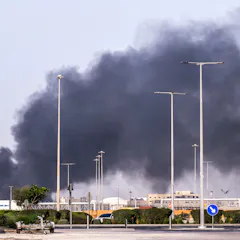
Commercial data centers have become critical infrastructure, supporting everything from financial transactions to government services. And critical infrastructure is often targeted in war.
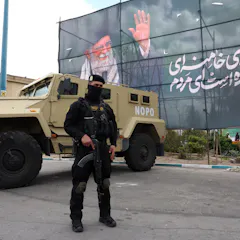
Iran’s regime was structured to withstand attacks from more powerful foes. It’s also resolved to deny the US and Israel a victory at all costs.
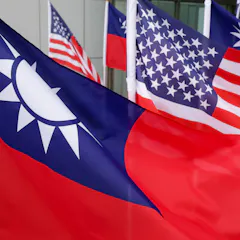
There is a growing recognition in Taiwan that US resources are not unlimited – and the US may not adapt well when under pressure.
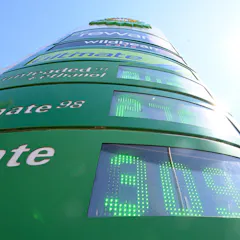
Australia isn’t about to run out of fuel. But disruptions caused by tightening supply are cascading. It’s time to plan to reduce dependence on foreign fuel.
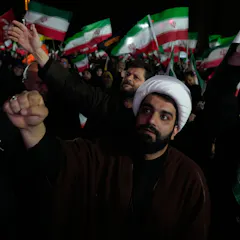
Wars that define eras are remembered not just for how they are fought, but for what follows. For Canada, the end of the Iran war will be a chance to lead with clarity, consistency and purpose.
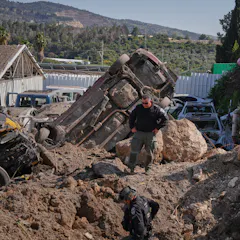
U.S. leaders brag about airstrikes’ tactical effects while Iran’s drones and missiles achieve strategic results.

As Hezbollah continues to fight Israel in southern Lebanon, the rest of the country is facing the prospect of civil conflict.

In normal times, as much as 14% of global maritime trade goes through the Bab el-Mandeb Strait. Disruption would be felt around the world.

The Iranian government uses the threat of sea mines to control access to the Strait of Hormuz, a narrow sea lane that is vital to the global economy.
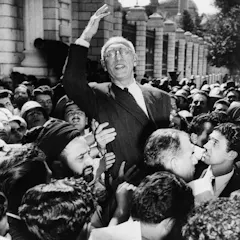
Many Americans only know the history of anger and tension with Iran. But an archaeologist who has spent 45 years focusing on Iran says it is worth recalling the time when the countries were friends.
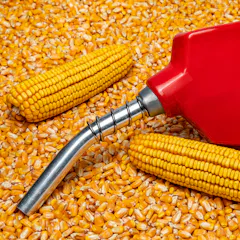
Australians are being urged to switch to E10 fuel, as the US-Iran conflict continues to put pressure on diesel and petrol supplies.
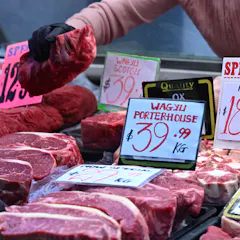
Modelling shows higher costs affecting freight, food production, and manufacturing – pushing up the cost of all kinds of goods, from steak to steel.
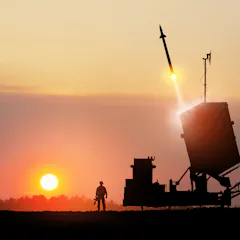
If Israel possesses a nuclear arsenal, while Iran is denied that possibility, what do the international norms on accepting, producing or acquiring nuclear weapons have to say about such double standards?
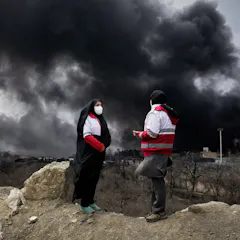
Studying the economics of war reveals how some democracies start wars and commit human rights abuses while corporations profit.

Conducting military strikes against a nation that is engaged in negotiations to reduce its nuclear capacity has set a dangerous precedent.
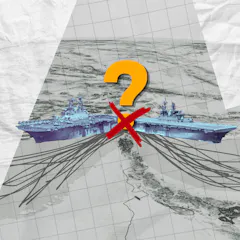
There are 4 reasons why the US may be reluctant to risk such a massive operation.
Top contributors
-

Honorary Research Fellow, Department of International Politics, City St George's, University of London
-
Professor in International Politics, City St George's, University of London
-
Emeritus Professor of Middle Eastern Studies, Australian National University; The University of Western Australia; Victoria University
-
Associate Professor in International Relations, UNSW
-
Lecturer in History and International Studies, Leiden University
-
Adjunct Professor, Defence and Security Institute, The University of Western Australia; UNSW
-
Associate Professor in International Politics, UCL
-
Professor of International Security, University of Birmingham
-
Lecturer in Energy Systems, University of Oxford
-
Professorial Fellow, University of Canberra
-
Professor of International Relations, Lancaster University
-
Professor of the Practice of Political Science and International Relations, USC Dornsife College of Letters, Arts and Sciences
-
Lecturer, Department of War Studies, King's College London
-
Associate Professor, Defence Studies Department, King's College London
-
Fellow for the Middle East at the Baker Institute, Rice University