
Tehran’s presence in the Horn of Africa and the Red Sea is selective and opportunistic.
Articles on US-Iran
Displaying 121 - 140 of 243 articles
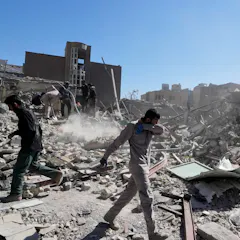
At the tail end of the Vietnam War, Congress engaged in a breathtaking act of legislative assertion, affirming that lawmakers held the power to declare war – not the president.

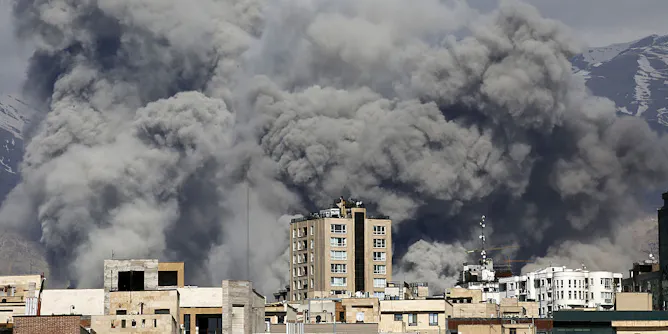
Israeli and U.S. strikes on Iran have triggered a widening regional conflict, drawing in Tehran’s allies and several Arab states while testing missile defences across the Middle East.
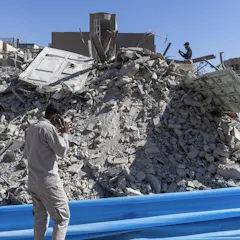
A covert US campaign in the mid-20th century helped steer Iran toward the intense anti-American sentiment that has distinguished its government policy for decades.
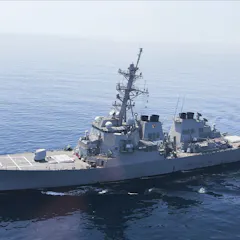
The Strait of Hormuz is one of the world’s most important economic chokepoints, and it has just been closed off by the conflict in Iran.
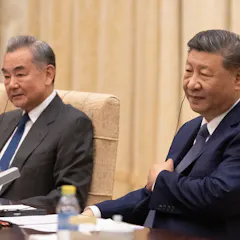
The war in Iran is likely to lead to several issues for China, but it also presents Beijing with opportunities.
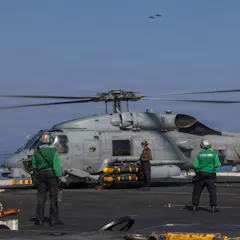
Anthropic’s refusal to allow the U.S. Department of War unrestricted access to Claude raises questions for many nations.
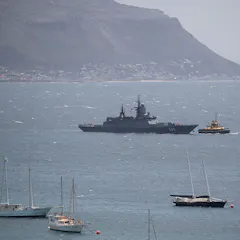
The presence of a warship can be the most tangible and visible sign of bilateral and multilateral friendships.
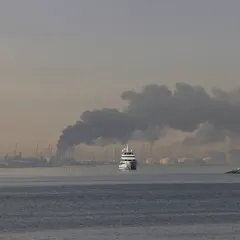
Qatar, the UAE and other Gulf nations have spent years cultivating an image of being an oasis of stability in the Mideast. The current war risks undoing all that work.
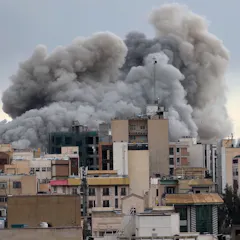
As US bombing operations in Afghanistan, Iraq and Libya have shown, destruction is not the same as political success.
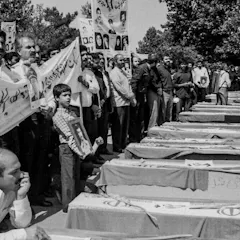
Conflict between the two nations – often via proxies like Israel – has taken many forms since the 1980s.
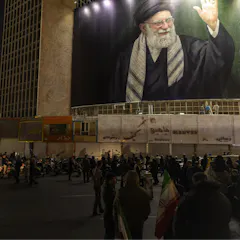
Khamenei was a deeply polarizing figure in Iran – perceived by some as a martyr and others as an oppressor.
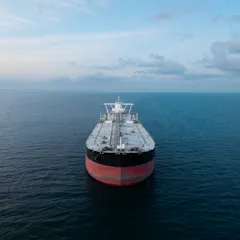
Oil prices are responding to risk – not just supply shortages.
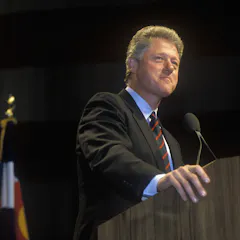
Trump has shifted American policy towards Iran from one of containment to direct confrontation.

Iran has warned it could close down the strait, through which 20% of the world’s oil transits each day.
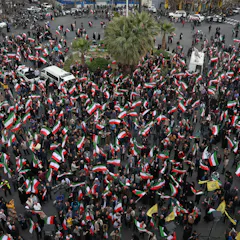
President Trump has appealed to Iranians to topple their government, but a popular uprising is unlikely to defeat current leadership or the Revolutionary Guards, a former US diplomat says.
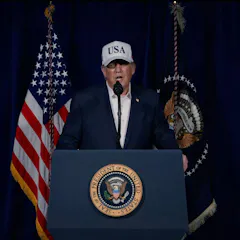
It appeared that diplomacy was working, but the strikes by the US and Israel now risk destroying any chance of a peaceful resolution of this crisis.
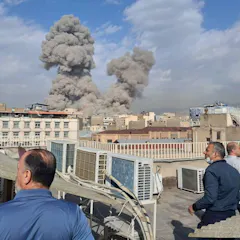
The attack has come in the middle of talks between Washington and Tehran.
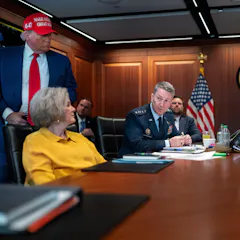
History tells us that a lack of understanding of war on the part of US presidents has often causec friction with their military commanders.
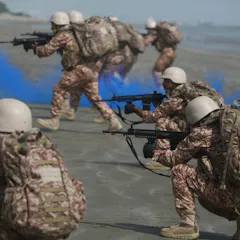
The US military buildup in the Middle East is now sufficient for Trump to order military action against Iran at any moment.
Top contributors
-

Professor of International Politics, Clinton Institute, University College Dublin
-
Fellow for the Middle East at the Baker Institute, Rice University
-
Senior Lecturer in International Relations, University of Pennsylvania
-
Honorary Research Fellow, Department of International Politics, City St George's, University of London
-
Assistant Professor of International Relations, American University
-
Associate Professor of Practice of Public Policy, University of Michigan
-
Professor in the Department of Government, University of Essex
-
Professor of the Practice of Political Science and International Relations, USC Dornsife College of Letters, Arts and Sciences
-
Professor of Practice in International Relations, USC Dornsife College of Letters, Arts and Sciences
-
Lecturer in Energy Systems, University of Oxford
-
Associate Professor of Politics and International Relations, Florida International University
-
Tony Walker AM is a Friend of The Conversation.
Director, La Trobe University
-
Professor of History and Peace Studies, University of Notre Dame
-
Lecturer in International Relations, University of East London
-
Graduate Teaching Associate, School of Politics and Global Studies, Arizona State University