
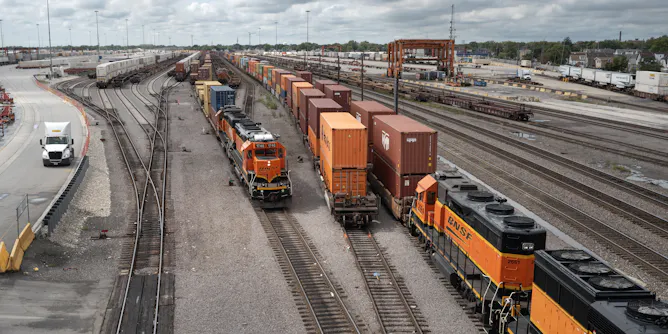
There’s not much diesel fuel lying around, and lots of people want to buy what is available, as well as what little is produced each day. It’s all a matter of supply and demand.
Articles on US economy
Displaying 1 - 20 of 359 articles

The country, and the world, have been losing diesel refining capacity for many years and can’t just ramp up production to fill the shortages.
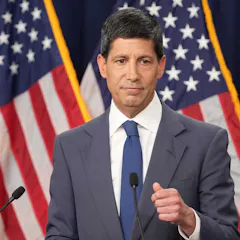
The Federal Reserve’s rate hike comes as the US economy is increasingly moving at two very different speeds.
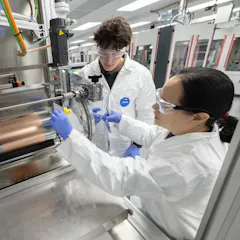
Job preparation through internships matters more than ever for young people amid a precarious and fast-changing job market.

Trump has approached governing through the same framework as his former business portfolio, where he casts the US as a flagship holding whose value he was elected to increase.

Recent polling shows if the disruption caused by the Trump administration’s war with Iran continues, Democrats will likely gain control of Congress.
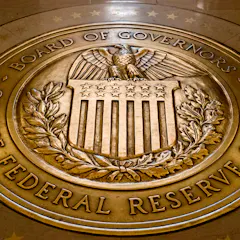
The Federal Reserve is much more powerful than it was 20 years ago, which has prompted calls for a reset in how it answers to Congress and the public.

After topping a record US$40 trillion, US national debt looks set to climb further.
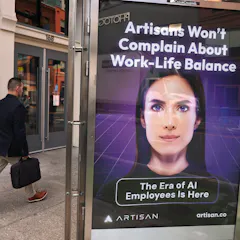
For too many companies, the adoption of artificial intelligence has become an AI hunger game that spreads fear rather than engagement.
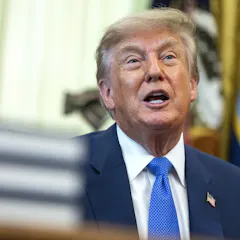
The US president’s approval rating is well below other past presidents at this point in their terms.

In a survey of more than 600 employers, one theme kept coming up: Despite AI, soft skills and the ability to learn still set successful job candidates apart.

While discord exists over the meaning of the 250th anniversary, Americans strongly believe there is more that unites the country than divides it.

The US economy keeps defying the odds.
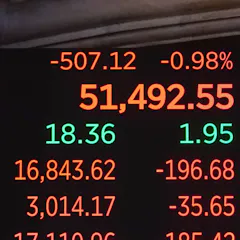
Corporate layoffs cause confusion about a business’s future, but there’s a way for investors and employees alike to see if downsizing could lead to profitability.

The Fed chair who served under five US presidents was more practical and less ideological than his detractors claimed.
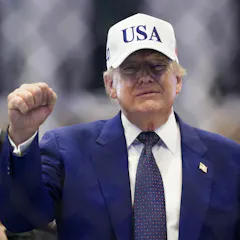
Fifty years of data from the US suggests that consumer confidence is reflected in an administration’s performance in elections.
Unless Congress acts, 1 in 5 Americans who receive Social Security could see an across-the-board benefit cut of roughly 22% starting in 2032.

Confronted by higher prices for everyday products, US households are spending more in total.

Investors’ inflation expectations, much more than the central bank, are among the factors that affect the cost of home loans.

Contrary to the belief that an immigration crackdown would lead to more jobs for US-born workers, ICE enforcement hasn’t produced economic gains for Americans.
Top contributors
-

Associate Professor of Business, Boston University
-
Part-Time Professor of Economics, The New School
-
Associate Professor of Finance, Mississippi State University
-
Election Analyst (Psephologist) at The Conversation; and Honorary Associate, School of Mathematics and Statistics, The University of Melbourne
-
Scientia Professor of Economics, UNSW
-
Professor of International Relations, Australian National University
-
Professor of Economics, University of Nebraska Omaha
-
Associate Professor of Political Science, Georgia State University
-
Professor, Department of Government, University of Essex
-
Visiting Faculty in Economics, Emory University
-
Assistant Professor of Economics, University of California, Merced
-
Associate Professor of Economics, University of South Carolina
-
Associate Professor of Economics, Pace University
-
Assistant Professor, Miller Center, University of Virginia, and US Studies Centre, University of Sydney
-
Professor of Finance and Distinguished Professor of Applied Investments, Appalachian State University