

With major shutdown impacts beginning to set in, a scholar of Congress says the House has all but abdicated its position as ‘The People’s Chamber.’
Articles on Shutdown
Displaying 1 - 20 of 21 articles
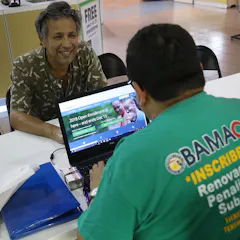
Florida relies on marketplace plans far more heavily than any other state. If subsidies are eliminated, health insurance will be unaffordable for many Floridians.
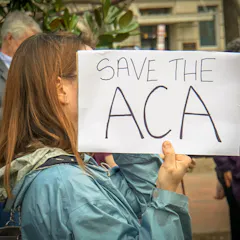
Short-term renewals of policies such as the ACA subsidies set up repeated battles in Congress.
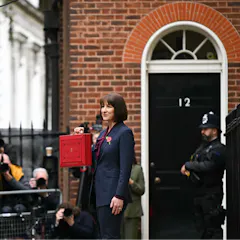
With hundreds of thousands of federal employees furloughed as part of the latest US government shutdown, a scholar explains why such events never occur in the UK.
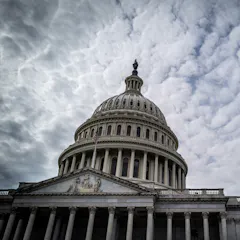
There’s a new element at play that’s heightening the stakes of budget negotiations in Congress. And it could lead to a shutdown.

Without Democratic votes to break a Senate filibuster, the GOP would not have been able to pass its stopgap spending bill and avert a government shutdown.

With the US government seemingly heading toward a potentially painful federal shutdown, a scholar explains why such events never occur in the UK.

While a single shutdown is unlikely to push a government worker to quit, the cumulative effect of multiple shutdowns can lead to low worker morale and employee retention problems.
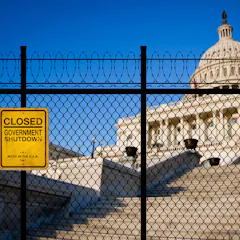
Shutting down the government won’t help reduce the deficit. Here’s what would.

States led by Republican governors generally had higher COVID-19 case and death rates in 2020.
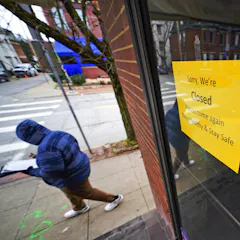
Most pandemic policies have benefited those already best off in US society and ignored people for whom neither mass shutdowns nor reopening offer relief.
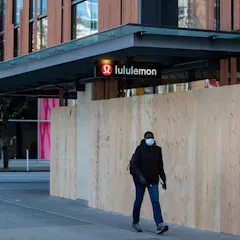
Canadians are living under a states of emergency, coping with a limping economy and social distancing as well as the stress of the pandemic itself. Many might be asking: when will it end?
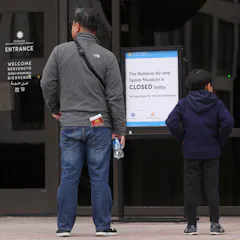
The government shutdown provided a short-term version of what some activists have long wanted: A government small enough so that you could ‘drag it into the bathroom and drown it in the bathtub.’
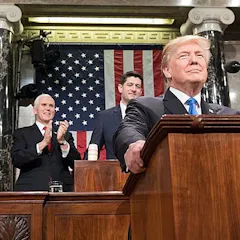
Trump is not the first US president to talk about border security, but he is the only one to make it an “urgent national crisis”. Here is a handy deconstruction of President Trump’s rhetorical strategy.
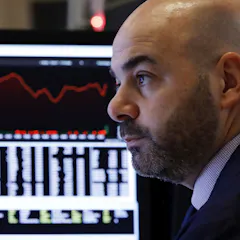
The government collects reams of economic data that are vital to the functioning of companies, policymakers and even families.

Two labor negotiation experts explain how a 2015 dispute that seemed intractable got resolved, with important lessons for the partial government shutdown.
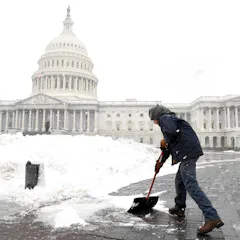
The shutdown poses a very real threat to preparedness for future emergencies, such as natural disasters and disease outbreaks.
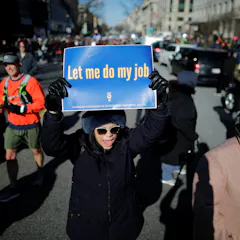
The current government shutdown is now the longest in American history, affecting about 800,000 federal employees.
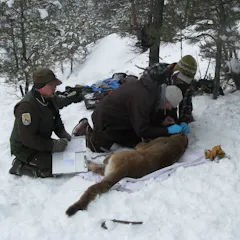
Setting aside personal hardships for workers who don’t see a paycheck during the shutdown, the research enterprise itself loses out, too. And unlike back pay, this lost time can never be made up.
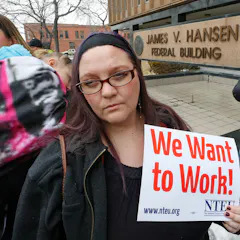
Because many Americans live paycheck to paycheck, the loss of even one can be a big financial blow for a family.
Top contributors
-

Associate Professor of Political Science, Boise State University
-
Hurst Senior Professorial Lecturer, Co-Director Transatlantic Policy Center, American University School of International Service
-
Associate Professor of Business, Boston University
-
Associate Professor of Political Science and Public Administration, University of Alabama at Birmingham
-
Professor of Physical, Theoretical and Computational Chemistry, Michigan State University
-
Professor of Law, New York University
-
Professor of Management, Co-Director of the MIT Sloan Institute for Work and Employment Research, MIT Sloan School of Management
-
Distinguished Professor, Arthur J. Gosnell Professor of Economics, & Head, Department of Sustainability, Rochester Institute of Technology
-
Professor of Political Science and Economics, Binghamton University, State University of New York
-
Professor of Social Policy and Management, Brandeis University
-
Associate Professor of Public Policy and Administration, Florida International University
-
Associate Professor of Finance, Northwestern University
-
Postdoctoral Scholar in Epidemiology and Biostatistics, University of California, San Francisco
-
Professor of Public Policy (retired), University of Virginia
-
PhD Candidate, Division of Epidemiology, Dalla Lana School of Public Health, University of Toronto