
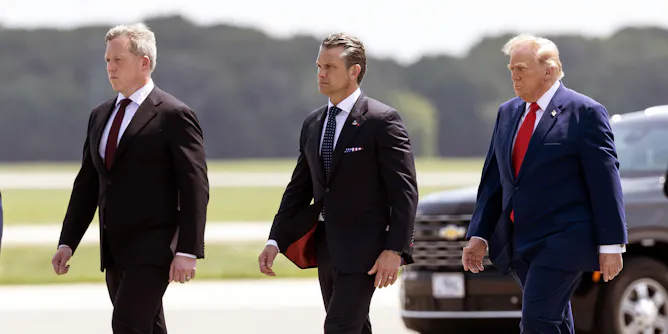
Half of the officers who have been fired or blocked from promotion are women or Black. A scholar who studies the US military explains why that’s dangerous.
Articles on US army
Displaying 1 - 20 of 43 articles
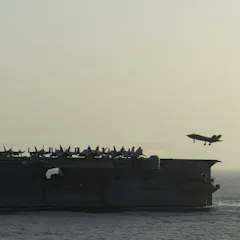
Navy readiness is a finite reserve that has been overstretched by a US military appetite for interventions in the past 50 years that has not tracked with a rise in danger.
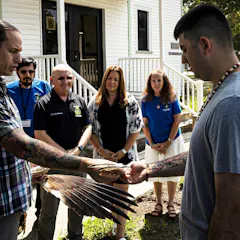
The Pentagon recategorized Native religions as ‘other.’ A scholar of Native American and Indigenous Studies explains the implications of that change.
During and after WWI, thousands of American women acted as mothers for displaced French children. A war studies research fellow weighs in with considerations for teaching this vital, often overlooked part of transatlantic wartime history.

On Veterans Day, a look at how the Trump administration views diversity as a symptom of ‘woke’ culture rather than as a long-standing practice driven by the nature of the all-volunteer force.
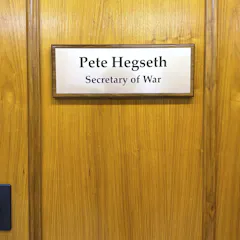
Donald Trump’s Department of War move suggests he’s ignorant about America’s long record of aggression in the post-Second World War era.

Eighty years ago, this remarkable event showed a rare glimpse of humanity on both sides of a bitter conflict.
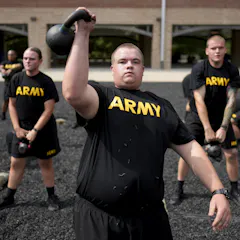
Generations already suffering a shattered sense of safety from US gun violence do not see the military as a viable option, a terrorism scholar argues.
The early 1920s in the US offers historical lessons on how current pessimism about the state of the country can manifest in dangerous, discriminatory ways.
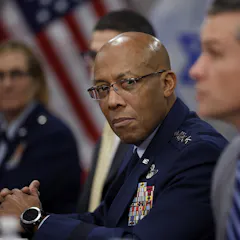
The highest-ranking military officer in the country, the chairman has no direct command authority. His role is as a presidential adviser rather than a decision-maker.
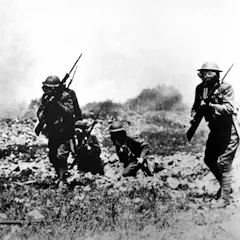
American newspaper correspondents reporting the fighting in the first world war succumbed to intense pressure to self-censor.
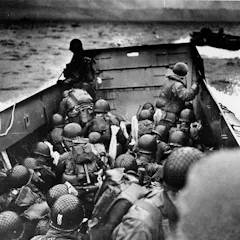
In the first wave to hit the beach, troops were met by withering German gunfire. But they kept pushing and established a small beachhead from which the invasion could continue.
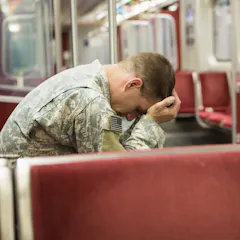
Suicide among military service members in the US is a growing problem. A lack of a sense of belonging and feeling like a burden are key risk factors.
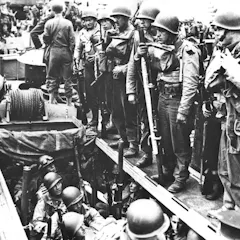
The fight up the cliffs of Pointe du Hoc and the battle across Omaha Beach were spearheaded by a relatively new type of unit: Army Rangers.

Members of the military take an oath before service, but it’s to the Constitution, not a specific person. West Point professors explain how young officers learn the importance of their allegiance.
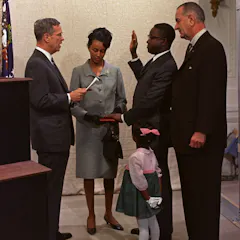
Andrew Brimmer, the first African American on the Board of Governors of the US Federal Reserve, helped develop the blueprint for the Central Bank of Sudan.
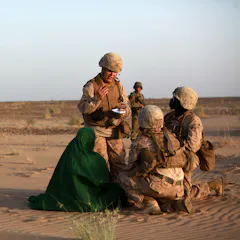
Women who served in unofficial combat and intelligence roles during the Afghanistan war offer brutally honest accounts of their experiences.
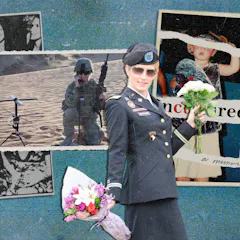
Daniella Mestyanek Young grew up in the Children of God cult, also known as The Family. She escaped aged 15, then joined the US army after college – and recognised similar systems of toxic control.
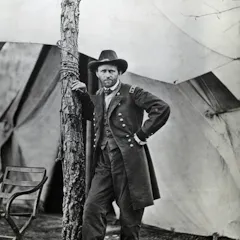
Known as the military leader who saved America, Ulysses S. Grant left a legacy of fighting for the rights of enslaved people during and after the Civil War.

Attention is on the UK to relinquish its hold on the islands. What’s missing is an acknowledgment of the enduring role of the US in this international crime.
Top contributors
-

Associate Professor of Communication Studies, Gonzaga University
-
Associate Professor of English, Virginia Tech
-
Lecturer in History, Penn State
-
Professor of Journalism, Indiana University
-
Associate Professor in Clinical Psychology, University of Oxford
-
Professor of Clinical Psychology, University of Liverpool
-
Defence Professor of Mental Health, King's College London
-
Professor of Internal Medicine, UT Southwestern Medical Center
-
Associate Professor of Native American and Indigenous Studies, San José State University
-
Oral Historian, Department of History, University of Texas at Arlington
-
Assistant Professor of History, Virginia Tech
-
Professor in Human-Computer Interaction, ARC Future Fellow, University of Sydney
-
Ph.D. Student, Political Science, University of Toronto
-
Professor of Communication and Middle East Studies, Georgia State University
-
Lecturer in Comparative Literature, University of Kent