
Our current celebration of cities is a big shift from the past generation when cities were seen to contain all of our problems. Should we believe the hype? Are the new ideas equally problematic?
Articles on Urbanism
Displaying 41 - 53 of 53 articles
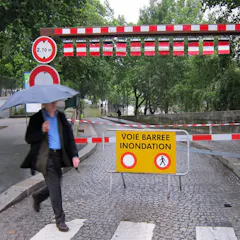
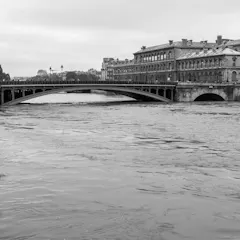
Although it is unlikely to find a scenario similar to that of the major flood of 1910, France’s national flood forecasting network is closely monitoring the level of the Seine.
Essays On Air: Australia’s property boom and bust cycle stretches back to colonial days
The Conversation, CC BY58.7 MB (download)
Australia's property market is slowing and many are contemplating a possible bust. But today's episode of Essays On Air reminds us that since colonial days, Australia's property market has had its ups and downs.
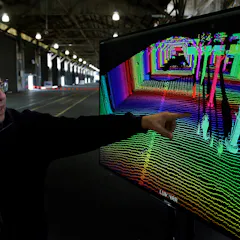
It will be hard to adjust. Considering what happened with the onset of car travel and web surfing, society can’t just wing it.
In the future, Europe will suffer from more heat waves as well as extreme rainfall, presenting new challenges for planners and health care services. Building resilient cities can help.

The State of Australian Cities Conference begins in Adelaide today. In major cities across the nation, there’s a stark contrast between lofty planning goals and the sprawling reality on the ground.
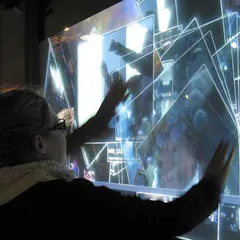
With the rise of the knowledge-based economy, fab labs, maker spaces and more, cities are being transformed into production centres. This dynamic movement is ripe with promise, but also has risks.
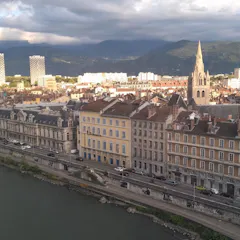
In France, research on local indicators’ inadequacies led a group of stakeholders and researchers in Grenoble to develop an alternative that focuses on social well-being and sustainability.

So you’re having to room share to live in the city. What if you need more than a place to sleep? Well, now you can rent a living room by the minute. Welcome to the world of distributed living.
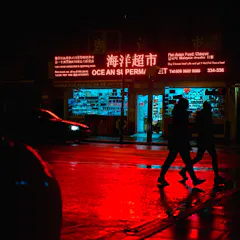
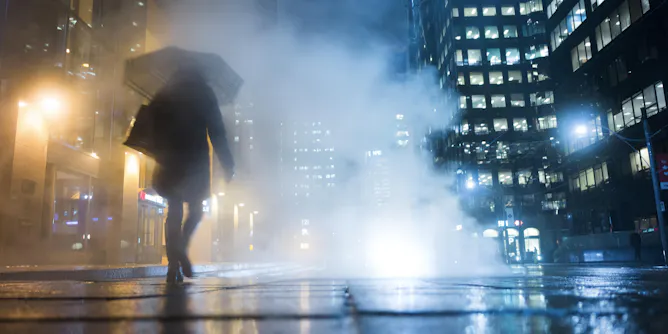
Movies often portray the city as a dystopia, particularly in the ‘neo-noir’ genre, which explores postmodern themes. TV shows and ads present an altogether sunnier picture of life in the city.
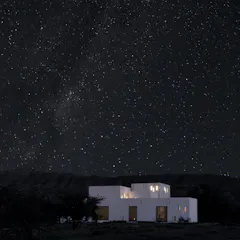
Buildings, thinkers, books, films and works of art can ask central questions about how to live on this planet and its consequences.
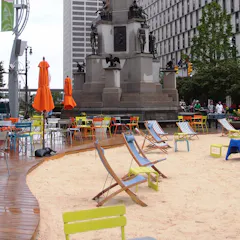
Big ideas and big dollars have been invested in making ‘memorable’ places. Paradoxically, as similar solutions are adapted in diverse settings worldwide, this can lead to an uneasy new placelessness.
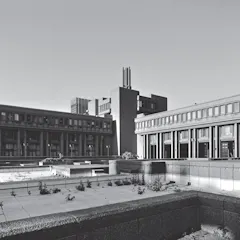
Taking stock of modernist buildings and their potential for reuse is a necessary public project in Johannesburg. A new book that tells the stories of reuse in this African metropolis can help do that.
Top contributors
-

Associate professor of Architecture, University of the Witwatersrand
-
Directeur de l'agence Villes Innovations, Chercheur associé au laboratoire PACTE (Université de Grenoble), Co-fondateur du Laboratoire d’usages culture(s)-art-société (LUCAS), Université Grenoble Alpes (UGA)
-
Professor, Urban Studies and Professor of Resource and Environmental Management, Simon Fraser University
-
Professor of Planning, School of Built Environment, UNSW
-
Ingénieure de recherche en hydrologie, Inrae
-
Professor of Landscape Ecology, Humboldt Universität zu Berlin, Helmholtz Centre for Environmental Research-UFZ
-
Rédacteur en chef, coordination internationale et technique, The Conversation France
-
Senior lecturer, Université de Genève
-
Ingénieur de l’agriculture et de l’environnement, Inrae
-
Ph.D student, Université Paris Dauphine – PSL
-
Enseignante chercheuse en Economie au CREG à l'UGA, Université Grenoble Alpes (UGA)
-
Head of Urbanism and Associate Professor of Urban Studies, School of Architecture, Design and Planning, University of Sydney
-
Ingénieur de recherche en prévision hydrologique, Inrae
-
Senior Research Fellow, City Futures Research Centre, UNSW Sydney, UNSW
-
Professor, Urban & Regional Planning, School of Planning, Design and Construction, Michigan State University