

It’s about designing cities that prioritise people not cars.
Articles on Urbanism
Displaying 21 - 40 of 53 articles

Quite how to gauge the size of a city – or where one ends and the next begins – is getting harder to determine. The 21st century belongs to the limitless city.
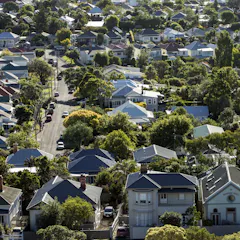
A comparison of 42 urban areas in New Zealand with 500 towns and cities in the US shows how much better local urban design has to be if we’re serious about reducing reliance on cars.
Cities are defined as much by their buildings as what people do in between them. Designing them comes with great responsibility.

The success of the metaverse – whether people use it or not – will rely heavily on the environments that are created.

Combining archaeological evidence, aerial scans and machine learning algorithms, researchers modeled how this medieval city grew over time.
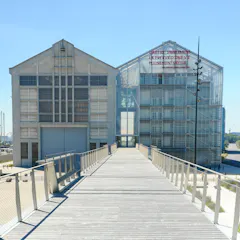
With the construction industry a major source of pollution and waste, rethinking how we use the built environment we have has never been more important. This French architect duo is showing the way

Containment during the pandemic has contributed to a recognition of the importance of public space as a gathering place and an essential tool to meet the needs of the population.

Temporary and tactical urbanism offers simple, low-cost solutions to make streets and other public spaces both safe and sociable during this time of physical distancing.
We sorely miss our regular haunts during the coronavirus lockdown not only because we like them but also because a healthy society needs places where people can gather, mix and mingle.
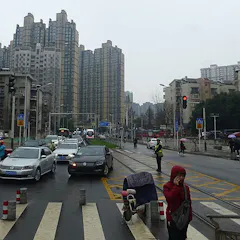
After the Covid-19 pandemic, we must seize the opportunity to make urban centers more livable places by investing in affordable housing, basic services, clean energy and active transport.
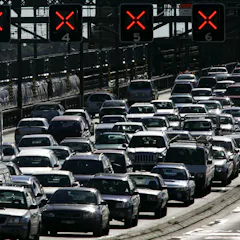
A new model based on how diseases spread will help traffic controllers get on top of congestion faster
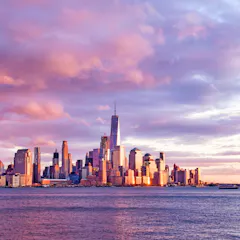
New York City’s municipal budget relies heavily on the property taxes of extremely high-value real estate. That drives gentrification and distorts local policy in other ways that hurt residents.
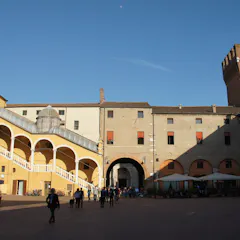
Leonardo da Vinci’s ideal city contained design features and engineering works not realised until hundreds of years after he died.
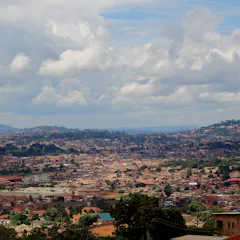
China is funding global infrastructure projects to expand its influence and capacity for economic growth.

With so few public washrooms in our cities, vulnerable people are forced to use café and restaurant washrooms. How do mostly minimum wage café and restaurant workers deal with this?

Companies like Google, Apple, Facebook, Amazon, Airbnb and Tesla are redefining key aspects of daily life such as work, mobility and leisure, using our cities as laboratories for their innovations.
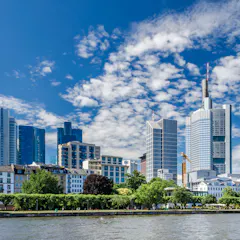
Economic polarisation across Europe is becoming an important phenomenon, in part driven by monetary policies that can increase office prices and can even affect the fundamentals that drive the markets.
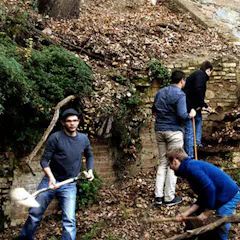
In a context marked by major ecological, social and economic changes, cities are at the heart of transitions.
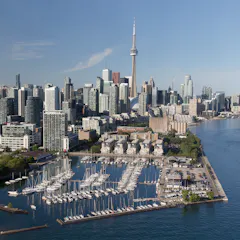
As Toronto hurtles towards its population dense future, the making of significant green communities for its waterfront needs to be urgently considered.
Top contributors
-

Associate professor of Architecture, University of the Witwatersrand
-
Directeur de l'agence Villes Innovations, Chercheur associé au laboratoire PACTE (Université de Grenoble), Co-fondateur du Laboratoire d’usages culture(s)-art-société (LUCAS), Université Grenoble Alpes (UGA)
-
Professor, Urban Studies and Professor of Resource and Environmental Management, Simon Fraser University
-
Professor of Planning, School of Built Environment, UNSW
-
Ingénieure de recherche en hydrologie, Inrae
-
Professor of Landscape Ecology, Humboldt Universität zu Berlin, Helmholtz Centre for Environmental Research-UFZ
-
Rédacteur en chef, coordination internationale et technique, The Conversation France
-
Senior lecturer, Université de Genève
-
Ingénieur de l’agriculture et de l’environnement, Inrae
-
Ph.D student, Université Paris Dauphine – PSL
-
Enseignante chercheuse en Economie au CREG à l'UGA, Université Grenoble Alpes (UGA)
-
Head of Urbanism and Associate Professor of Urban Studies, School of Architecture, Design and Planning, University of Sydney
-
Ingénieur de recherche en prévision hydrologique, Inrae
-
Senior Research Fellow, City Futures Research Centre, UNSW Sydney, UNSW
-
Professor, Urban & Regional Planning, School of Planning, Design and Construction, Michigan State University