

From roadside plots to community gardens, urban farmers in Alexandra township, South Africa are growing food, earning income and coping with climate change.
Articles on Urban farming
Displaying 1 - 20 of 26 articles
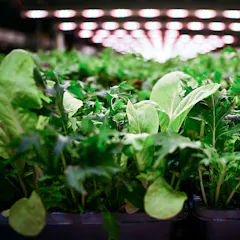
Hidden in city car parks or warehouses, smart greenhouses promise to bring farming back to the city. But can these technology boost resilience?
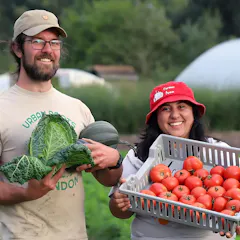
London, Ont., adopted Canada’s first stand-alone Urban Agriculture Strategy in 2017. Yet, almost eight years later, many of the strategy’s goals remain unrealized.
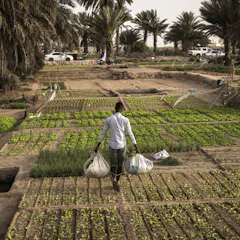
Young urban farmers in Khayelitsha are nurturing connections, creating economic opportunities, and promoting environmental conservation.
Access to nature is provenly beneficial. Yet the UK’s urban green spaces are poorly funded and are vulnerable to local government budget cuts.

Scholars believe vertical farming, the practice of growing crops in stacked pots in vacant spaces, could be well suited to degrowth values.
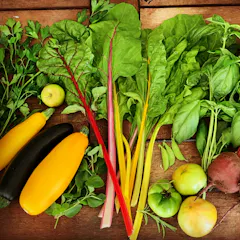
As the cost-of-living crisis bites into our household budgets, growing or foraging food can save you money.
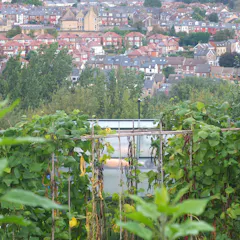
Maintaining a diversity of insects may be key for crop pollination in cities.

Food forests are urban oases that pack a lot into small spaces, including food production, local cooling and social connections.
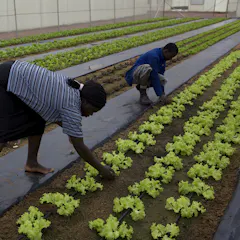
Urban farms can work in developing countries if farmers and architects are aware of conditions that favour food production in built spaces.

Artificial light is upending trees’ ability to use the natural day-night cycle as a signal of seasonal change.
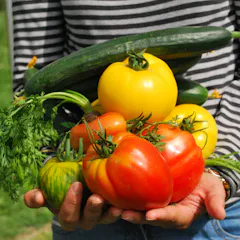
A ‘right to grow’ law encouraging more locally-grown food could boost health, community pride and food supply resilience.
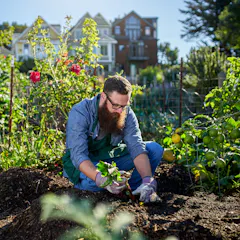
Nurturing enthusiasm for growing food closer to home could benefit people, wildlife and the global food system.

Policies should protect arable land from urban encroachment and make peri-urban households less vulnerable.
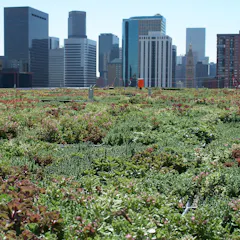
From happier and healthier residents to more resilient buildings – green roofs offer significant benefits to cities.
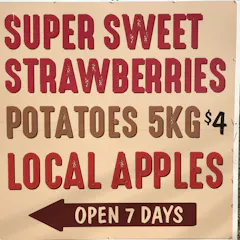
To improve access to locally grown food and help prevent disruptions to supply chains caused by climate change, we need to support farming on the fringes of cities.

Vertical farms grow more food but use much more energy, so let’s consider other kinds of urban agriculture.
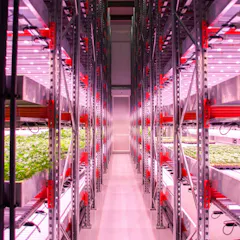
Hydroponics and aquaponics are already being used by the agriculture industry – is it time urban farmers got on board?

Urban farming increases access to healthy foods. And building social networks is one of the greatest benefits of urban agriculture in poor areas.
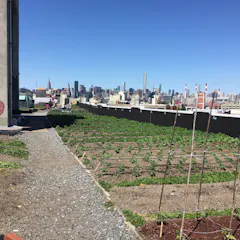
Urban farms might be trendy, but they won’t replace rural agriculture anytime soon.
Top contributors
-

Professor of Urban Sustainability, University of Salford
-
Chair Professor in Sustainability, Lancaster University
-
Postdoctoral Research Fellow, Global Change Institute, University of the Witwatersrand
-
Associate Professor, School of Built Environment, UNSW
-
Senior Lecturer in City Planning, UNSW
-
Senior Lecturer in Urban Planning & Design, Monash University
-
Senior Research Fellow, Agroecological Futures, Coventry University
-
Senior Lecturer, University of Kent
-
Research Fellow, School of Natural and Built Environment, Queen's University Belfast
-
-
Associate Professor Department of Urban and Regional Planning, University at Buffalo
-
Research Associate, Institute of the Americas, UCL
-
Professor of International Planning, Centre for Urban Research, RMIT University
-
Researcher in sustainable food systems, The University of Melbourne
-
Food Systems Research and Partnerships, The University of Melbourne