
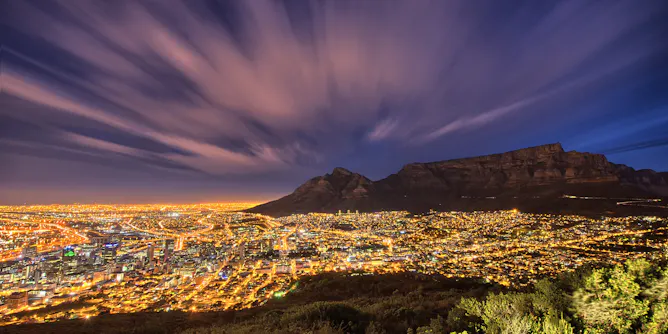
A film about Cape Town’s environmental resources features a cast as diverse as breakdancers and wetland activists - and is being used as a study aid globally.
Articles on Urban ecology
Displaying 21 - 37 of 37 articles

Drains take up precious but inaccessible open space in our cities. Converting these to living streams running through the suburbs could make for healthier places in multiple ways.
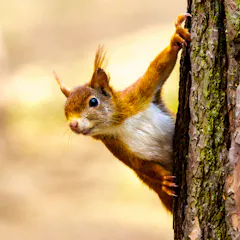
Formby is one of the only remaining urban areas in England where red squirrels can be found at all.
These agile and unfussy animals are well-placed to exploit all the food we leave lying around.
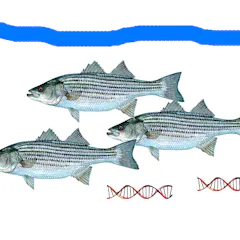
Animals shed bits of DNA as they go about their lives. A new study of the Hudson River estuary tracked spring migration of ocean fish by collecting water samples and seeing whose DNA was present when.

Given that cities may be home to 80% of humanity by the end of the century, they can only be sustainable if eco-friendliness is one of their core features.
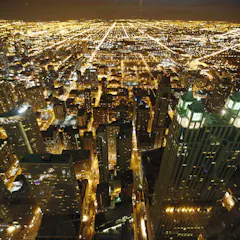
Urban greening programs need to consider the harmful impacts of artificial lighting on ecosystems. Fortunately, we can do a lot to create more biosensitive lighting.
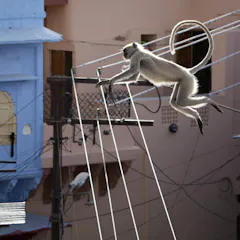
Some animals love living in the urban jungle – but they are a small minority, compared to those we risk losing to urbanisation.
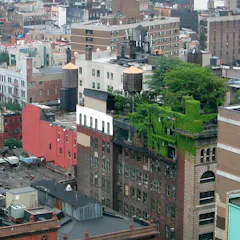
The rise of urban greening is an opportunity to recast the relationship between people and environment. Humans and non-human species are ecologically intertwined as inhabitants of cities.
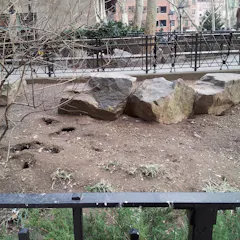
Rats foul our food, spread disease and damage property, but we know very little about them. A biologist explains how he tracks wild rats in New York City, and what he’s learned about them so far.

City-centric thinking arguably obscures connections between ‘humans’ and ‘nature’, and ‘urban’ and ‘rural’ or ‘wild’. Growing evidence of the depths of these links is testing the concept of ‘urban’.

The rhetoric of ‘smart cities’ is dominated by the economic, with little reference to the natural world and its plight. Truly smart and resilient cities need to be more in tune with the planet.
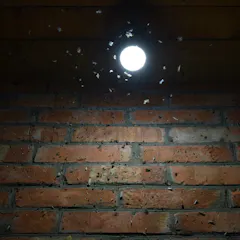
New research shows that street lighting changes the activity of moths, and is likely to disrupt nocturnal pollination.
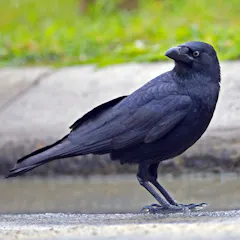
Why are our cities full of crows, ravens and rainbow lorikeets, while other species decline? The answer comes down to street smarts, adaptability, and sometimes plain bullying.
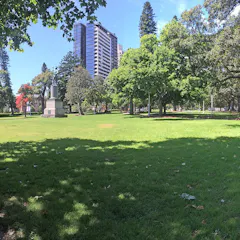
Nature is dispersed through our cities, even if we don’t notice it. And there’s abundant evidence that engaging with nature, even in urban settings, is good for us.

Have a look in your garden - you might be surprised at some of the native animals that thrive there when the weather’s hot.
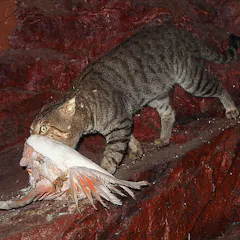
Australia wants to kill off two million feral cats and momentum for similar plans is growing in the US. Is there a good case for killing or neutering outdoor cats to protect biodiversity?
Top contributors
-

Assistant Researcher, School of Ecosystem and Forest Sciences, The University of Melbourne
-
Former Postdoctoral Research Associate
-
Visiting Research Scholar, Fordham University
-
Lecturer, Australian Urban Design Research Centre, The University of Western Australia
-
Senior Research Associate in the Program for the Human Environment, The Rockefeller University
-
Professor in Conservation Ecology, University of Stirling
-
Professor of Climate Change Adaptation, La Trobe University
-
Senior Lecturer, School of Agriculture, Food and Ecosystem Sciences, The University of Melbourne
-
Vice-Chancellor's Research Fellow, Centre for Urban Research, RMIT University, RMIT University
-
Adjunct Professor, Global, Urban and Social Studies, RMIT University
-
Post-doctoral fellow, Australian Landscape Trust, Calperum Station, James Cook University
-
Professor in Zoology, James Cook University
-
Postdoctoral researcher, RMIT University
-
Director, Melbourne Sustainable Society Institute, The University of Melbourne
-
Lecturer in Geography, Maynooth University