

The lack of dedicated funding and support for research commercialisation, on top of the other obstacles academics face, means Australia’s poor performance is no mystery.
Articles on University research
Displaying 21 - 40 of 63 articles

The Job-Ready Graduates policy aims to remove ‘the misalignment between the cost of teaching a degree and the revenue that a university receives to teach it’. But new research challenges its costings.
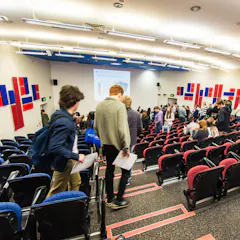
At best, when universities differentiate and specialise it can marshal talent and sharpen their focus. At worst. though, this debate can present universities with a false dilemma.

The budget splashed out extra money for almost every sector deemed important to economic recovery (or politically sensitive). But with universities in a state of financial crisis, they missed out.

The federal government is right to focus on improving Australian universities’ success rate in commercialising research, but can take specific steps itself to help achieve this.

Government incentives might boost the numbers of collaborative research projects, but academics also must work on their relationships with industry practitioners to ensure everyone contributes fully.
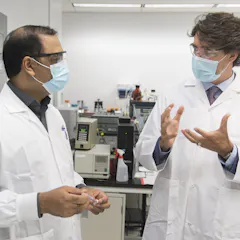
To continue the fast-paced collaborative research and innovation we have seen during the pandemic, here are five ways universities can support health research that responds to societal needs.

More than 90% of universities in the world have been built since 1949. The vast majority built large campuses outside city centres, and all for much the same reasons.

The Fourth Industrial Revolution failed to deliver; it’s time that we put our faith once again in hard science.
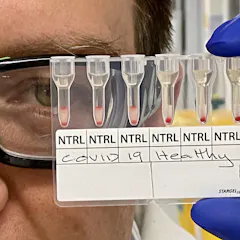
As well as extra funding for research beyond what has been announced in the budget for 2021, Australia must take half-a-dozen further steps to put the research sector back on a sound footing.

While some progress has been made toward gender equality in the research world, the coronavirus pandemic has reminded us that the old models are never far away and can re-emerge.

We estimate the reduction in international student fees will lead to a loss of 5,100 to 6,100 researchers by 2024, with some universities more affected than others.

Australia’s research workforce will be severely impacted by the pandemic, with the effects likely to be felt for years, if not decades.
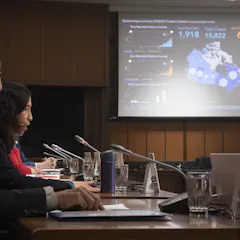
As Canadians yearn for a return to normal life, experts will rely on the latest data to determine the safest ways to come out of the coronavirus pandemic. Making that data transparent is essential.
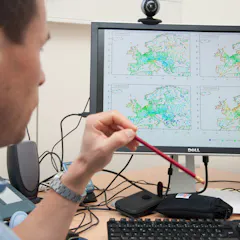
The climate emergency requires the full mobilisation of scientific institutions, but the persistent compartmentalization between disciplines and difficulties of adaptation hinder their action.

In order to regain public confidence, universities must take steps to show citizens that investments in higher education are well-spent, an education professor and university professor argue.

Today many Americans see universities negatively. But, as the dean of USC Dornsife argues, academia has a unique capacity to solve society’s problems. Yes, astrophysicists can help law enforcement.

Canola is an example of an innovation that sprung from university research and became a major economic boon to Canada. It should be happening more often.

How can African research universities be more responsive to African countries’ needs? And how can these universities work together to leverage funding for research informed by African realities?

This move to measure the impact of university research on society introduces many new challenges that were not previously relevant when evaluation focused solely on academic merit.
Top contributors
-

Professor Emeritus and Former Deputy Vice Chancellor, The University of Melbourne
-
Distinguished Professor of Political Science, Crawford School of Public Policy, Australian National University
-
Adjunct research fellow, Swinburne University of Technology
-
Honorary Principal Fellow, Melbourne Centre for the Study of Higher Education, The University of Melbourne
-
Associate Professor, Bond Business School, Bond University
-
Director of Research, US Studies Centre, University of Sydney
-
Associate Professor, Melbourne Centre for the Study of Higher Education, The University of Melbourne
-
Professor of Higher Education Policy, Monash University
-
Principal policy adviser, Queensland University of Technology
-
Dean of Research, Adelaide University
-
Postdoctoral Fellow, University of Sydney
-
Chair, The Conversation Media Group
-
Dean, USC Dornsife College of Letters, Arts and Sciences
-
Professor of Archaeology, College of Humanities, Arts and Social Sciences, Flinders University
-
School Education Program Director, Grattan Institute